- Design industry shaping loyalty programs
- Integrate easily and go live quicker
- Deliver hyper-personalized consumer experiences

Capillary: Recognized as a Leader in Everest Group’s PEAK Matrix® 2025 Read more >
The Balanced Loyalty Quotient Report 2026 is now live — our largest and most in-depth loyalty report yet. Download Report >
Metaverse as a term gained mainstream popularity when Facebook changed its name to Meta in 2021 but the term has a rather long history. In fact, it dates back to 1838 when Sir Charles Wheatstone outlined the concept of ‘binocular vision’! For our context, we’ll stick to the 21st century where ‘the metaverse’ is being discussed across tech and enterprise boardrooms.
In layman’s terms, the metaverse is an immersive internet or a digital twin to the real world where people can have ‘real experiences’ in the virtual world. Consider Nikeland as an example. A virtual simulation where a person can experience all of Nike’s experiences and more in an immersive way.
The future is closer than it seems, but more nuanced than early hype suggested. IDC projects the extended reality (XR) market—which includes metaverse-style experiences—will exceed $120 billion by 2026. Gartner’s earlier prediction that 25% of people would spend an hour per day in the metaverse by 2026 has since been revised into a broader view of “immersive commerce,” reflecting steady but more realistic growth.
“Vendors are building ways for users to replicate and enrich their lives in digital worlds,” says Gartner VP Marty Resnick. “From attending virtual classrooms to buying digital land and constructing virtual homes, these activities are converging into richer, multi-platform ecosystems.”
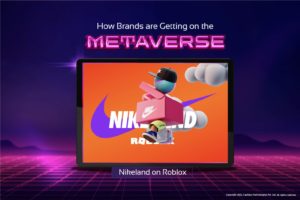
There are infinite possibilities in virtual and mixed-reality worlds. Just like the Nikeland example above, there are several ways in which a brand can engage with customers by adopting metaverse or spatial engagement strategies:
A key element of the entire metaverse is gamification—creating digital twins of the real world and embedding game-like mechanics. For instance, Hyundai’s Mobility Adventure on Roblox showcases future mobility lifestyles and continues to draw younger audiences to the brand.
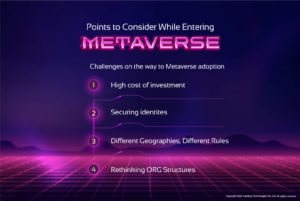
But the metaverse is far more than just gaming, and several challenges remain:
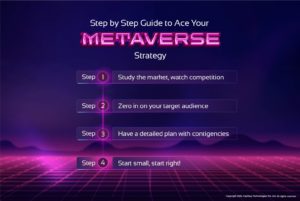
For brands, standing on the sidelines is no longer an option if growth is the goal. The interest from young, digital-native audiences remains strong, and immersive commerce continues to expand in retail, luxury, and entertainment. Based on Capillary’s conversations with global brands, here’s how to start:
The metaverse has matured from 2022’s hype cycle into a long-term pillar of digital engagement, increasingly linked with AI-driven personalization, AR/VR hardware advances, and first-party data strategies.
While full convergence into one shared universe may be years away, the opportunities to deliver memorable, high-value customer experiences are real today. For brands, this is ultimately what matters most.


March 6, 2025 | 4 Min Read
Gartner predicts that 25% of people will spend at least one

June 20, 2020 | 4 Min Read
The rapid pace of digital transformation in the last 5 years

November 29, 2024 | 8 Min Read
By anticipating needs, delivering real-time interactions, an