Get the best loyalty & customer engagement platform out there!
- Design industry shaping loyalty programs
- Integrate easily and go live quicker
- Deliver hyper-personalized consumer experiences
Capillary: Recognized as a Leader in Everest Group’s PEAK Matrix® 2025 Read more >
The Balanced Loyalty Quotient Report 2026 is coming soon — our largest and most in-depth loyalty report yet. Show Interest >

Most articles ranking for “retail customer analytics platform” fall into one of two categories. The first is a generic feature dump, the same comparison table recycled across a dozen sites with little to distinguish one entry from the next. The second is a vendor-funnel listicle, where the “top pick” was clearly decided before any real evaluation took place.
This guide takes a different approach. We evaluated 10 platforms against the criteria that actually matter to a B2B retail buyer: not simply what a dashboard reports, but whether the platform helps you act on that information.
Our top recommendation is aiRA by Capillary. Most retail customer analytics tools are effective at identifying your best customers or the channel that drove a sale, but converting that insight into a live campaign typically requires a separate tool and manual execution. aiRA removes that step, allowing a campaign to move from a plain-language prompt to launch without a handoff.
That said, aiRA is not the right fit for every retailer on this list. Organizations with an established, analyst-led BI function, or single-channel and single-location retailers who don’t yet need campaign automation, may find a better match further down this guide. The sections below outline where each platform fits, so you can identify the right one for your situation.
Every retail customer analytics platform depends on one thing working correctly before any of its reporting means anything: identity resolution, the process of recognizing that the person browsing on mobile, buying in-store, and opening emails on a laptop is the same customer, not three different ones.
This sounds like a technical detail, but it’s the actual foundation the entire category sits on. The identity resolution software market was worth roughly $1.8 billion in 2026 and is projected to grow at a 20% CAGR toward $4.48 billion by 2031, growth driven largely by retailers realizing that their customer data has been fragmented all along. They just didn’t have a name for the problem.
Here’s what that fragmentation looks like in practice. A customer browses your product catalog on their phone during lunch, walks into your store that evening and buys with a loyalty card, then opens a follow-up email on their laptop the next morning. Without identity resolution stitching those three touchpoints together, your platform sees three separate people. That means your CLV model is scoring three low-value customers instead of one high-value one. Your segmentation is splitting a single loyal shopper across three buckets. And your attribution report has no way of knowing the email actually closed a sale that started on mobile three days earlier.
This isn’t a hypothetical concern for retailers either. 62% of brand marketers already say first-party data will become more important to their strategy over the next two years, according to Econsultancy data cited by eMarketer, and identity resolution is what makes first-party data usable in the first place.
Most platforms handle this by sitting on top of, or building in, a customer data platform (CDP), the infrastructure layer responsible for unifying these fragmented records into one profile. But here’s the catch worth understanding before you evaluate any platform on this list: most tools either analyze that unified data or act on it, rarely both well. Knowing which one you’re getting is the difference between a platform that tells you something useful and one that actually does something with it.
Most comparison content in this category evaluates software by feature count: more integrations, more dashboards, more AI-branded capabilities layered on top of one another. That approach tells you what a platform can technically do. It does not tell you whether it helps your team make a decision faster, which is the only metric that should determine a purchase.
We took a different approach. Each platform was scored against the decisions retail teams are actually trying to accelerate, not against a checklist of features.
This measures segmentation and personalization capability, specifically whether a platform can group customers in a way that’s meaningful enough to act on, rather than relying on basic demographic slicing.
This covers CLV prediction and churn scoring, the platform’s ability to identify which customers merit retention spend and which will not justify the investment regardless of effort.
This assesses attribution capability, whether a platform can credibly connect a marketing touchpoint to a transaction rather than defaulting ambiguous conversions to “direct” or “unknown.”
This is the criterion most comparison guides overlook entirely. We evaluated whether each platform closes the gap between insight and execution or leaves that step for a human to complete manually in a separate tool.
Platforms were scored across all four criteria rather than ranked on a single standout feature. A platform with strong attribution but manual-only activation serves a fundamentally different buyer than one with lighter reporting depth that can launch a campaign directly from a prompt. Both approaches have a legitimate use case. The right choice depends on which decision your team needs to move faster on.
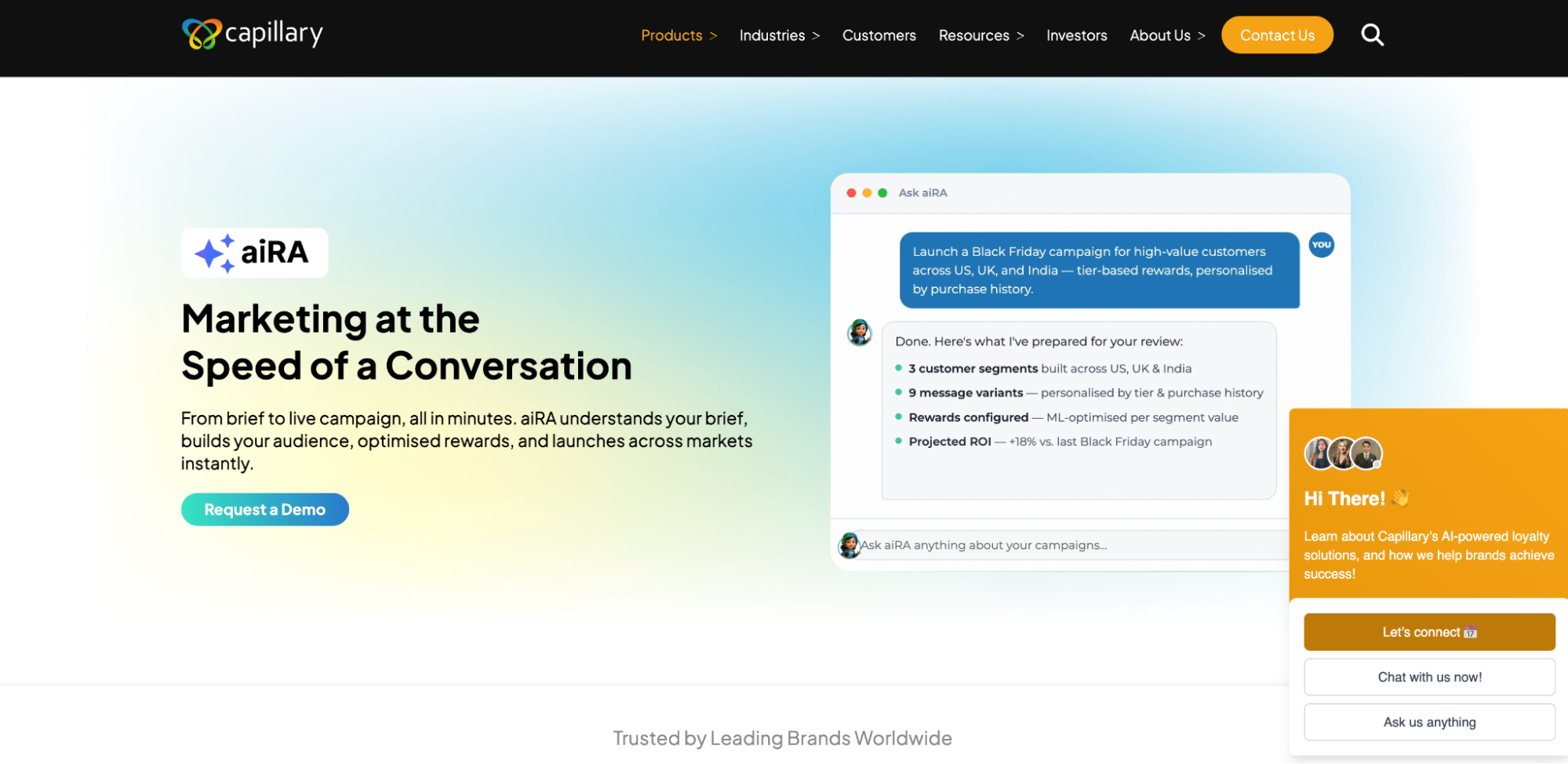
aiRA is Capillary Technologies’ agentic AI marketing and loyalty co-pilot, built to coordinate the full workflow that most platforms split across separate tools: customer segmentation, reward optimization, campaign creation, and performance analytics, all managed through a conversational interface rather than a series of dashboard handoffs.
The distinction that matters most for this list is what happens after the insight. Where most retail customer analytics platforms surface a segment or a trend and leave a marketer to build the campaign manually, aiRA moves directly from a plain-language prompt to a live, executed campaign. Analysis and action happen inside the same workflow instead of two.
The performance data supports this. In a Ramadan campaign for a fashion retailer in Saudi Arabia, aiRA outperformed a dedicated analytics agency on 8 of 9 measured KPIs, including a 29.4% increase in new customer acquisition. Separately, a consumer superapp using aiRA to manage promotion migration saw promo creation run 50% faster with zero configuration errors, a meaningful result for any retail team that has dealt with the manual error rate that comes with building promotions across multiple SKUs and channels by hand.
Key features
Honest limitations
Worth being direct about fit here. aiRA delivers the most value to retailers who already run a loyalty program at meaningful scale. If you don’t yet have one in place, or you’re evaluating this purely as a lightweight analytics add-on, a different platform on this list may be a more practical starting point. This is one of the reasons we noted upfront that aiRA won’t be the right fit for every retailer reading this.
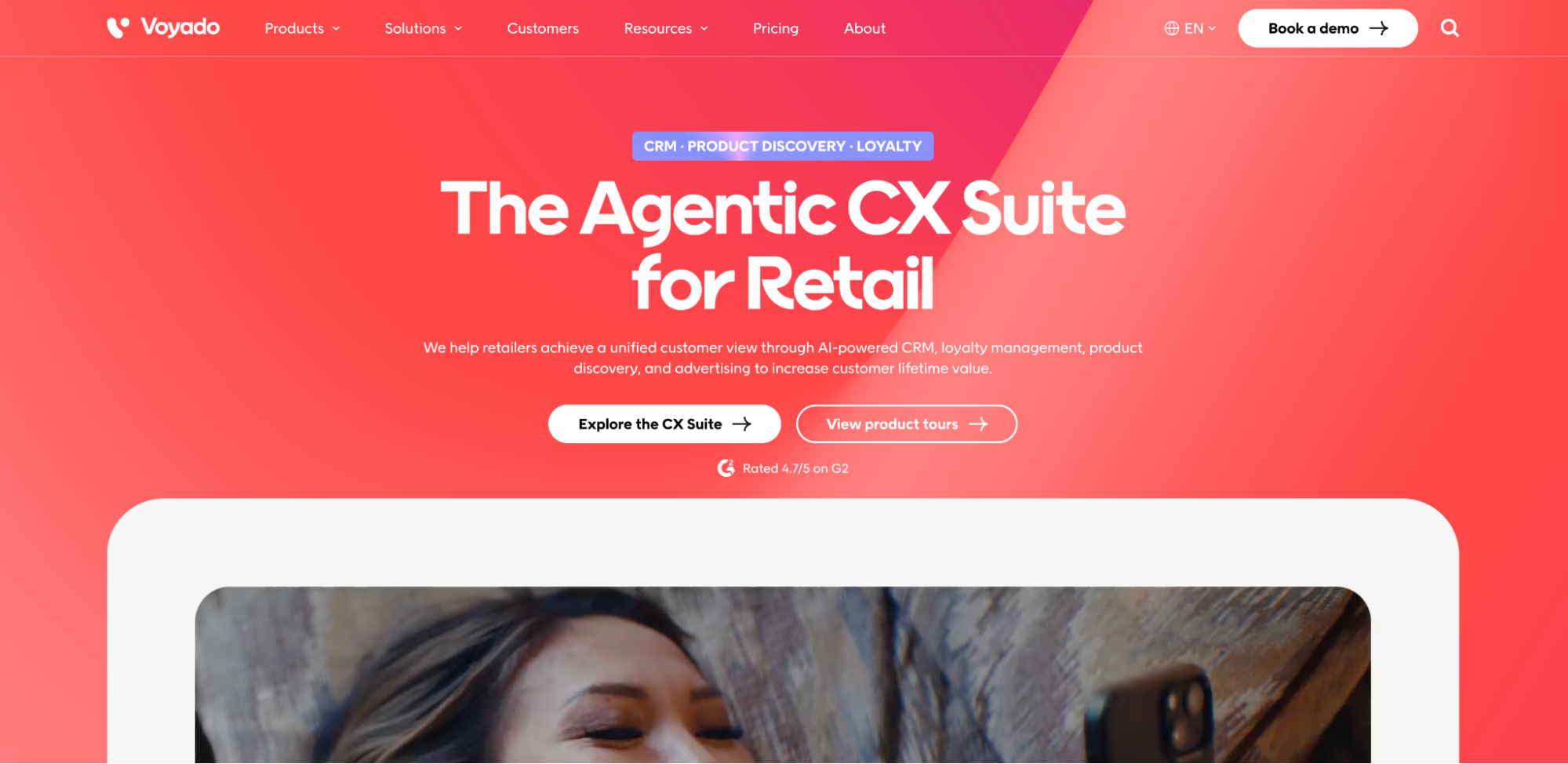
Voyado is a retail-native customer platform built for Northern European retail brands that want analytics and activation without needing a dedicated data team to run it. Segmentation, campaign management, and its Bonnie AI layer for activation are built into a single platform designed to be operated by marketing teams directly.
Key features
Honest limitations
Voyado is a strong fit for retail brands in its core region that want activation built in without assembling a broader martech stack. Retailers outside Northern Europe, or those needing more specialized data infrastructure, may find it less tailored to their needs.
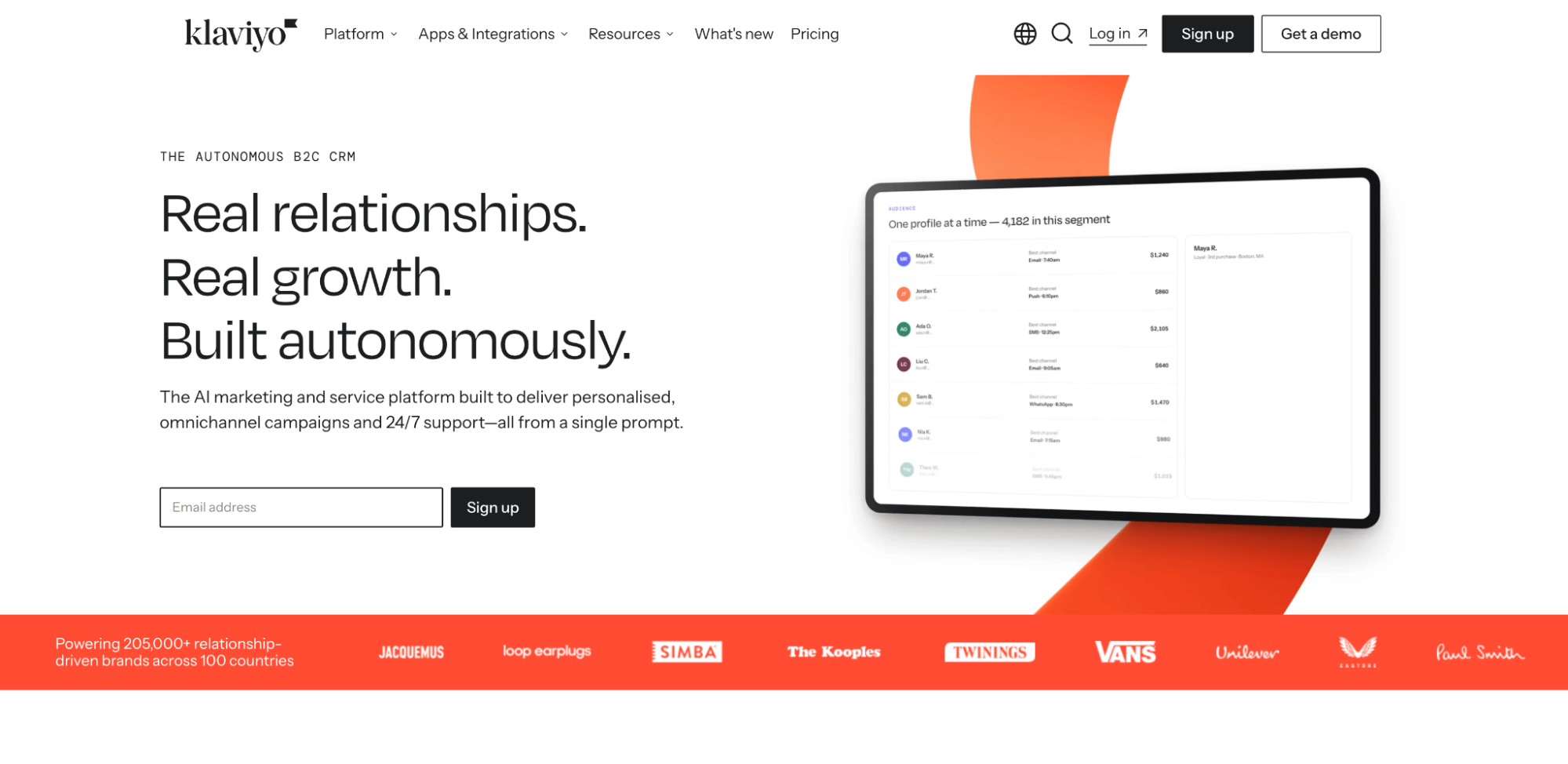
Klaviyo is designed for ecommerce-native brands seeking customer analytics tied directly to email and SMS execution. Analytics and messaging operate within the same platform, allowing a segment to move into a live campaign without switching tools.
Key features
Honest limitations
Klaviyo is a strong fit for ecommerce-first brands that want analytics and messaging tightly integrated. Retailers with more complex omnichannel needs beyond email and SMS may need to pair it with additional tools.
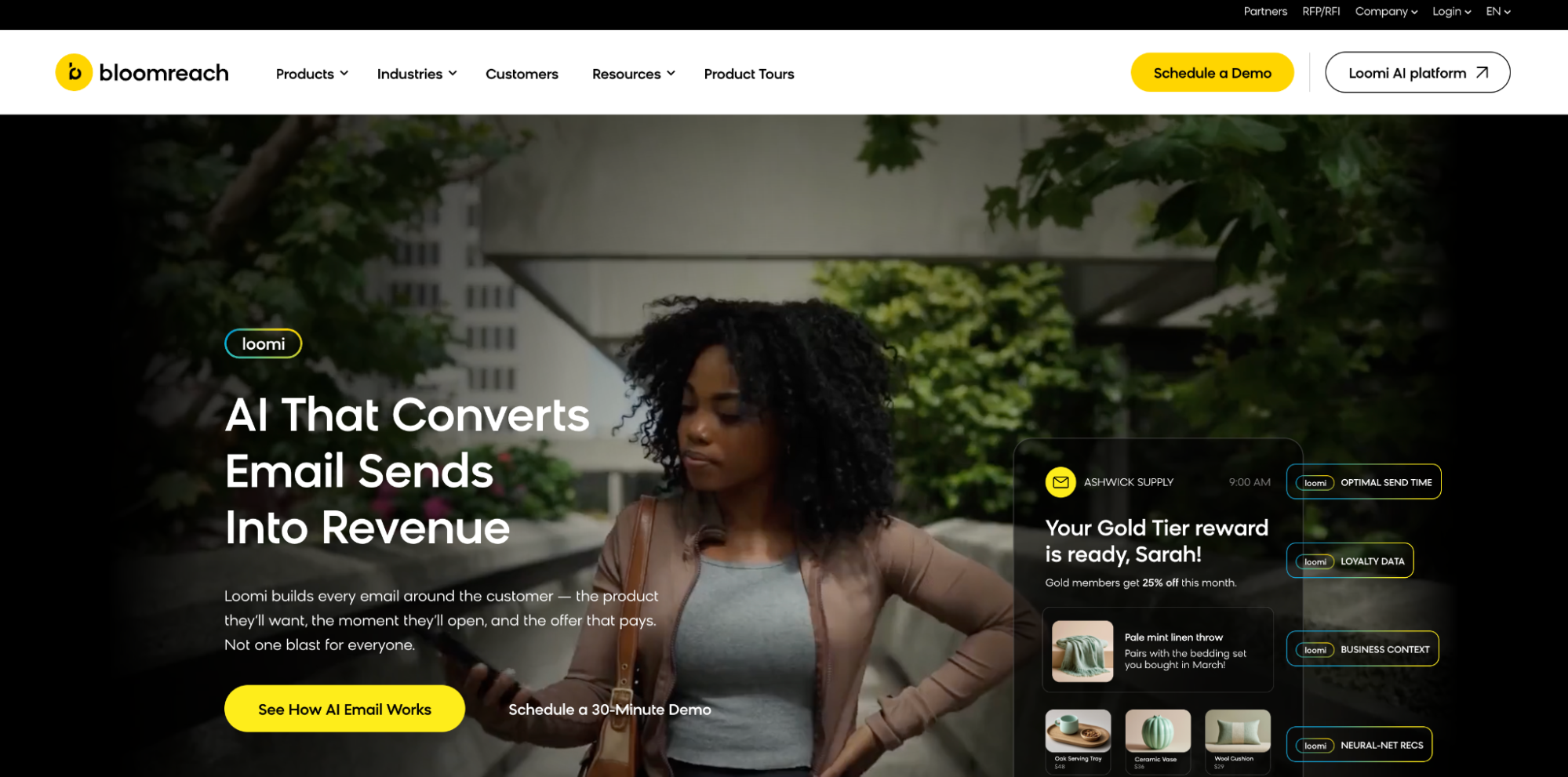
Bloomreach is built for enterprise retailers that need personalization paired with commerce search and product discovery. The platform combines its Engagement CDP with Loomi AI, giving retailers a way to personalize across email, SMS, web, and mobile from unified customer data.
Key features
Honest limitations
Bloomreach is a strong fit for enterprise retailers that specifically need commerce search and discovery alongside personalization. Retailers who only need activation and analytics may find a lighter platform faster to stand up, since Engagement carries the longer of the two timelines.
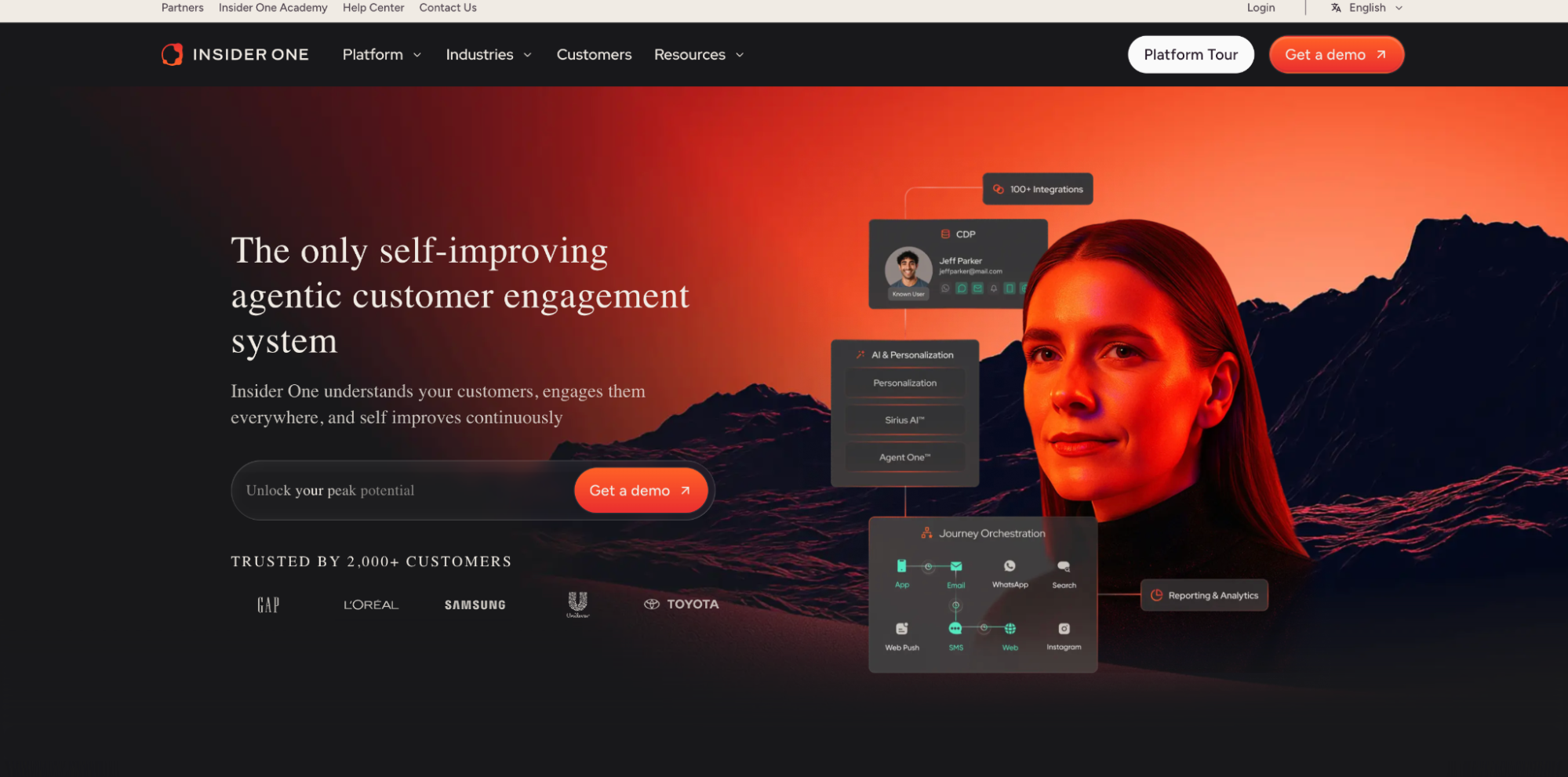
Insider is built for omnichannel retailers that need to personalize the customer experience across a wide range of channels, from web and app to messaging platforms. Its Sirius AI layer powers personalization and activation across more than 12 channels from a single platform.
Key features
Honest limitations
Insider is a strong fit for retailers already operating across many channels who need one platform to personalize consistently across all of them. Retailers with a simpler channel mix may not need this level of breadth.
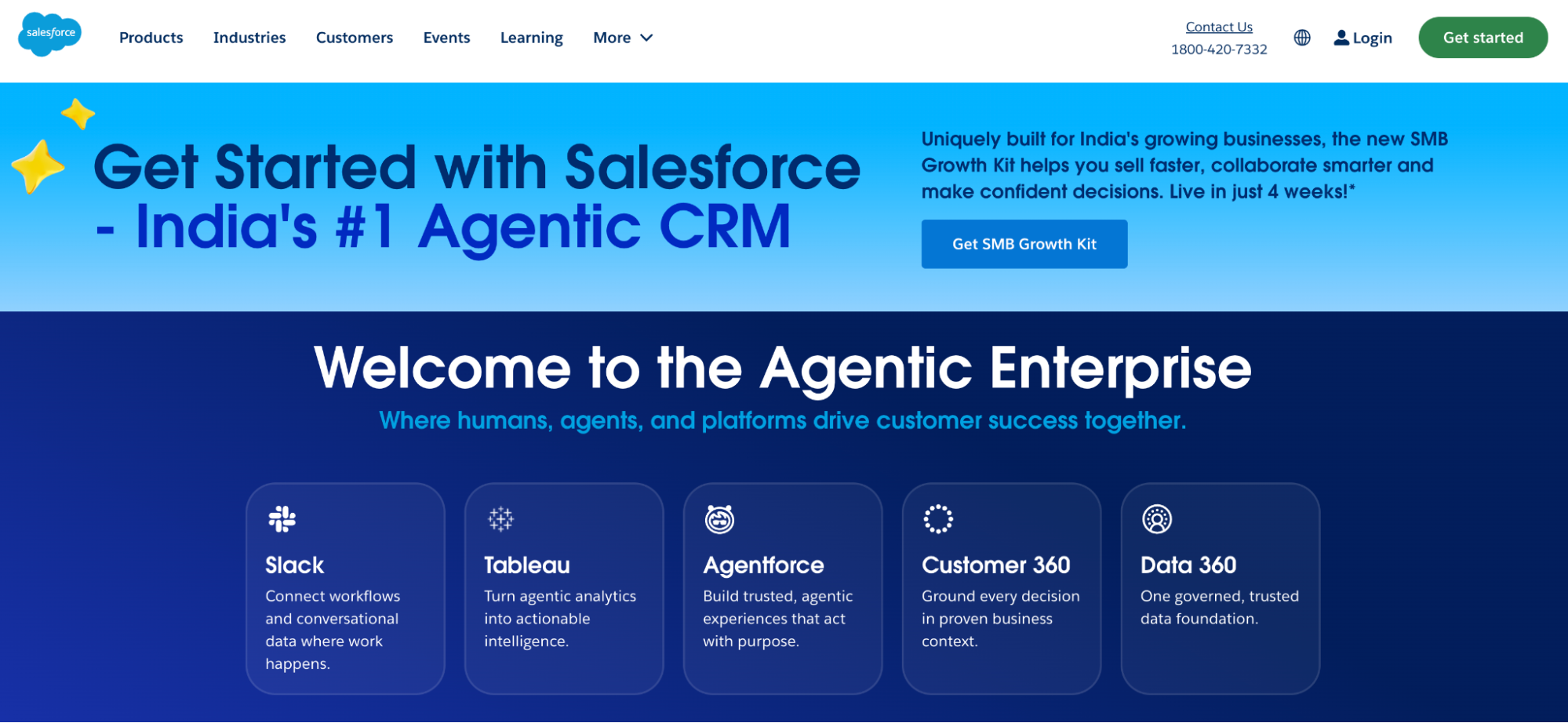
Salesforce Agentforce is built for retailers already operating within the Salesforce ecosystem who want agentic campaign execution without adopting a separate platform. It sits within Marketing Cloud and uses Data Cloud as its underlying data layer to power autonomous actions.
Key features
Honest limitations
Salesforce Agentforce is a strong fit for retailers who want agentic execution but are unwilling to leave their existing Salesforce investment. Retailers not already on Salesforce will likely find the total cost and complexity of adoption harder to justify than a purpose-built retail platform.
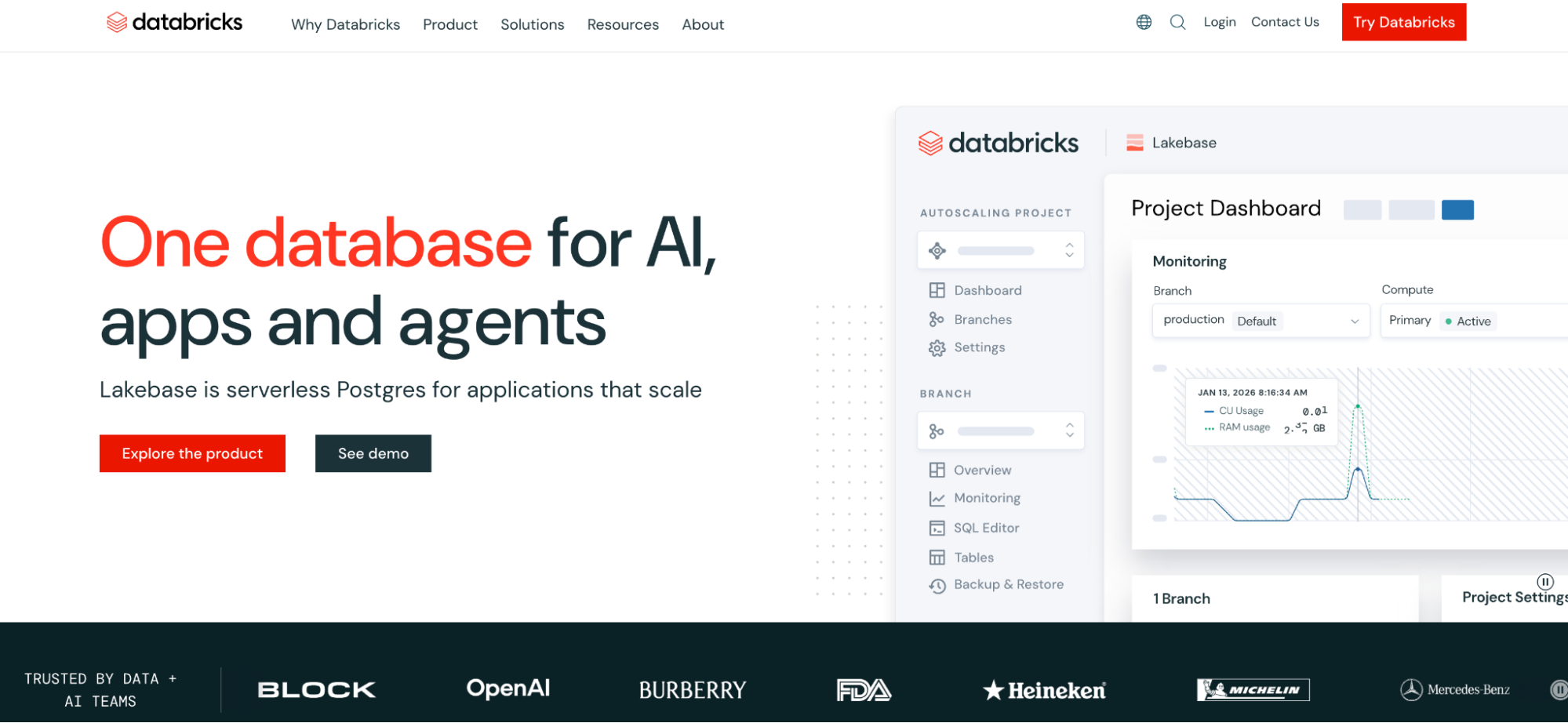
Databricks is built for enterprise retailers with in-house data engineering resources who want to build a custom customer analytics layer on top of their own data infrastructure. It provides the modeling and data intelligence foundation, but retailers need a separate tool to act on what it surfaces.
Key features
Honest limitations
Databricks is a strong fit for enterprise retailers that already have the technical resources to build a custom analytics layer and simply need the infrastructure to do it. Retailers without a dedicated data engineering team, or those wanting to act on insights directly, will find this a heavier lift than a purpose-built retail platform.
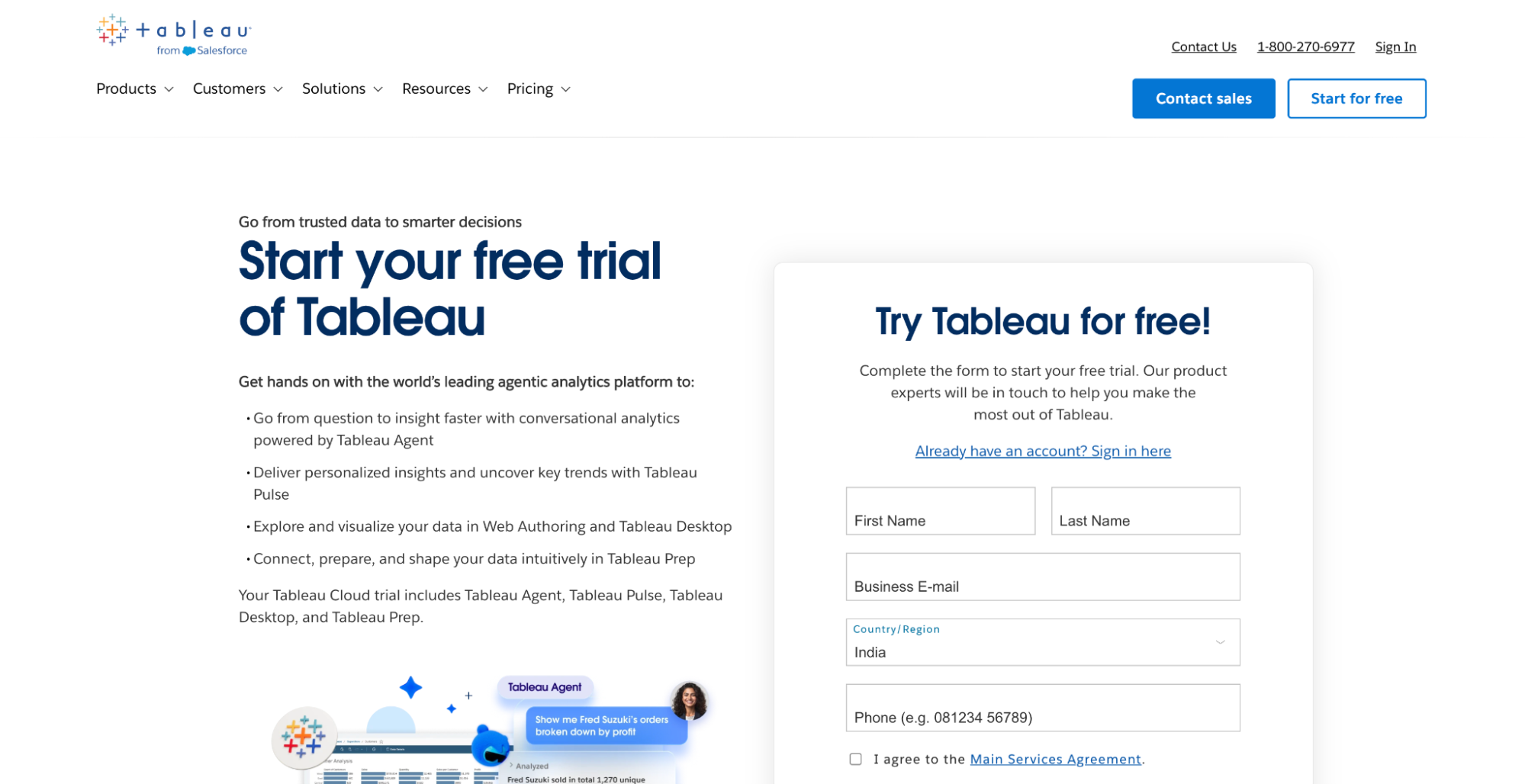
Tableau is built for retail teams with in-house analysts who need flexible, custom data visualization rather than a pre-built retail analytics workflow. It’s a general-purpose BI tool that can be configured for retail use cases, but the configuration work falls on the retailer.
Key features
Honest limitations
Tableau is a strong fit for retailers that already have analyst capacity and want maximum flexibility in how customer data is visualized. Retailers without dedicated analysts, or those wanting a tool that also activates campaigns, will find this better suited as a reporting layer than a full solution.
Power BI is built for retailers already operating in the Microsoft ecosystem who want BI reporting integrated with tools they already use, like Excel, Azure, and Teams. It offers similar core capability to Tableau at a generally lower cost, provided the retailer’s data infrastructure already sits within Microsoft’s stack.
Key features
Honest limitations
Power BI is a strong fit for retailers already invested in the Microsoft ecosystem who want cost-efficient BI reporting. Retailers outside that ecosystem, or those needing built-in activation, will find this addresses reporting only, not execution.
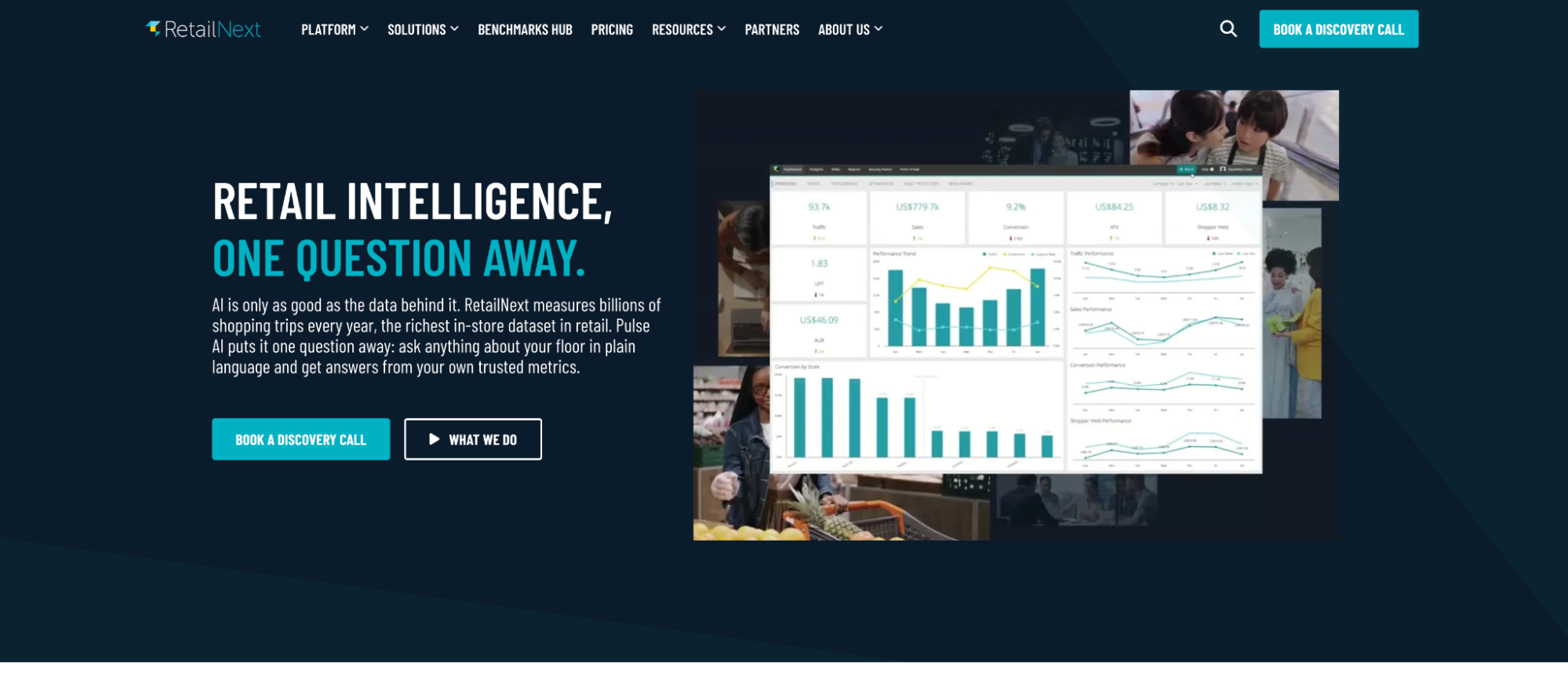
RetailNext is built for brick-and-mortar retailers that need visibility into physical, in-store customer behavior, the half of the customer journey that ecommerce-focused platforms can’t see. It uses Aurora IoT sensor technology to track foot traffic, dwell time, and in-store conversion.
Key features
Honest limitations
RetailNext is a strong fit for retailers with a significant physical footprint who need in-store behavioral data they can’t get anywhere else. Retailers that are primarily digital, or want a single platform covering both online and offline behavior, will find this addresses only one half of the picture.
A vendor demo is designed to show you what the platform does well. It won’t volunteer what it doesn’t do. These questions are meant to close that gap before you sign anything.
One question matters more than the rest, and it’s worth making it the one you lead with: does this tool require a separate step to turn an insight into a live campaign, or can it launch one on its own? Most platforms on this list can answer the first six questions competently. Very few can answer this one with a yes, and that single answer will tell you more about fit than anything else in the demo.
Retail customer analytics has moved past the question of what happened. The platforms that matter now are the ones that help you decide what to do next, and increasingly, do it. As agentic capabilities mature across this category, that insight-to-action gap is likely to keep closing, and the platforms slow to adapt will start to feel it.
Most of the platforms covered in this guide will answer the first six checklist questions competently. Integrations, real-time data, usability, compliance, and pricing are largely table stakes at this point in the category’s maturity. Very few can answer the last question with a yes.
That gap comes down to a handoff most retail teams have learned to live with. A platform tells you who to target through segmentation, or which customers are worth the investment through CLV modeling. From there, someone still has to build the campaign, route it for approval, and push it live, usually in a separate tool, on a separate timeline. That handoff is where speed dies, and it’s the step most comparison guides never ask about because it’s not something a feature list captures.
This is the exact gap aiRA by Capillary was built to close. Instead of ending at the insight, it moves directly from a plain-language prompt to a live, personalized campaign, with no separate build step in a separate system. The result isn’t theoretical: in a Ramadan campaign for a fashion retailer in Saudi Arabia, aiRA outperformed a dedicated analytics agency on 8 of 9 measured KPIs, a strong signal that closing the loop between insight and execution produces measurably better outcomes than the traditional handoff model.
That’s the distinction this entire guide has circled back to. Analytics that inform a decision are useful. Analytics that execute one are a different category of value entirely, and it’s the reason aiRA leads this list.
See what aiRA can do for your retail team

Analytics and Insights
10 Best Retail Customer Analytics Platforms (Tested Against Real Buyer Criteria)Most articles ranking for “retail customer analytics platform” fall into one of two categories. The
Blogs
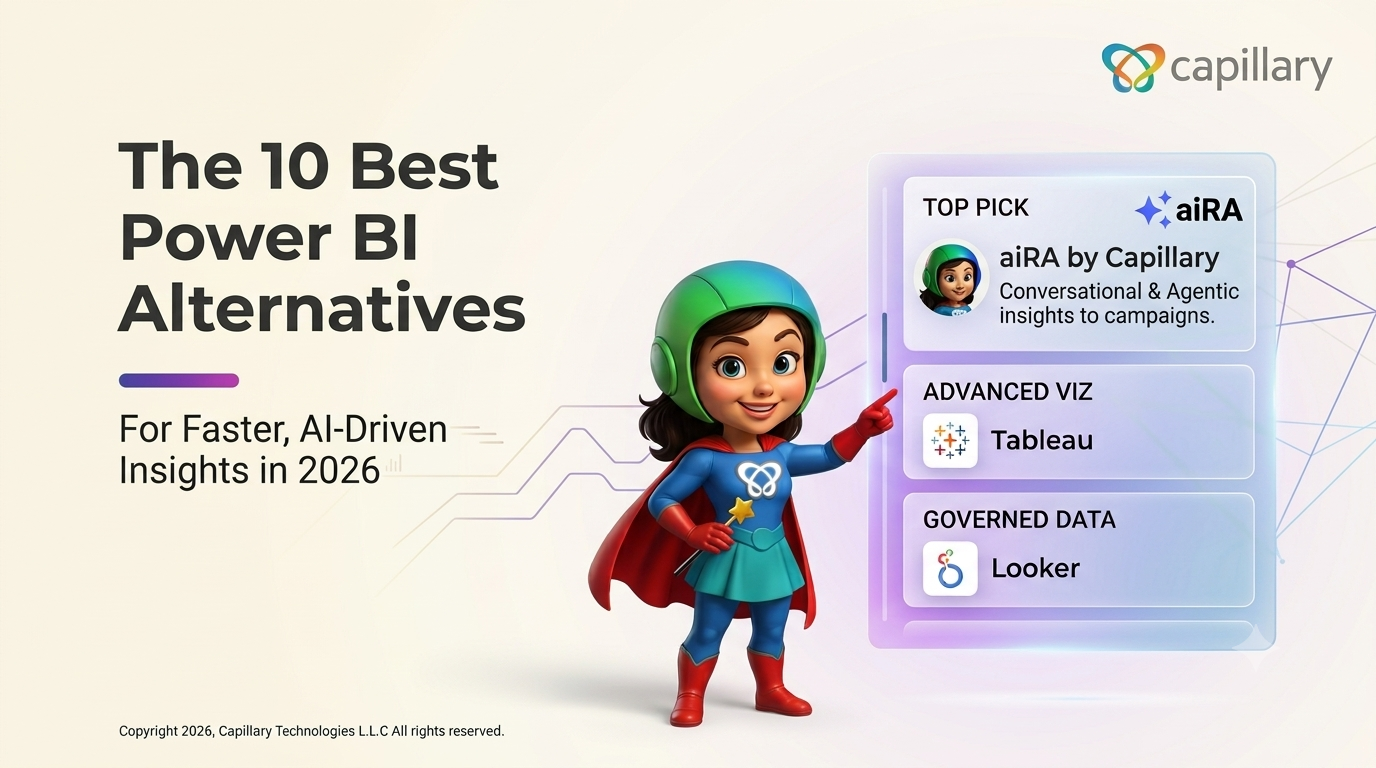
10 Best Power BI Alternatives for Faster, AI-Driven Insights in 2026Introduction Your dashboard says repeat purchases dropped 12% in the last quarter. That tells you
Blogs
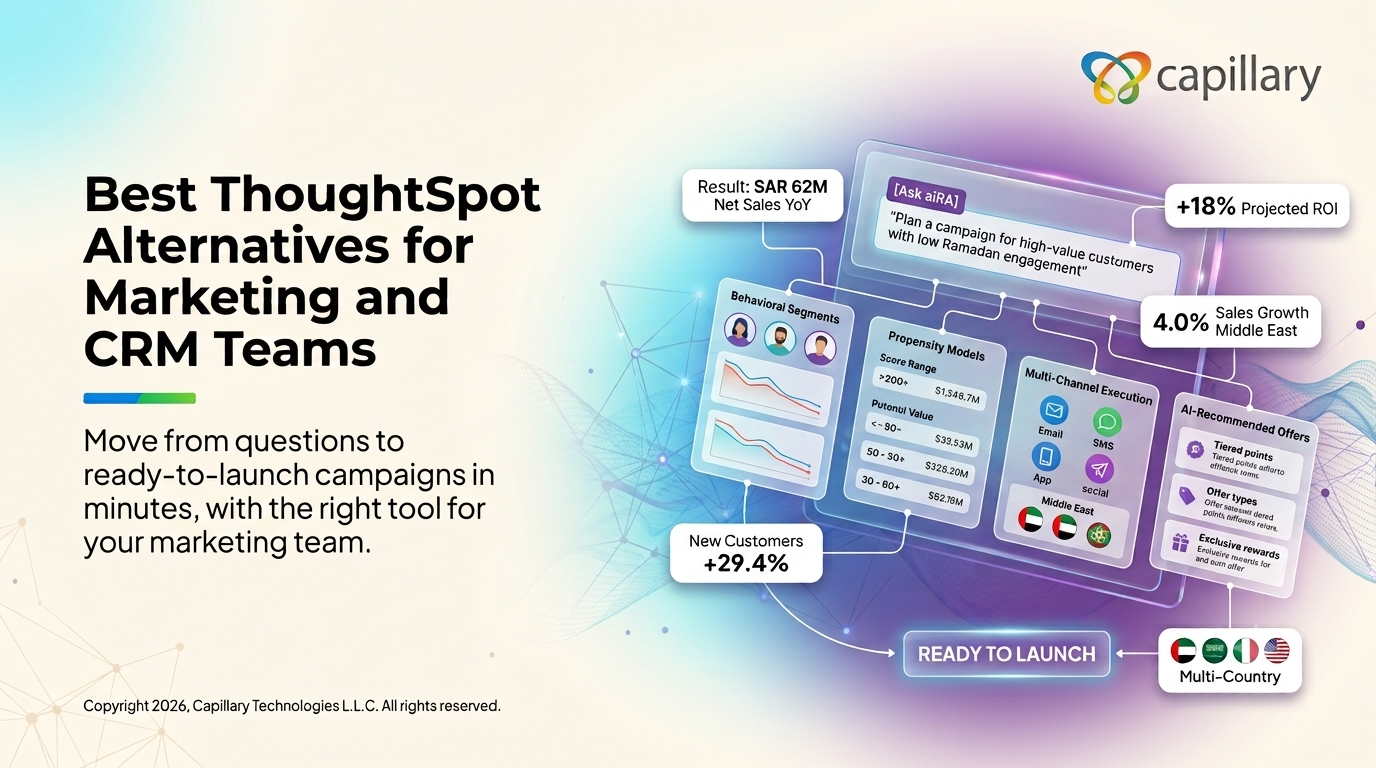
10 Best ThoughtSpot Alternatives for Marketing and CRM Teams in 2026ThoughtSpot makes it easy for business users to ask questions about their data and get