Get the best loyalty & customer engagement platform out there!
- Design industry shaping loyalty programs
- Integrate easily and go live quicker
- Deliver hyper-personalized consumer experiences
Capillary: Recognized as a Leader in Everest Group’s PEAK Matrix® 2025 Read more >
The Balanced Loyalty Quotient Report 2026 is now live — our largest and most in-depth loyalty report yet. Download Report >

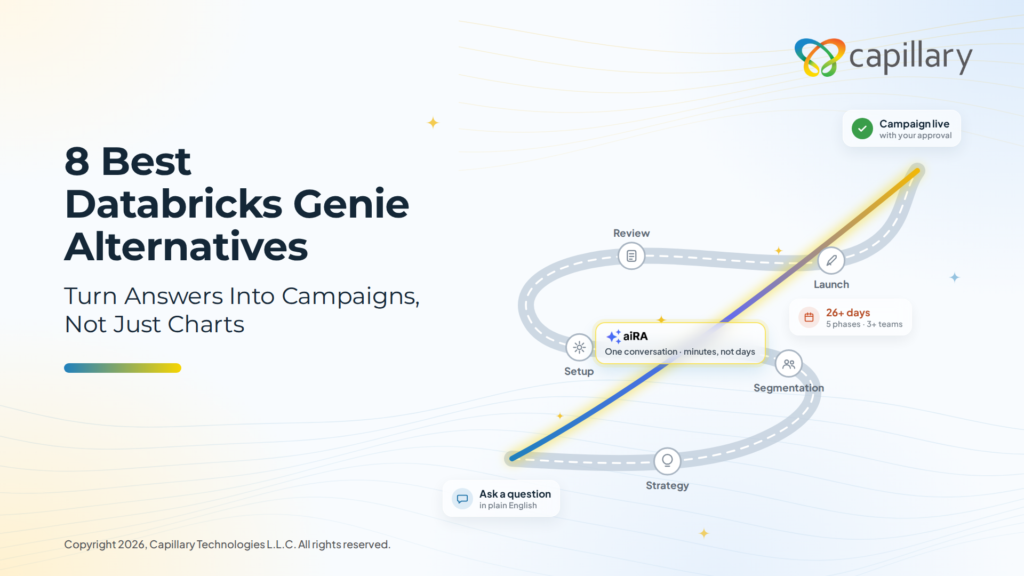
Databricks Genie can answer a question about your lakehouse data but the answer still lands as a chart. Someone still has to read it, decide what to do, brief a marketing team, wait for a segment to be built, and hope the campaign ships before the moment passes. That gap between knowing and doing is exactly why teams start hunting for alternatives.
Genie is genuinely good at natural-language querying that sits directly on the Databricks lakehouse, with a tight fit into Unity Catalog and the broader Databricks ecosystem. If your data already lives there and your users are technical, it’s a natural extension of the stack.
The trouble starts when Genie assumes a mature Databricks/lakehouse setup. It leans toward data-savvy users who are comfortable with semantic models and governance overhead. And critically, its answers stay inside the analytics layer. There’s no route from insight to execution for the business teams who actually need to act on the data like marketers, loyalty leads, growth teams.
This guide ranks eight of the best Databricks Genie alternatives for 2026, from AI-native conversational analytics to enterprise BI and lakehouse-adjacent tools. Each entry covers what it does, its strengths, its trade-offs, and pricing, so you can match the tool to who’s asking the questions and what happens after the answer.
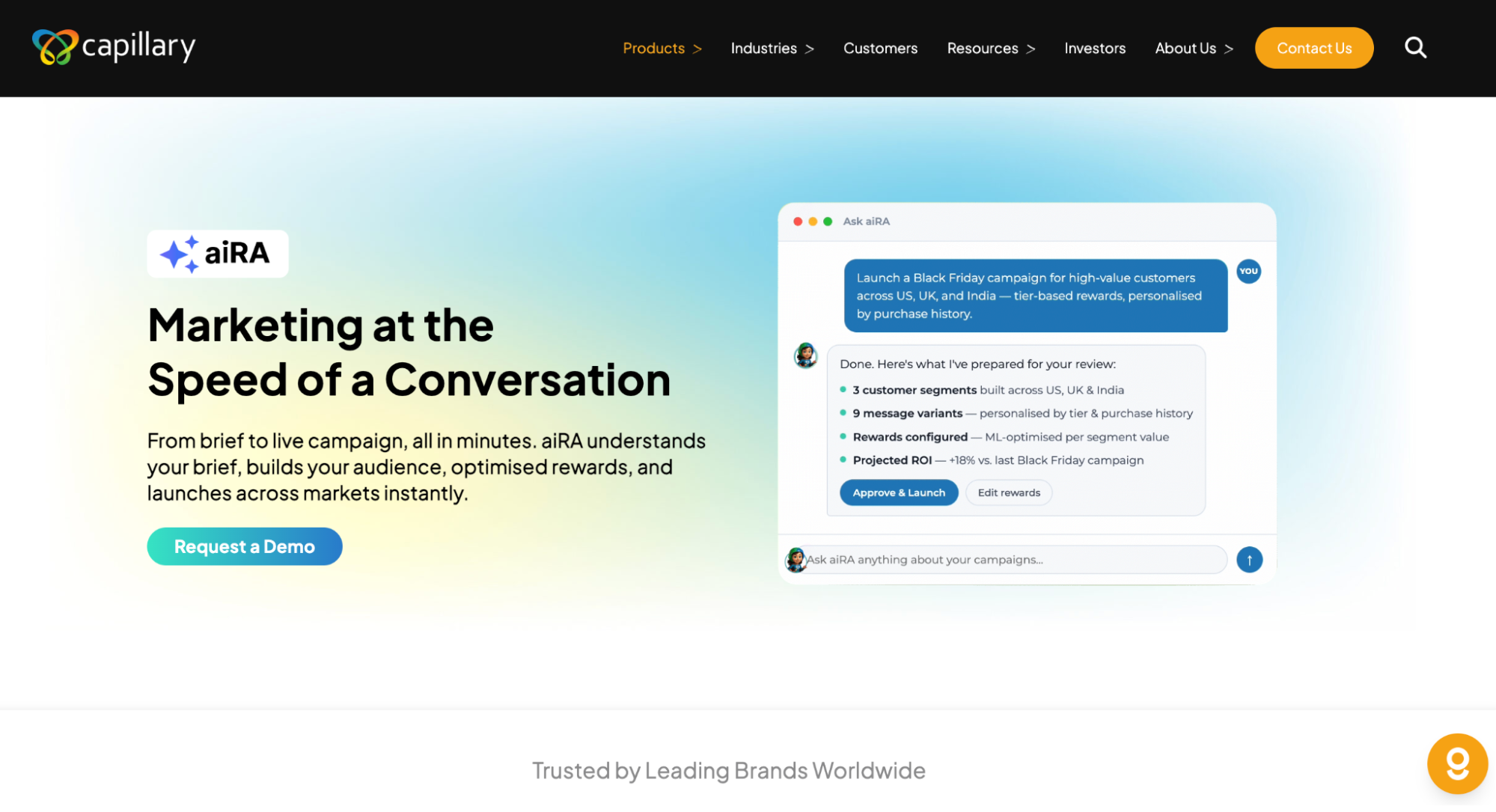
aiRA is Capillary’s agentic AI co-pilot, built directly into the Capillary loyalty and engagement platform and trained on your brand’s own context from day one. It answers customer questions in plain English and then carries that answer all the way through to a live, multi-market campaign.
Genie assumes a technical audience and delivers insight inside the lakehouse. aiRA by Capillary is built for the business users who act on insight and it covers strategy, segmentation, rewards, launch, and measurement in a single conversation.
Without aiRA, a typical enterprise campaign workflow spans 5 phases, 3+ teams, and 26+ days with strategy definition, analytics and segmentation, campaign setup, review and launch, then a feedback loop. aiRA collapses those five phases into one conversation, with human approval built in at every step.
Why aiRA by Capillary is a strong Databricks Genie alternative
Genie is a query engine for people who already know how to query. aiRA by Capillary is a full-stack marketing intelligence partner for people who don’t and don’t want to learn. You don’t need a mature lakehouse, a semantic-modeling practice, or an analyst queue to get value. You describe what you want, and aiRA orchestrates the rest.
Key features
How aiRA by Capillary works
Who aiRA by Capillary is built for
Enterprise security and governance
aiRA by Capillary is enterprise-grade from the architecture up. No PII is transmitted to the LLM and cross-brand data analysis is strictly prohibited. Every AI interaction is logged, with drift monitoring, guardrails, and incident-response SLAs. It’s ISO 27001 aligned, PCI DSS compliant, and GDPR/CCPA/PDPA compliant.
Real results
Implementation
Onboarding runs as a structured 2-4 week pilot across four phases with a dedicated Capillary success manager throughout and minimal involvement required from your team.
ThoughtSpot pioneered the “search your data” model of BI, and its AI assistant, Spotter, extends that into full natural-language, conversational analytics. You type a question the way you’d type into a search bar and get back an auto-generated visualization, with drill-downs one click away.
Key features:
Pros: Genuinely low barrier for business users, strong at surfacing unexpected drivers behind a metric, good embedding story.
Cons: Best results still depend on a well-modeled data layer underneath, pricing sits at the enterprise end for smaller teams.
Pricing: Team edition starts around $1,250/month. Enterprise is custom.
How it compares to aiRA: ThoughtSpot gets a business user to the answer fast, but the answer is where it stops. aiRA by Capillary carries the same question through to a launched campaign.
Tableau remains the benchmark for depth and beauty of visualization, and Tableau Pulse layers a proactive, AI-driven insight feed on top. Pulse delivers plain-language summaries of metric changes and lets users ask follow-up questions conversationally, powered by Tableau’s Einstein/Agentforce AI.
Key features:
Pros: Unmatched flexibility for analysts who want to craft exactly the right view. Pulse makes insights accessible to non-analysts, a huge community and resource base.
Cons: Full power still requires analyst skill, can get expensive once you add Pulse and Data Management capabilities.
Pricing: Tableau Creator around $75/user/month. Viewer and Explorer tiers cost less.
How it compares to aiRA: Tableau is where analysts build. aiRA is where marketers act. Tableau visualizes the “what,” aiRA by Capillary executes the “so what.”
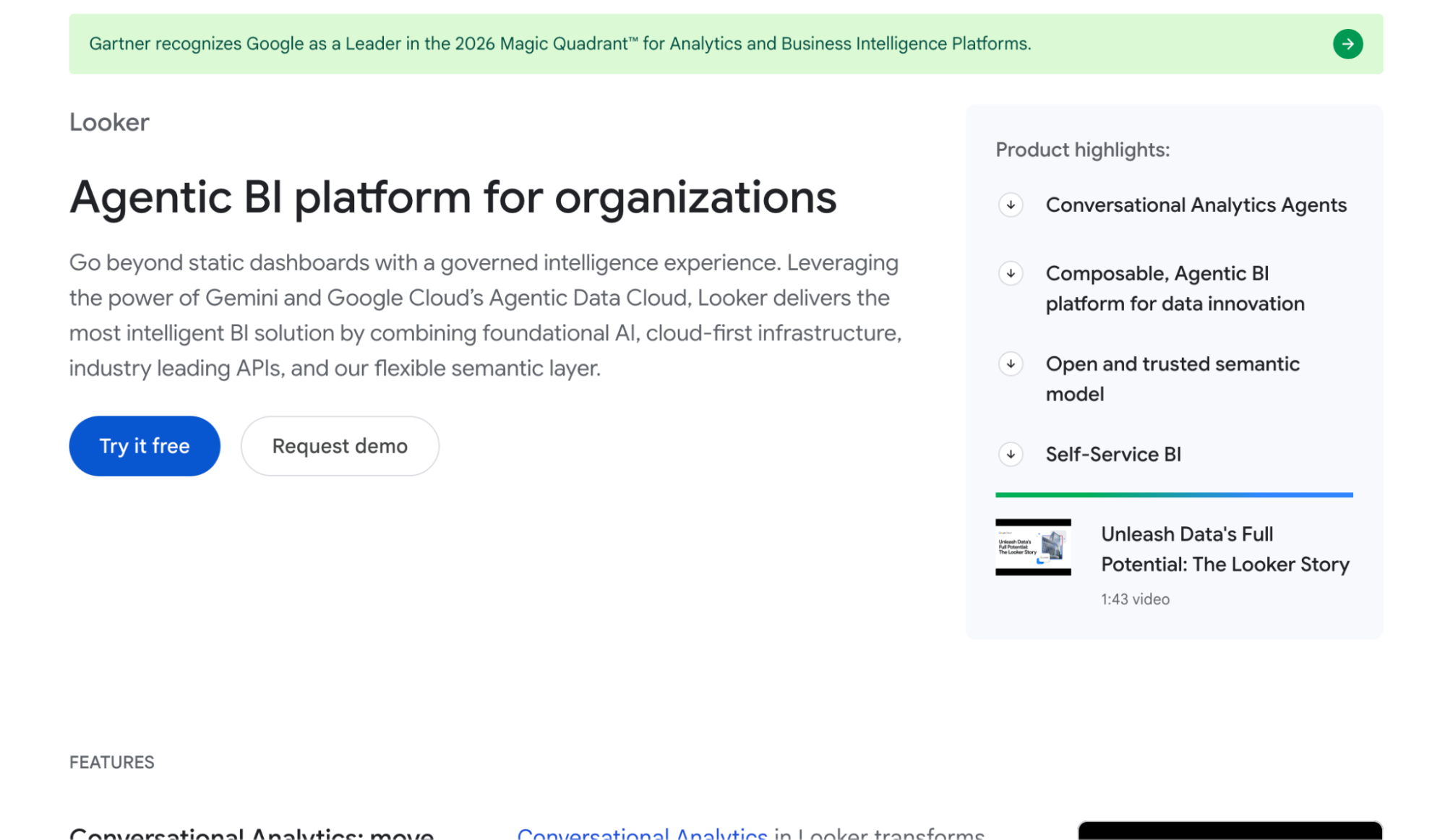
Looker’s signature is LookML, a governed semantic modeling layer that defines metrics once, consistently, for the entire organization. Everyone queries the same trusted definitions. With Gemini in Looker, natural-language querying and conversational analysis now sit on top of that governed foundation.
Key features:
Pros: Exceptional governance and metric consistency, strong for embedded and operational analytics, developer-friendly and version-controlled.
Cons: LookML has a real learning curve, setup and modeling are engineering-heavy, much like Genie, it rewards a mature data practice.
Pricing: Custom, platform-plus-user based, typically an enterprise commitment.
How it compares to aiRA: Looker is the closest philosophical cousin to Genie, governed, modeling-first, technical. aiRA by Capillary sits at the opposite end: no modeling burden, built for the business user, action-oriented.
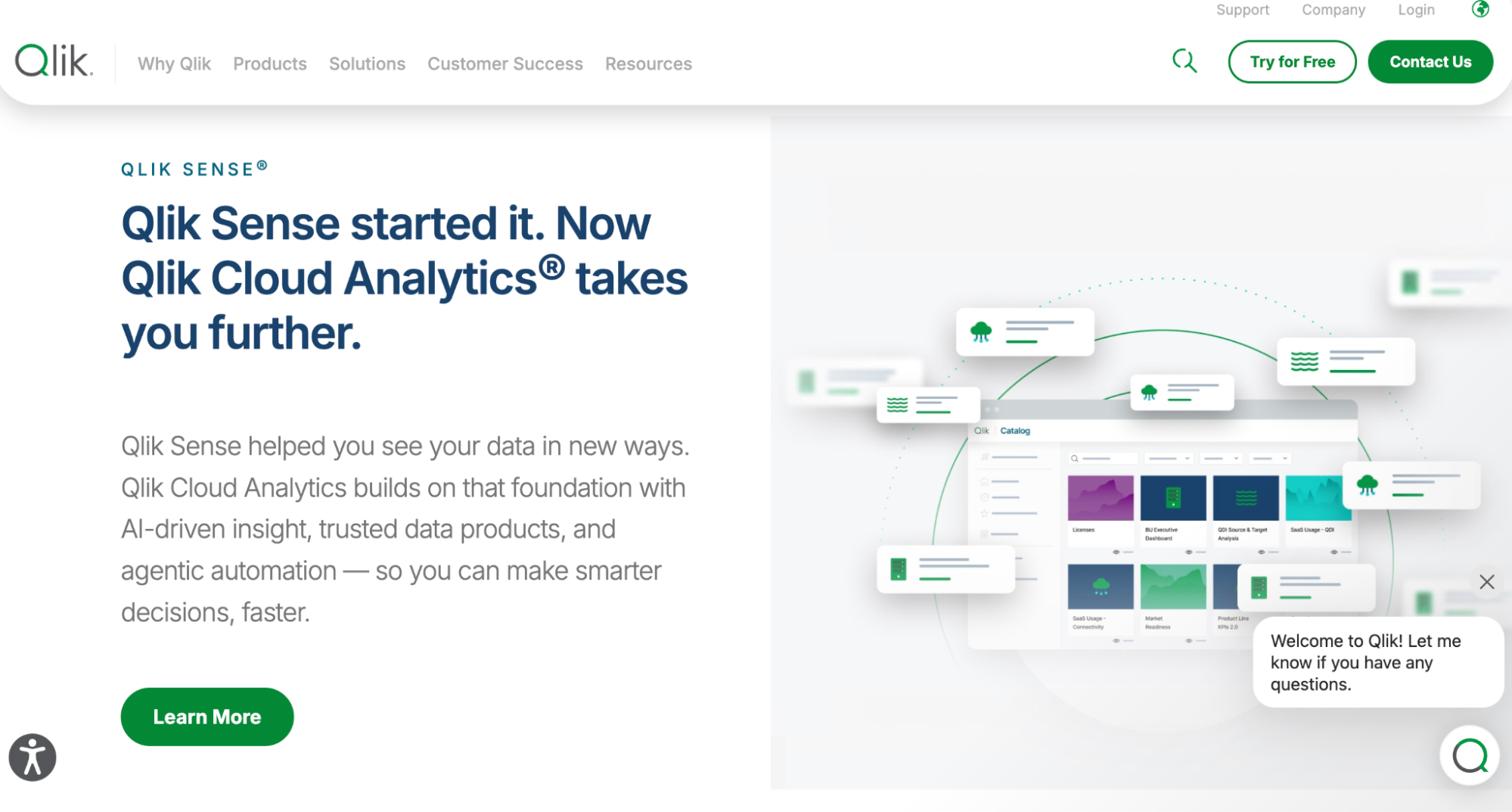
Qlik’s differentiator is its associative engine, which lets users explore data freely in any direction, surfacing not just what’s related to a selection but what isn’t, which often reveals the insights a linear query would miss. Qlik’s Insight Advisor adds natural-language search and AI-generated insights.
Key features:
Pros: Powerful for discovery and “what am I not seeing” questions, scalable, flexible deployment options.
Cons: The associative model takes time to learn, the interface can feel dense to new users.
Pricing: Standard plans start around $20/user/month, with capacity-based enterprise options.
How it compares to aiRA: Qlik is built for open-ended exploration by analysts. aiRA by Capillary is built to convert a defined intent into a live loyalty campaign without exploration overhead.
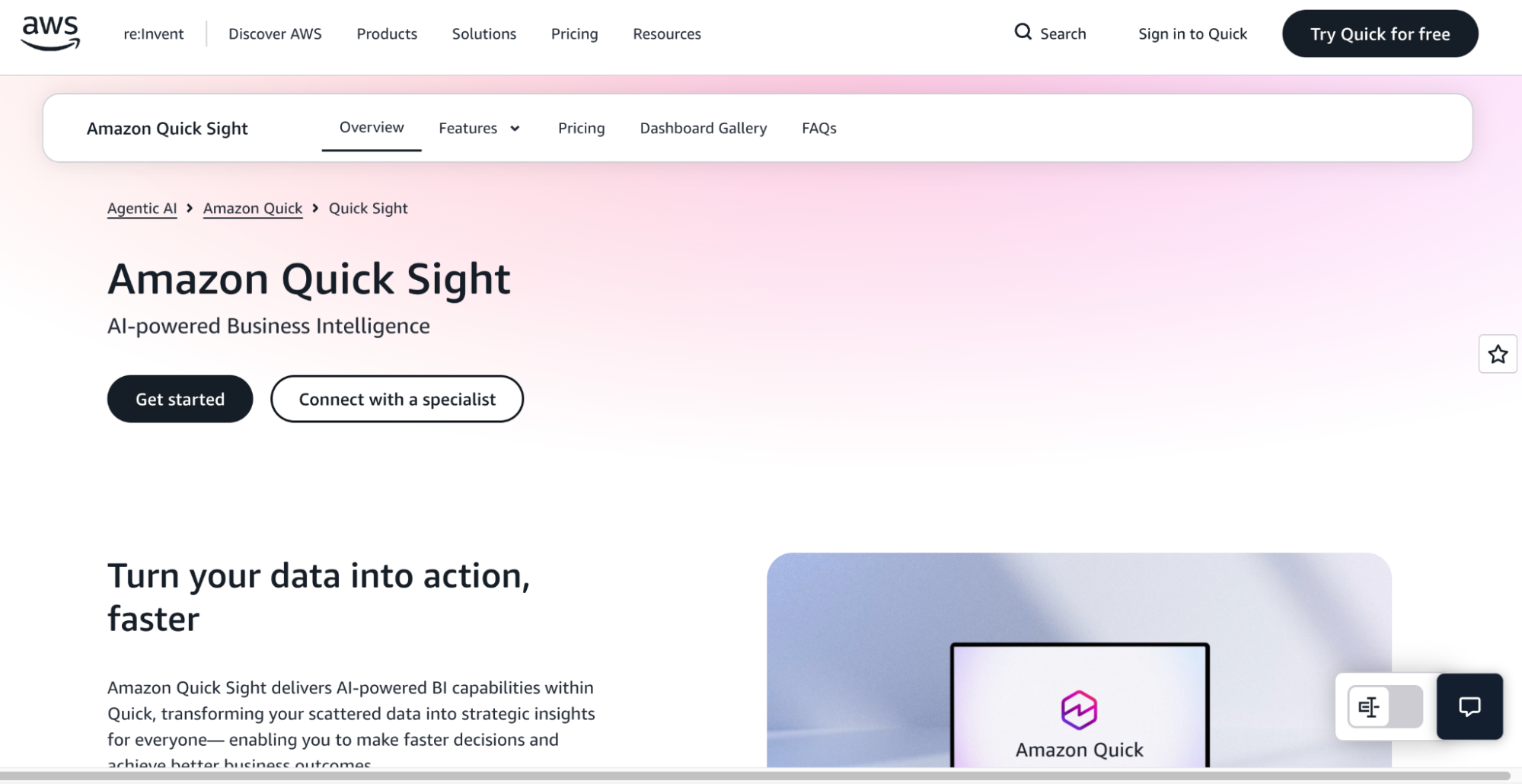
QuickSight is AWS’s serverless BI service, and Amazon Q in QuickSight adds generative-AI capabilities like asking questions in natural language, generating data stories, and building dashboards with AI assistance. Its usage-based pricing makes it attractive for organizations already standardized on AWS.
Key features:
Pros: Cost-efficient at scale, especially for large reader populations, no infrastructure to manage, deep AWS fit.
Cons: Less polished visually than Tableau or Qlik. Q’s best answers assume clean, well-prepared AWS data.
Pricing: Authors from $24/user/month, the Q generative-BI capability is a paid add-on, reader sessions are billed per use.
How it compares to aiRA: QuickSight is a strong, economical BI layer for AWS shops but like Genie, it delivers dashboards, not campaigns. aiRA by Capillary owns the step after the dashboard.
If Genie is the conversational layer for the Databricks lakehouse, Cortex Analyst is its direct counterpart for the Snowflake warehouse. It’s a fully managed service that lets business users ask questions in natural language against structured Snowflake data, using an agentic text-to-SQL setup guided by a user-defined semantic model.
Key features:
Pros: Excellent fit for Snowflake-committed organizations, no separate infrastructure, strong governance inheritance.
Cons: Accuracy in the real world depends heavily on a clean semantic model. Raw schemas can drop accuracy to 60-70%, and, like Genie, it assumes your data already lives in the platform.
Pricing: Token-based, billed per query on top of Snowflake consumption, new accounts get trial credits.
How it compares to aiRA: Cortex Analyst is the most Genie-like option here which is warehouse-native, technical-adjacent, insight-focused. aiRA by Capillary trades platform-nativeness for something Genie and Cortex both lack: a path from the answer to the action.
Zoho Analytics brings self-service BI and conversational analytics to smaller teams at a fraction of enterprise pricing. Its AI assistant, Zia, supports natural-language querying, automated insights, and forecasting, and it connects to a wide range of data sources out of the box.
Key features:
Pros: Very affordable, quick to stand up, friendly for non-technical users and small teams.
Cons: Not built for very large, complex enterprise data estates, advanced modeling is limited compared with Looker or Qlik.
Pricing: Paid plans start around $24/month for a small number of users.
How it compares to aiRA: Zoho is the budget entry point to conversational BI. aiRA by Capillary is a different category, an enterprise co-pilot that runs marketing execution.
The right choice comes down to two questions: who needs the answers, and what do they do with them?
If you want lakehouse- or warehouse-native conversational querying and your users are technical, Snowflake Cortex Analyst or a governed layer like Looker stays closest to the Genie model. If analyst-led exploration and visualization is the priority, Tableau or Qlik lead.
If budget is the deciding factor, Zoho Analytics or Amazon QuickSight deliver conversational BI without an enterprise commitment. And ThoughtSpot is the pick for search-first self-service across a broad user base.
But if the point of the question is a campaign then aiRA by Capillary is the standout. It’s the only tool on this list that treats the answer as the beginning of the workflow.
Ready to see the difference?
What is the best Databricks Genie alternative?
For marketing and loyalty teams, it’s aiRA by Capillary. For general lakehouse or warehouse querying, Snowflake Cortex Analyst and ThoughtSpot are common choices.
Who are Databricks Genie’s main competitors?
ThoughtSpot, Tableau Pulse, Looker, Qlik, Snowflake Cortex Analyst, and Amazon QuickSight.
Which Databricks Genie alternative is best for enterprise?
aiRA by Capillary for marketing and loyalty at scale, Looker or Snowflake Cortex Analyst for governed enterprise data.
Do I need a Databricks lakehouse to use these alternatives?
No, most alternatives, including aiRA by Capillary, work independently of Databricks.
Which Databricks Genie alternative is best for marketing teams?
aiRA by Capillary, because it links analytics directly to segmentation, rewards, and campaign launch.
Why do companies switch from Databricks Genie?
Mainly for easier self-service for non-technical users, less dependence on the Databricks stack, and a path from insight to action.

Blogs
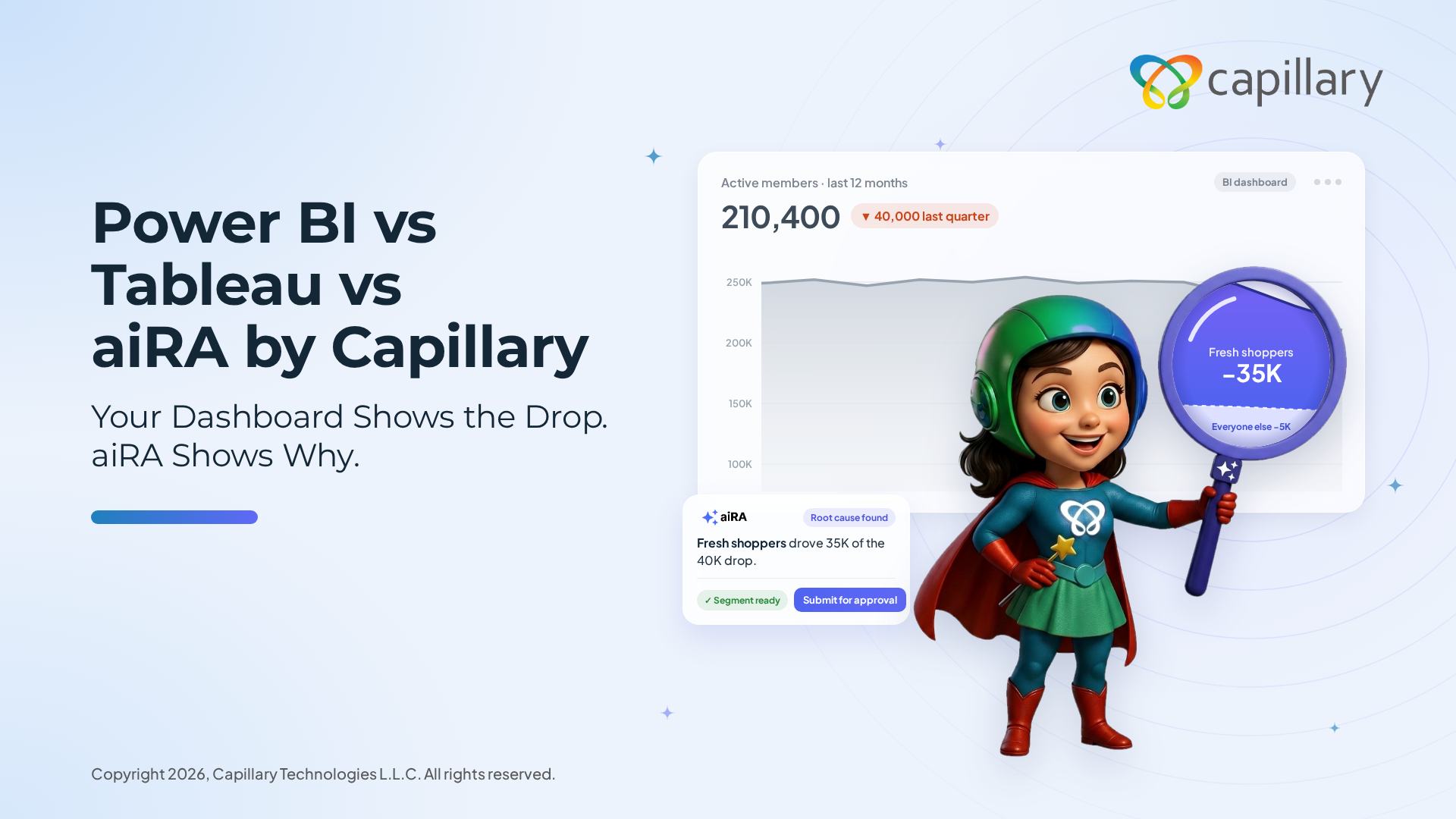
Power BI vs Tableau vs aiRAYour Dashboard Shows the Drop. aiRA Shows Why, & What to Do About It. Power
News
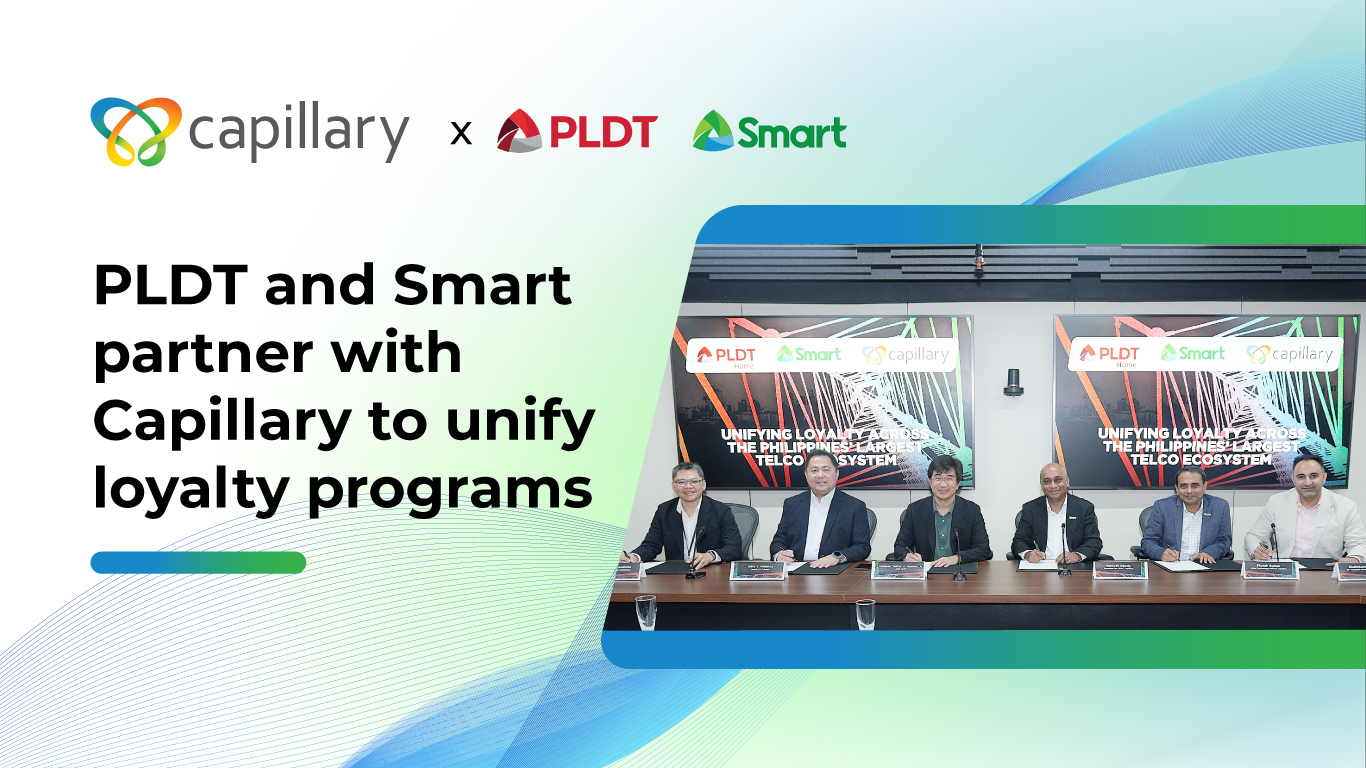
PLDT and Smart partner with Capillary to unify loyalty programsCapillary Marcom
Latest News
PLDT and Smart partner with Capillary to unify loyalty programsManila, Philippines — PLDT Inc. (PLDT) and its wireless subsidiary Smart Communications, Inc (Smart) have