- Design industry shaping loyalty programs
- Integrate easily and go live quicker
- Deliver hyper-personalized consumer experiences

Capillary: Recognized as a Leader in Everest Group’s PEAK Matrix® 2025 Read more >
The Balanced Loyalty Quotient Report 2026 is coming soon — our largest and most in-depth loyalty report yet. Show Interest >

Brand Love ≠ Brand Loyalty
We often assume the people who love our brand are also our most loyal customers. But here’s the kicker: they’re not always the same.
What Is Brand Love?
Brand love is emotional. It’s an affinity. A brand that reflects a person’s identity, dreams, or values. It’s why a teenager proudly wears a hoodie with our logo, or why a YouTube creator lights up when unboxing our latest product. It’s about how a brand makes someone feel—cool, creative, empowered, understood.
What Is Brand Loyalty?
Loyalty, on the other hand, is behavioral. It’s the repeated choice to engage, purchase, and return. It may be driven by habit, price, convenience, or customer service. Loyalty may lack the fireworks of love, but it’s consistent, measurable, and bankable for lifetime customer value

Why Some People Love a Brand but Aren’t Loyal
1. Affordability Mismatch
A college student may idolize your flagship devices, but ultimately settle for a lower-tier competitor due to price. Brand love is there, but loyalty isn’t feasible.
2. Functional Needs Trump Emotion
A creative professional might love the elegance of our laptops but use a different ecosystem for work due to specific software compatibility or IT mandates.
3.Aspirational Distance
Sometimes, people love what a brand represents, even if they don’t interact with it regularly. Think of how people treat high-fashion brands—they’re symbols of aspiration, not necessarily practicality.
Why Some People Are Loyal but Don’t Fall in Love
How Emotions & Loyalty Evolve Over Time
People grow up with brands. But they don’t always grow into them.
A child may fall in love with the playfulness of a tech toy. A teen may express their identity through their earbuds or phone cases. A professional may value our productivity features. And a parent may appreciate our security systems.
But at each life stage, love and loyalty may not move in parallel. Sometimes, consumers outgrow love but stay out of habit, and other times, they fall back in love, sparked by nostalgia, innovation, or renewed relevance all these years later.
We see this with legacy users who rediscover brands through a new product category. Or those who “cheated” with another brand but come back after a meaningful product update or campaign that sparks new life into the brand experience.
Loyalty isn’t static, and love isn’t guaranteed, but both can be re-earned and re-established at any part of the customer journey.
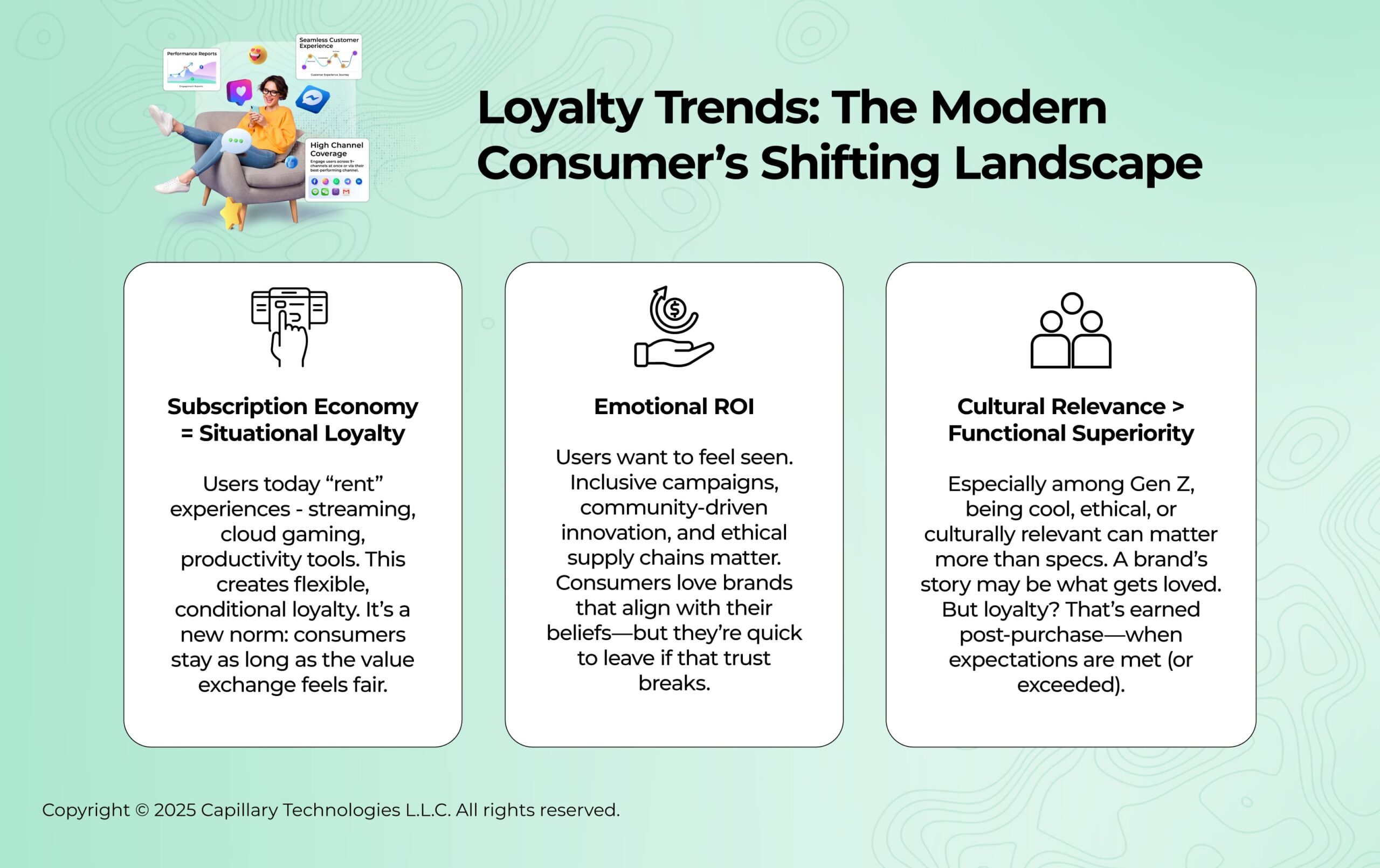
How You Should Evolve as a Brand
At Capillary, we’ve adapted our platform and marketing brand thinking to embrace this complexity. Below are some strategy techniques we’ve used to evolve as brand ambassadors:
And importantly, listen. Constantly. Various global communities, forums, and brand ambassadors aren’t just channels; they’re temperature checks on love and loyalty, region by region. Always be in the know and ahead of the market curve.
Final Thought
If love is the spark, loyalty is the commitment. Some people fall hard, but leave. Others stay faithfully, even when the fire dims.
As brand leaders, our job is to keep both alive. To spark new love, reignite old connections, and reward loyalty not just with discounts and rewards, but with dignity, relevance, and trust.
In the end, it’s not about whether they love or stay. It’s about how we make them feel when they do either, or both.


