Capillary Named a Leader in The Forrester Wave™ Loyalty Platforms, Q4 2025 Report.    Read more >

Capillary: Recognized as a Leader in Everest Group’s PEAK Matrix® 2025    Read more >

Capillary Named a Leader in The Forrester Wave™ Loyalty Platforms, Q4 2025 Report.     Read more >

Invite for RFP/RFI

Blogs

Stop Calling Every Assistant “Agentic AI”

Not every assistant is agentic. Precision matters — because enterprises are not buying terminology. They are buying capability.

By

Summaya

4 Min Read

July 09, 2026

Every few years, enterprise software gets a new vocabulary. The current one is "agentic AI."

Almost overnight, every chatbot, assistant, workflow helper, and recommendation layer is being described as agentic. The term is appearing in product pages, pitch decks, analyst conversations, and boardroom discussions. But like most useful terms that become popular too quickly, it is already starting to blur.

That blurring is not harmless.

For enterprises, imprecise language leads to imprecise decisions. A marketing leader evaluating AI capabilities needs to know whether a system can merely answer questions, suggest actions, automate rules, or actually orchestrate work toward a business outcome. These are very different capabilities. They require different architectures, different governance models, and they create very different levels of business value.

Not every assistant is agentic. If an AI system only suggests and waits, it may be useful — but it is not truly agentic.

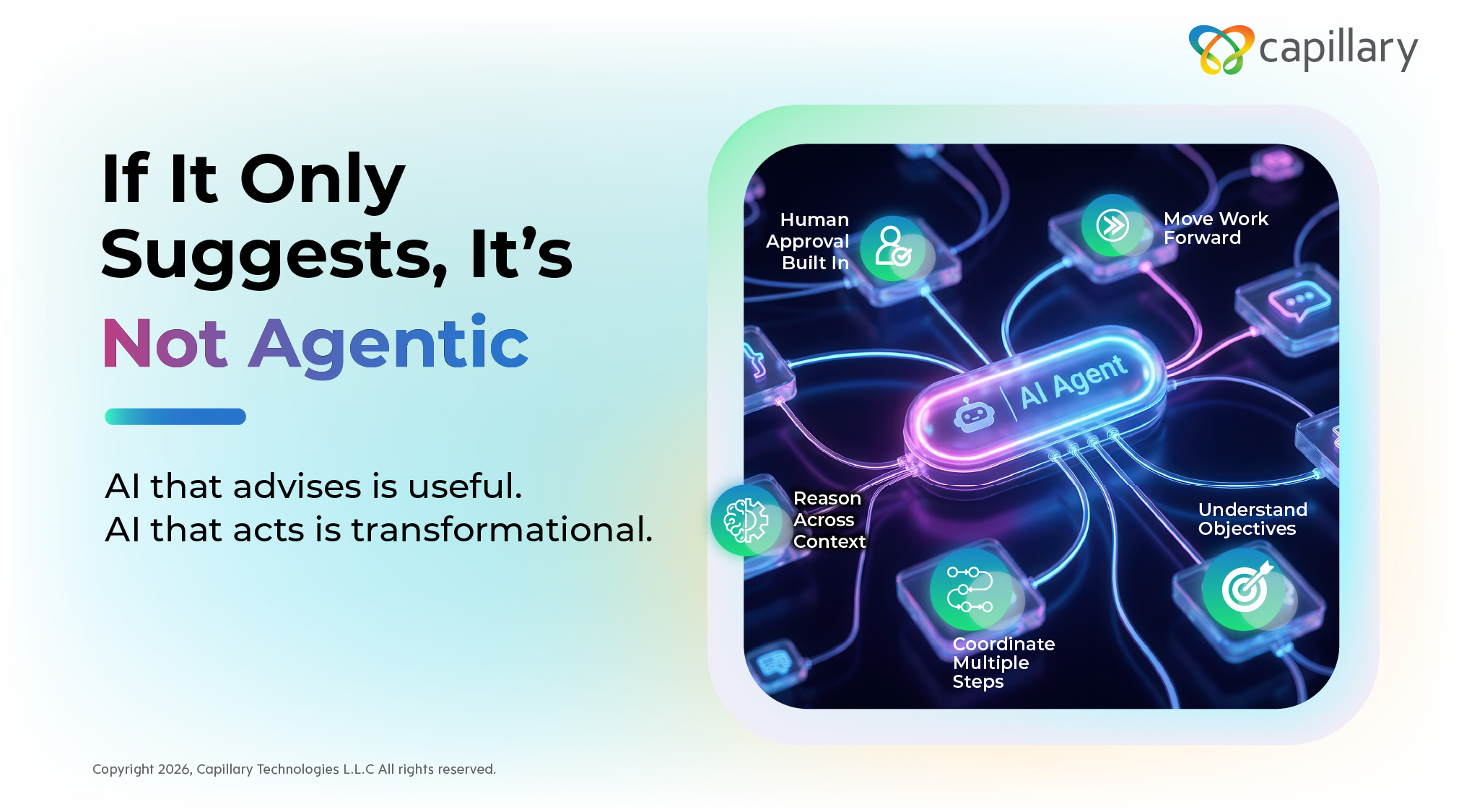
The distinction matters because the next leap in enterprise marketing and loyalty will not come from adding a conversational layer to old workflows. It will come from AI systems that can understand objectives, reason across context, coordinate multiple steps, and move work forward with human approval built into the flow.

Everyone Has an AI Assistant Now. That Is Not the Breakthrough.

AI assistants have become the easiest feature to add and the hardest one to differentiate.

They can summarize reports, generate campaign copy, explain dashboards, and answer questions in natural language. For many users, that is a genuine improvement. It lowers friction and makes software feel more accessible.

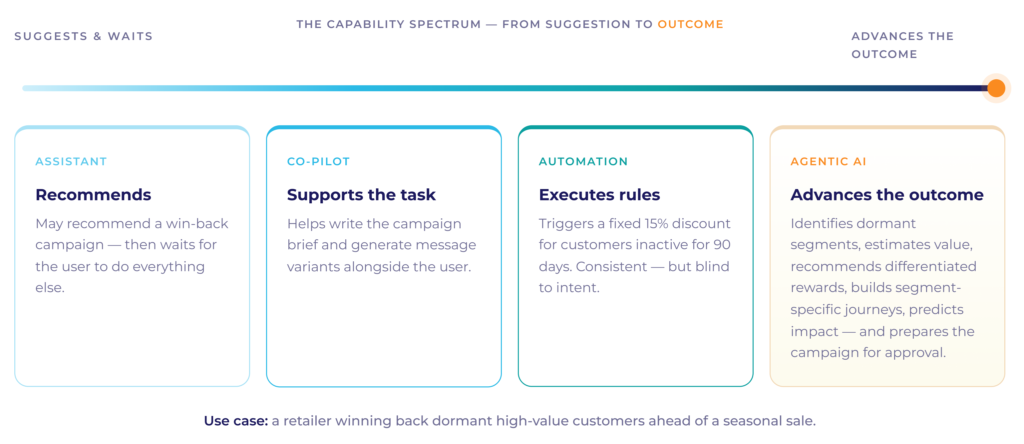
But accessibility is not the same as agency. An assistant helps a user think or create faster. A co-pilot supports the user through a task. Automation executes predefined logic. Agentic AI is different because it is designed around goals, not just prompts or rules.

A simple loyalty use case makes the distinction clearer.

That is the difference between helping with a task and advancing an outcome. The market is currently confusing the two.

A Chat Window Is Not a Product Strategy

One of the most common mistakes in enterprise AI right now is treating the interface as an innovation.

A chat window can make a product easier to use. It can make complex systems feel more approachable. But a conversational interface does not automatically make the underlying system intelligent, adaptive, or agentic.

The real question is not: "Can the user ask a question in plain English?" The real question is: "What can the system do after it understands the question?"

In marketing, the gap between insight and execution is where most value is lost. A marketer may already know that dormant customers should be reactivated, that high-frequency customers should be nudged toward higher-margin categories, or that over-discounting is hurting profitability. The issue is rarely lack of awareness.

The issue is operational drag. The audience needs to be created. The analyst has a backlog. The offer logic has to be configured. The content has to be adapted by region. The campaign has to be reviewed. The KPI framework has to be agreed on. The launch has to be coordinated across teams and channels.

If AI only improves the recommendation but leaves the workflow intact, it has not changed the operating model. It has simply made the starting point smarter. For enterprise products, that is an incomplete promise.

Smarter Advice on Top of Old Workflows Is Still Old Work

Rules engines have been central to loyalty and marketing platforms for years. They are valuable and necessary. They define eligibility, rewards, tier benefits, triggers, exclusions, earn logic, burn logic, and campaign conditions.

But rules engines are not agents.

A rules engine executes what has already been defined. It is excellent at applying logic consistently, but it does not understand business intent. It does not know why a marketer wants to improve weekday frequency, reduce discount dependency, protect margin, increase cross-category adoption, or shift members from transactional behavior to habitual engagement.

Consider a QSR brand trying to increase weekday lunch orders. A rule can trigger an offer between 11 AM and 2 PM. An assistant can suggest lunch-themed copies. A co-pilot can help create variants for apps, SMS, and email.

But the business question is more complex: Which customers are most likely to respond? Which stores need traffic? Which bundles protect contribution margin? Which users need a discount, and which users only need a reminder? Should the campaign optimize for order frequency, average ticket size, margin, or repeat behavior?

Those are not just execution questions. They are product intelligence questions. This is where agentic AI should operate: not as a cosmetic layer over existing workflows, but as an orchestration layer that can interpret objectives, reason across constraints, and prepare action.

The Missing Layer Is Orchestration

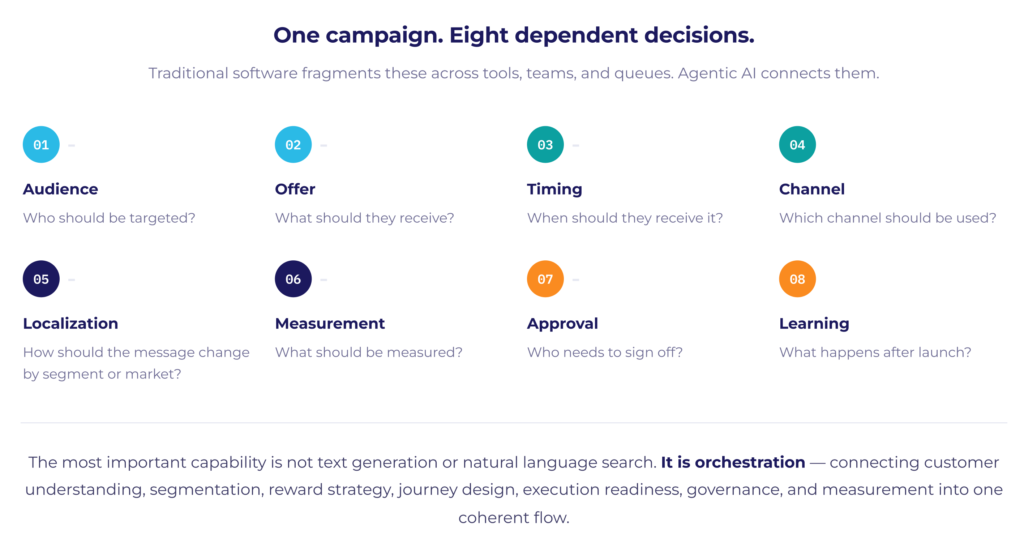
Most enterprise marketing work is not one task. It is a chain of dependent decisions.

AI assistants can make individual steps faster, but they do not necessarily connect the steps. Agentic AI should. In product terms, this is where AI moves from feature to system behavior.

Enterprise Agentic AI Must Be Governed by Design

There is another misconception worth correcting: agentic does not mean fully autonomous.

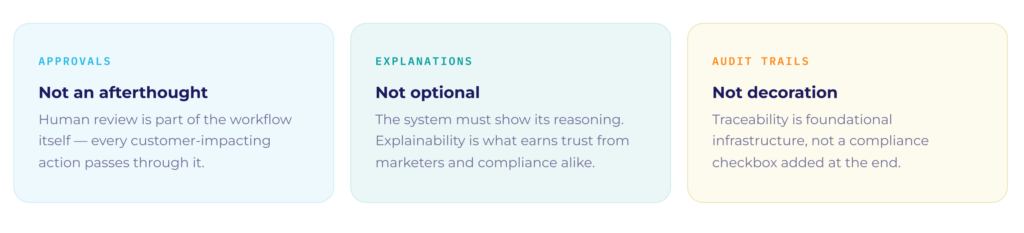
In consumer AI, autonomy is often presented as the dream. In enterprise AI, unbounded autonomy is a risk. No serious brand wants AI independently launching customer-facing campaigns without review. No compliance team wants customer data flowing into uncontrolled models. No product leader wants a black-box system modifying business logic without traceability. No CMO wants offers going live without visibility into margin impact, customer experience, or brand fit.

A system can be agentic and still keep humans in control. In fact, for enterprise use cases, that is the only sustainable model. The AI should reduce repetitive coordination, accelerate decisioning, and prepare execution. The business should retain judgment, accountability, and final approval.

The future is not "AI replaces the marketer." The future is "AI removes the drag around the marketer."

The Business Case Is Velocity With Better Decisions

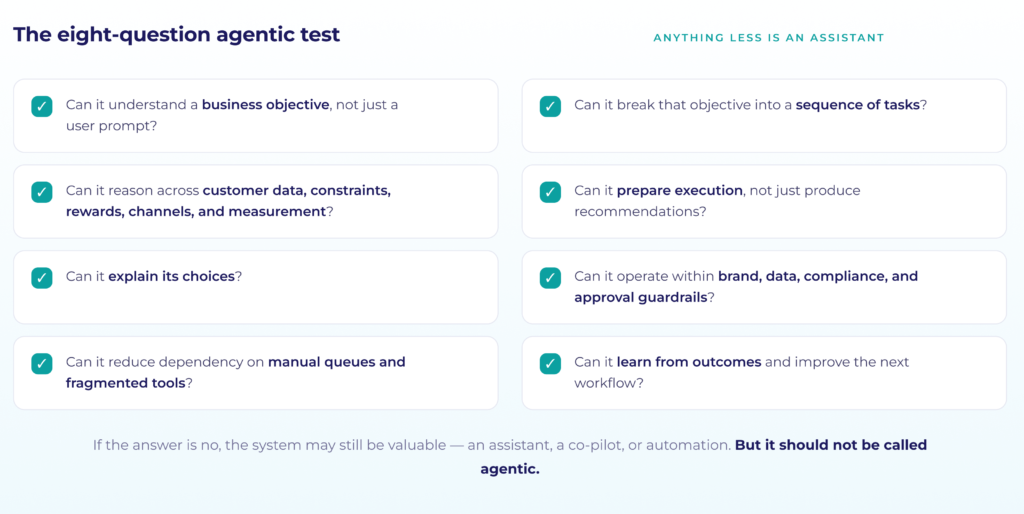
The value of agentic AI should not be measured by how impressive the demo feels. It should be measured by what changes in the operating model. Does campaign cycle time reduce? Do marketers depend less on analyst queues? Can regional campaigns be localized faster? Are rewards optimized for margin and response, not just generosity? Can teams move from idea to launch with fewer handoffs? Can leaders see projected impact before approving execution? Can the system learn from outcomes and improve the next cycle?

Velocity alone is not enough. A bad campaign launched faster is still a bad campaign. The promise is velocity with better decisioning: faster movement from intent to execution, supported by customer intelligence, reward intelligence, governance, and measurement.

This is especially important in loyalty, where the cost of poor decisions compounds. Over-discount too often, and customers learn to wait. Target too broadly, and margins suffer. Personalize poorly, and engagement drops. Move too slowly, and the moment passes.

Agentic AI should help teams act faster without becoming less thoughtful.

A Better Test for Agentic AI

As the term becomes more common, enterprise buyers and product teams need a more disciplined test. Before calling a system agentic, ask:

Precision matters because enterprises are not buying terminology. They are buying capability.

From Advice to Action: Where aiRA Fits

This is the shift we have been building toward with aiRA.

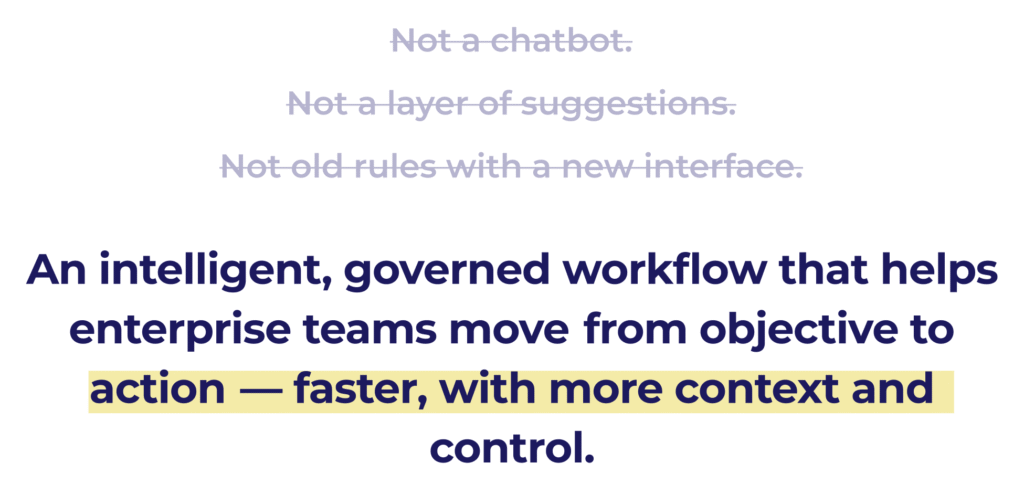
aiRA is not designed as another assistant that sits beside the workflow and offers suggestions. It is designed to move marketing from intent to execution inside the Capillary ecosystem.

The principle is simple: AI should not only tell teams what they could do. It should help them get to the point where the work is ready to move. That is what makes the agentic conversation meaningful for loyalty.

Because the future of AI in loyalty will not belong to systems that only advise from the sidelines. It will belong to systems that understand the work, shape the path, and help get it done.

Trevor Antley, Head of Global Content, Capillary Technologies
Summaya

Contact Us

Get the best loyalty &
customer engagement platform out there!
  • Design industry shaping loyalty programs
  • Integrate easily and go live quicker
  • Deliver hyper-personalized consumer experiences

Request A Call
Array
(
    [wp-wpml_current_language] => en
    [icwp-wpsf-notbot] => exp-1783825994
)