
Customer loyalty in 2026 won’t be defined by who has the biggest points program or the glossiest app. It will be defined by who feels most worth sticking with in a world where choices are abundant, economic pressure is real, and AI quietly shapes every touchpoint.
A few numbers set the stage:
- A 5% increase in retention can lift profits by 25–95%.
- 91% of companies already have loyalty programs—yet 81% of Gen Z and millennials switched brands in the last year.
- The loyalty tech market is on track to hit $41B+ by 2032.
The message is clear: companies don’t have a loyalty program problem. They have a true loyalty problem.
Below are 10 executive-level predictions for how customer loyalty and engagement will transform in 2026—what’s driving the changes, why they matter, and how leaders should prepare.
1. “Agentic AI” Becomes the Loyalty Operating System
2026 is the year loyalty stops being a static program and starts behaving like an adaptive system powered by AI agents.
- Over 70% of retailers have already piloted or partially implemented “agentic AI” to drive efficiency and smarter operations, with customer service and personalized marketing as the top use cases. (TechRadar)
- McKinsey highlights “next best experience” models that use AI to orchestrate every interaction—content, timing, offer—based on predicted behavior, not just past clicks. (McKinsey & Company)
What this looks like in 2026
- AI bots that don’t just answer questions but proactively intervene when churn risk spikes (e.g., “We noticed you’re not using feature X—want a quick walkthrough and a 20% upgrade credit?”).
- Agentic AI in CX platforms (like those showcased in recent industry events focused on AI in customer experience) becomes the brain behind loyalty, not just a bolt-on to the contact center. (The Times of India)
Why this prediction is worth betting on
The economics are brutal: customer acquisition costs keep climbing, while a small increase in retention still produces outsized profit gains. (Sprinklr) AI that can predict and prevent churn will become a board-level priority, not an experiment in the CX team.
Executive move:
Treat AI not as a “chatbot project” but as your loyalty infrastructure. Mandate a 2026 roadmap where AI models continuously rank customers by risk, value, and propensities—and trigger personalized journeys automatically.
2. Loyalty Becomes Emotional… or It Doesn’t Exist
Points and discounts still matter—but younger customers are loyal to brands that feel like them.
- 70% of Gen Z say they’re loyal to a brand they love and trust, and 21% will pay more to show that loyalty.SAP Emarsys
- Yet 81% of Gen Z and millennials switched brands in the last year—they’re emotionally loyal, but not locked in. (EMARKETER)
What this looks like in 2026
- Loyalty is expressed as community membership: private Discords, exclusive drops, co-created collections, and local events.
- Rewards become less “10% off next purchase” and more “access, identity, and recognition”—early access, backstage classes, community voting on new features.
Example
Gen Z shoppers are already driving a revival of malls as social spaces, valuing community, experiences, and authenticity over pure transactional shopping. (The Guardian)
Executive move:
Measure emotional loyalty (trust, identification with values) alongside transactional metrics. Put community-building and brand storytelling on the same priority level as discounts and cashback.
3. From “Program” to “Platform”: Ecosystem Loyalty Takes Over
With 91% of companies running some kind of loyalty program, we’re hitting saturation. (ClickPost) The next competitive edge is ecosystem-level loyalty, where your program connects multiple brands, categories, or services.
- The loyalty management market is expected to grow at 15.3% CAGR through 2032, driven largely by omnichannel and partner ecosystems. (ClickPost)
- Deloitte’s research shows consumers want flexibility in earning and redeeming across contexts—4 in 5 say flexibility is critical. (Deloitte)
What this looks like in 2026
- Telecom + food delivery + streaming bundles with one shared rewards currency.
- Airline points redeemable for ride-hailing, grocery delivery, or creator content.
- Retail brands linking their programs so customers can “spend their loyalty” where it’s most meaningful to them.
Executive move:
Stop designing loyalty as a closed garden. Ask: “Whose ecosystem are we in—or building?” Start with 1–2 high-fit partners and pilot shared rewards or multi-brand tier benefits.
4. Personalization Moves From “Nice” to “Non-Negotiable”
Personalization has been “the future” for a decade. In 2026, it becomes the minimum expectation.
- 71% of consumers expect personalized interactions, and 76% get frustrated when it doesn’t happen. (McKinsey & Company)
- 61% of consumers say they’re willing to spend more for personalized experiences, but only 25% of experiences feel truly personalized today. (medallia.com)
- 58% of marketers plan to invest more in personalization specifically for their loyalty programs in 2025 and beyond. (Digital Silk)
What this looks like in 2026
Loyalty offers that adapt in real time based on context: location, inventory, and mood inferred from interactions.
- Pricing, bundles, and recommendations are all tuned to individual value perception, not static segments.
- “Next best experience” engines running under the hood of apps, websites, and service centers. (McKinsey & Company)
Executive move:
Make “% of interactions that are contextually personalized” a key health metric. If your loyalty emails still look identical for all Platinum members, you’re behind.
5. Subscription Fatigue Forces a “Loyalty for Flexibility” Deal
The subscription gold rush has created its own enemy: subscription fatigue.
- Over 60% of streaming consumers report subscription fatigue, with one-third canceling at least one streaming service in 2023. (Lexology)
- In 2024, 40.3% of consumers said they had canceled a subscription service, with video and music streaming hit hardest. (International Finance)
- Consumers juggle about 12 active subscriptions across categories, making them increasingly selective. (Kadence)
What this looks like in 2026
- Churn isn’t just “lost customers”—it’s rotating subscriptions as a lifestyle.
- “Pause, don’t cancel” becomes a standard retention pattern, with loyalty incentives to come back or downgrade instead of leaving.
- Programs reward tenure and flexibility (e.g., keeping an account open but on a low tier) as much as raw spend.
Executive move:
Redesign loyalty for a subscription-fatigued world:
- Introduce “loyalty for flexibility” benefits (easy plan switches, seasonal pauses, earned grace periods).
- Treat every cancellation as a loyalty moment: offer “come back” credits, saved preferences, and easy reactivation.
6. Service Quality Becomes the #1 Loyalty Battleground
Marketing still wins the click—but service keeps (or loses) the customer.
- Research shows AI in service is shifting from cost reduction to delivering faster, more human-like support that boosts satisfaction and reduces burnout.(DevRev)
- In many sectors, customers say the least personalized parts of their experience are “during their stay” or “in-store,” not in pre-purchase marketing—an untapped loyalty lever. (medallia.com)
What this looks like in 2026
- Loyalty tiers that explicitly include service-level guarantees (response times, access to specialists, concierge support).
- AI agents that resolve the bulk of routine tasks, freeing humans to handle emotional, complex, or high-value interactions.
- NPS and CSAT linked directly to loyalty benefits and funding—your happiest customers literally earn better perks.
Executive move:
Move part of your loyalty budget into service. It’s no longer “loyalty vs. CX”—service excellence is a loyalty benefit.
7. “Micro-Loyalties”: Customers Are Loyal in Context, Not Forever
The idea of a single “forever brand” is fading, especially among younger consumers.
- 81% of Gen Z and millennials switched brands in the past year.EMARKETER
- Half of retail executives now expect price sensitivity to override traditional brand loyalty, even as they know retention is crucial. (openloyalty.io)
What this looks like in 2026
Customers hold multiple micro-loyalties:
- One brand for premium treats, another for everyday value.
- One app for discovery, another for price checks, another for checkout convenience.
- Loyalty can shift by use case, mood, or social context.
Executive move:
Stop asking, “How do we own 100% of this customer?” and start asking, “Where do we deserve to be their first choice?” Design use-case–specific experiences and offers rather than generic “be loyal to us always” messaging.
8. Experience-Led Loyalty Makes a Physical Comeback
Experiences—not just products—will increasingly anchor loyalty.
- 56% of consumers say it’s important to spend money on experiences. (BON Loyalty)
- Gen Z is reviving malls as social destinations—going for events, community, and engagement, not just shopping. (The Guardian)
What this looks like in 2026
- Loyalty programs that convert points into events, learning, and networking (workshops, creator meetups, lounges, live demos).
- Physical spaces designed as engagement hubs for top-tier members, not just showrooms.
- Hybrid experiences where in-person engagement unlocks digital perks or exclusive online access.
Executive move:
If you have any physical footprint—stores, branches, pop-ups—treat them as loyalty theaters, not just sales channels. Tie visits, check-ins, and event participation directly into your rewards model.
9. Data Transparency Becomes a Loyalty Currency
Customers will increasingly trade their data for better experiences—but only if they understand the deal.
- PwC reports 82% of consumers are willing to share personal data in exchange for more personalized experiences. (PwC)
- Another survey shows 48% of consumers would share data for a better brand experience, and 30% for direct economic value (cash or goods). (Retail Customer Experience)
- At the same time, more than half of consumers remain worried about data misuse, especially with AI. (TechRadar)
What this looks like in 2026
- Loyalty programs that explicitly state: “Here’s what we collect, here’s what you get back.”
- Granular controls (“Share location only in-store,” “Use my data for offers but not for sharing with partners”).
- “Data dividends” where customers earn bonus points or cash for opting into richer data-sharing.
Executive move:
Turn your privacy policy from a legal PDF into a value story. Make “data-for-value” a visible part of your loyalty messaging, and let customers control—and see—the impact of their choices.
10. Loyalty Goes Hyper-Local and Inclusively Designed
Global brands will still matter—but loyalty will increasingly be shaped by local context and inclusive design.
- Deloitte’s loyalty research shows younger generations place a much higher value on digital experience, with ~75% of Gen Z and millennials calling a strong digital experience essential to loyalty programs. (Paint & Decorating Retailer)
- Cultural expectations, payment norms, and economic realities vary widely by region—what feels like “loyalty” in India is different from Brazil or the UK. (Deloitte+1)
What this looks like in 2026
- Programs tuned to local realities: micro-rewards, low-data app experiences, local language support, regional partner networks.
- Inclusive tiers that don’t just reward big spenders, but also frequency, advocacy, and engagement, making loyalty feel accessible even at lower income levels.
Executive move:
Stop rolling out one global program with light translations. Build local loyalty playbooks, co-designed with regional teams and customers. Measure success not just in global metrics, but in how well you’ve adapted to local behaviors and constraints.
So… What Should an Executive Actually Do in 2025 to Win 2026?
If you’re leading CX, marketing, or digital, here’s a pragmatic starting checklist:
- Name a “Chief Loyalty Owner.”
Make loyalty (not just CRM) an executive-level responsibility, with clear revenue and experience goals. - Build an AI-backed loyalty brain.
Start with churn prediction + next best action, then expand to always-on personalization. - Redesign your value exchange.
Make it explicit: “Here’s what we know about you. Here’s what you get in return.” - Shift some discounts into experiences and service.
Reallocate a percentage of your promo budget into events, community, and differentiated service levels. - Pilot one ecosystem partnership.
Don’t boil the ocean—link your program with one strong partner and test a shared reward or universal tier benefit.
Loyalty in 2026 Isn’t a Program—It’s a Promise
As we move into 2026, customer loyalty will be defined less by the size of your rewards wallet and more by the depth of your brand’s commitment to relevance, transparency, and emotional resonance. Loyalty becomes the sum of every interaction—each helpful nudge, each personalised moment, each act of empathy, each friction quietly removed.
The brands that win will be the ones that build relationships, not just reward structures.
The ones that use AI to elevate human connection, not replace it.
The ones that treat data ethically, design inclusively, and innovate with intent.
Customers aren’t asking companies to be perfect—they’re asking them to be present, consistent, and genuinely value-driven. That’s where real loyalty is born.
2026 won’t belong to the companies with the most points. It will belong to the ones that make people feel seen, supported, and significant—the brands that come across as:
- Smarter – AI that actually helps, not annoys
- More human – emotional connection and real community
- More fair – transparent data use and honest value exchange
- More flexible – adapting to customers’ real lives, not forcing them into rigid journeys
In the end, loyalty in 2026 won’t just be something customers earn—it will be something brands must earn back, every day.
Share

Summaya
Trending Topics
Ecommerce in Malaysia: Growth, Trends & Opportunities
Capillary Technologies acquires Brierley
Similar Articles
Great Ingredients, Broken Recipes: Why North America’s Biggest Loyalty Programs Are Failing Their Best Customers
A few weeks ago, I set out to answer a question that had been nagging
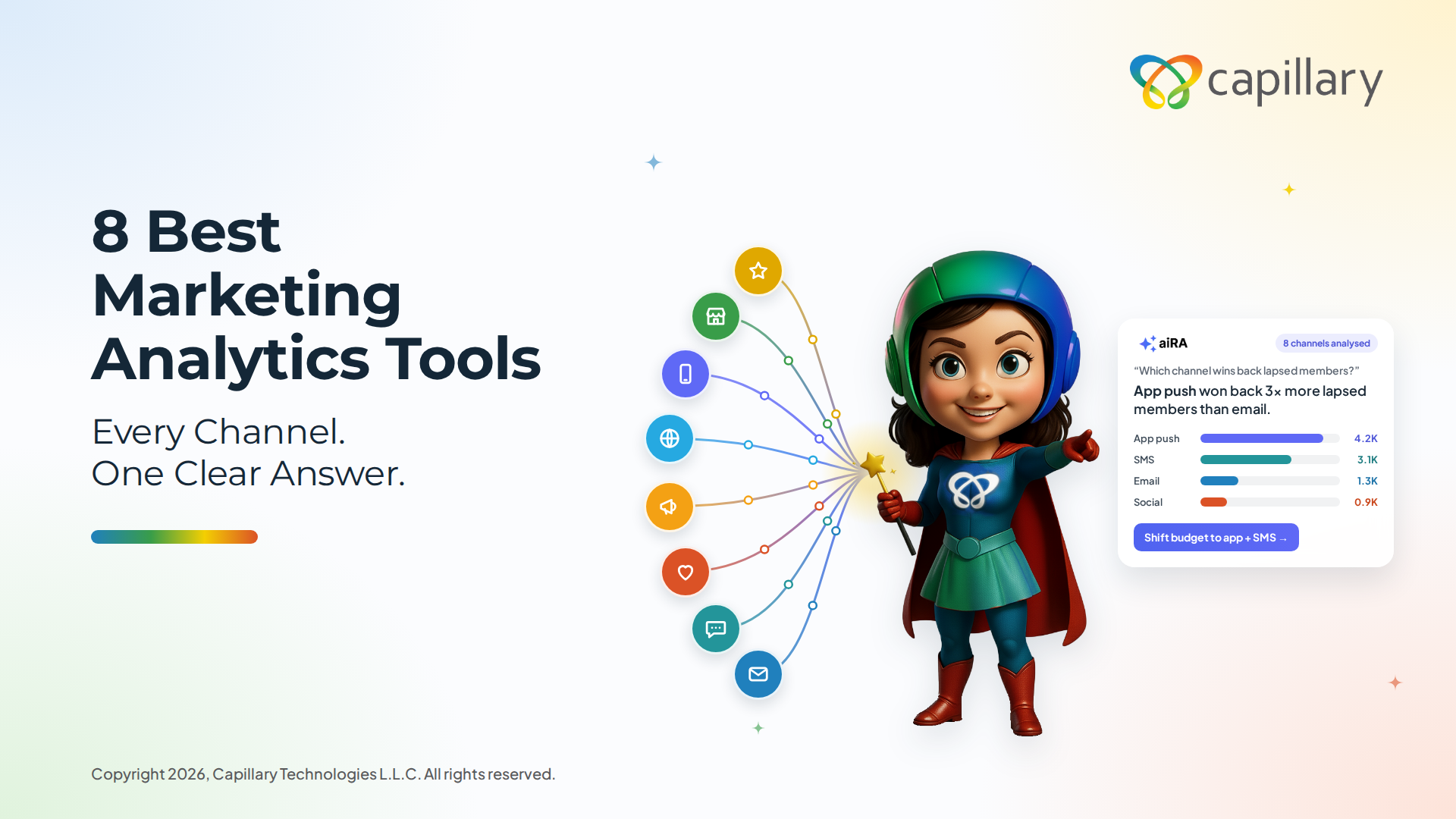
8 Best Marketing Analytics Tools for 2026 (Self-Service & AI-Powered Compared)
Introduction Marketers are drowning in channel data, yet most still wait days for a simple
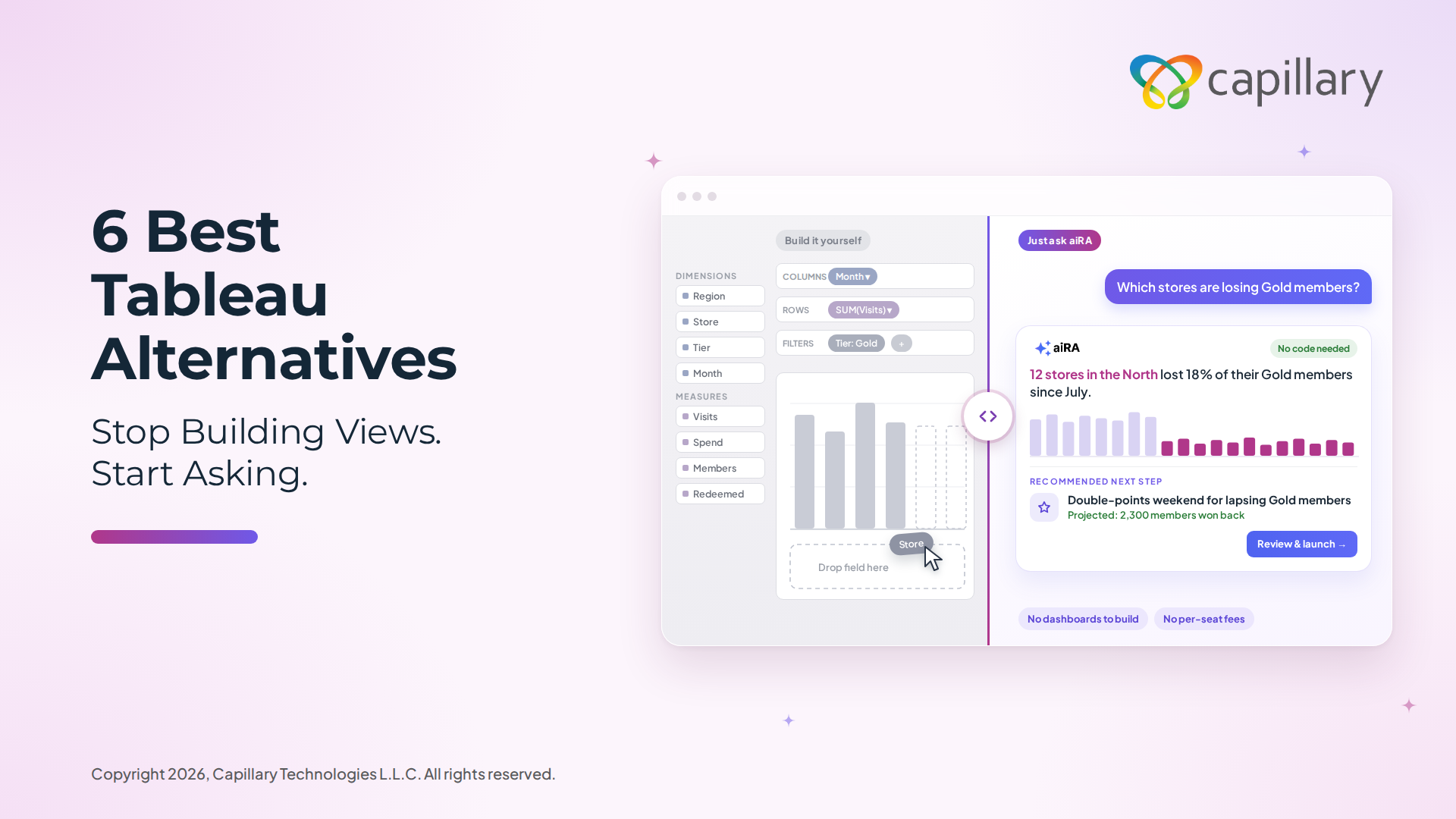
Tableau Alternatives: 6 No-Code & AI-Powered BI Tools Worth Switching To in 2026
Introduction Tableau is powerful, but it is also heavy. The learning curve is steep, most
Contact Us
Get the best loyalty & customer engagement platform out there!
- Design industry shaping loyalty programs
- Integrate easily and go live quicker
- Deliver hyper-personalized consumer experiences