Design, Data, Discipline: The Answer to Attrition for QSRs in Asia

January 2026

Why loyalty is becoming critical infrastructure for QSRs in Asia — and how data, design, and discipline are reshaping retention.
QSR Sector in Asia

In a region like Asia, where dining habits are rituals—family weekends at Jollibee in Manila, late-night McDonald’s in Singapore, or bubble tea runs across Bangkok—loyalty should be the industry’s competitive edge. With millions of digital-first consumers making quick-service dining part of their weekly routine, the battle for retention is no longer optional—it’s existential.

Today, a handful of QSRs in Asia have started asking a different question: “How do we make the customers feel something again?”


Where Exactly Is the Problem?

Low Engagement & Redemption


Many loyalty programs see low usage and redemption, with points piling up unused, ultimately making the program costly without delivering real growth.


Poor Loyalty Tech


In fragmented markets, especially Southeast Asia, many QSRs run disparate loyalty apps, and as customers move between apps, kiosks, and delivery aggregators, tech stacks fail to recognize them as the same person, creating data silos and inconsistent experiences.


Program Complexity & Customer Confusion


Overly complex points math, too many tiers, and unclear rewards create mental fatigue, causing activation drop-off before the first reward.


Communication That Doesn’t Cut Through the Noise


Most outreach remains one-size-fits-all—blending into an already noisy feed. When messages aren’t personalized to the moment, person, or platform, audiences tune out, and conversions decline as nothing feels meant for them.


How QSRs Can Win Back Retention


1. Habit by Design with Gamification


Across APAC’s mobile-first markets, game loops have the power to build habits. The QSRs pulling ahead use everyday mechanics that make progress visible: streaks for visit consistency, quests that nudge the next action, status that signals recognition, and small “win moments” that feel earned.

Take KFC’s Shrimp Attack in Japan. The mobile game worked like Fruit Ninja: slice the falling shrimp, protect the chicken kingdom, rack up points, and unlock discount vouchers for the new shrimp menu. 

The game was played by approximately 800,000 users, resulting in an engagement rate of nearly 91%. Sales of shrimp items rose by about 106% year over year, strong enough that inventory ran short and KFC curtailed the campaign to rebalance supply. 


2. Personalization That Protects Margin and Lifts Loyalty

Generic push notifications (“We miss you!”)
Mass offers (“Get 10% off your next order”)

If your QSR business is doing any of the above, this isn’t loyalty. It’s digital couponing on autopilot.

Personalization starts with behavioral, mission-based segmentation instead of demographics: breakfast commuters vs late-night snackers, delivery-first vs in-store, value seekers vs explorers, and “lapsed-since-last-routine.” With AI as the decisioning brain, you can layer RFM/CLV and propensity cohorts (likelihood to try new items, respond to bundles, or churn after a poor experience) to create a living map of how people actually eat.

Sushi Tei (and its sister brand, Hokkaido-Ya) deployed AI-powered self-ordering kiosks that recognized returning guests and personalize menu suggestions and upsell prompts in real time. The kiosks first use broad patterns (time of day and trip purpose), then your own order history, to suggest what you’re most likely to want next.

Results: ~10% higher item value and ~5% higher order value—proof that context-aware, segment-led personalization lifts both basket and visit.


3. Reclaiming Customer Ownership: The Shift from Aggregators to Direct Channels


Third-party apps built discovery, but the real gains now come from making owned ordering the obvious, everyday choice. McDonald’s Singapore shows how to do it: the My McDonald’s App lets guests order ahead with clear pickup options like front counter, table service, and Drive Thru, so the experience feels faster and more reliable than a marketplace route.

They cut checkout friction by accepting the wallets that customers already use. With GrabPay working in-store, at Drive Thru, on McDelivery, and in Mobile Order, the journey stays on McDonald’s rails while customers earn GrabRewards—driving more direct-channel orders, better unit economics, and cleaner visibility into recency, cadence, and item preference than aggregators provide.


4. Loyalty Ecosystem Partnerships


Asia’s diners already live inside super-apps and marketplaces—payments like Alipay, WeChat Pay, GrabPay, and platforms like GrabFood, Shopee, and Tmall. That’s where ID, checkout, and everyday rewards already happen. If your loyalty doesn’t plug into these rails, you’re asking customers to step out of their routine, and most won’t.

When QSR loyalty plugs directly into these rails, recognition, payment, and redemption collapse into one motion: tap, pay, perks applied, progress shown. 

eCommerce tie-ups then multiply touchpoints: branded storefronts sell digital gift cards and limited-time boosters, live-commerce drops onboard new members in minutes, and the same rules follow them back in-store. You’re not forcing a new behavior—you’re hitching loyalty to habits people already have.


5. Unified Loyalty-Tech Stacks for Omnichannel Orchestration


QSRs are moving from a jumble of tools to one connected system that actually works in the real world of lines, kiosks, and delivery apps. Think of it as one backbone for loyalty: your customer data, campaigns, and rewards all in the same place—and fluent in POS. A single customer identity follows people across app, web, delivery, and counter. 

The payoff is a brand that sounds like one voice, not five: smart caps on messages, automatic pauses after a conversion, and channels that take turns instead of shouting over each other. Reporting comes from the same live stream that powers the experience, so you can show true lift—incrementality, daypart habits, offer efficiency—without spreadsheet gymnastics. And because consent, purpose tags, and in-region storage are built in, the stack plays nicely with Asia’s privacy rules as you scale.

So, What Can the Industry Take Away?

Asia’s QSR loyalty doesn’t need a band-aid; it needs a rethink. The leaders here treat loyalty as infrastructure, baking data and recognition into every touchpoint across app, kiosk, delivery aggregators, and wallets; designing life cycles that move diners from first try to weekly habit to vocal fan; and using AI powered behavioral science so offers feel relevant. This way loyalty becomes a business system that creates predictable demand, real differentiation, and defensible growth even when menus, prices, and delivery speeds are easy to copy.


Share

Similar Articles

Contact Us

Get the best loyalty & customer engagement platform out there!

  • Design industry shaping loyalty programs
  • Integrate easily and go live quicker
  • Deliver hyper-personalized consumer experiences
Request A Call

The 12 Micro-Moments of Relational Loyalty: Orchestrating AI-Powered Experiences That Forge Lifelong Customer Bonds

January 2026

See how Capillary bakes privacy, security, and global compliance so you can protect customer data, earn trust, and turn it into an advantage.

12 Micro Moments for Loyalty

Most loyalty programs are still optimized for transactions.

The world’s most enduring brands are optimizing for something far more valuable: relationships.

At Capillary Technologies, we do not merely track purchases. We study the signals within billions of customer interactions across our global loyalty ecosystem. What the data consistently shows is this: brands that use AI to orchestrate high-context, timely micro-moments outperform those that rely on broad campaigns and static rewards.

The results are material. Brands that operationalize relational loyalty through AI-led micro-moments see engagement lift by up to 45 percent and Customer Lifetime Value growth of 30 percent or more.

This marks a fundamental shift. Loyalty is no longer a program customers enroll in. It is a continuous, evolving relationship brands must earn every day.

Every interaction—before, during, and after a purchase—is a micro-moment. Handled well, it strengthens trust. Missed or mishandled, it weakens the bond. When orchestrated intelligently, these micro-moments transform loyalty from a transactional mechanism into a durable growth engine.

Below are twelve AI-powered micro-moments that define Relational Loyalty in the modern enterprise.

The 12 Strategic Micro-Moments of Relational Loyalty

  • The Contextualized Access Nudge

  • The Capillary Perspective: Moving beyond simple “early access,” this moment is about using predictive AI to identify the members most likely to convert on a specific product and delivering access before they even express demand for it.
  • Thought Leadership: Exclusivity is only valuable if it’s relevant. Early access must be hyper-personalized. The Capillary platform uses historical browser and purchase data to predict holiday product affinity, ensuring the VIP pass is for the collection the member actually wants.
  • Real Impact: Brands using AI-led affinity-based early access achieve 45% higher conversion rates compared to generic early-access blasts.


  • The Proactive Discovery Concierge


  • The Capillary Perspective: A gift guide should not be a static list. It must be a dynamic, adaptive curation delivered via the customer’s preferred channel (app, email, WhatsApp, etc.).
  • Thought Leadership: In a world of infinite choice, brands must become trusted discovery engines. We leverage Next Best Action (NBA) engines to cross-reference a customer’s personal profile (sizes, style, brand affinity) with the profiles of successful gift recipients they purchased previously.
  • Real Impact: This level of personalization drives 3x higher engagement and a 20% lift in Average Order Value (AOV) for gift purchases.


  • The Gamified Progress Check


  • The Capillary Perspective: This is the moment to use behavioral economics to motivate the next purchase.
  • Thought Leadership: Don’t just show a progress bar; show the value of the immediate next step. Our platform identifies members who are $X away from a high-value threshold and instantly calculates the incentive ($10 reward, free shipping, etc.) that will move them to act now.
  • Real Impact: Intelligent, ‘just-in-time’ progress nudges boost purchase frequency by 22% in the critical 7-day run-up to a tier upgrade or reward threshold.


  • The Undeserved Delight Drop


  • The Capillary Perspective: The highest form of loyalty is driven by surprise and delight—a reward given not for a transaction, but purely as a thank you for being a member.
  • Thought Leadership: True reciprocity is unexpected. We help brands identify their ‘silent advocates’ (high CLV customers who haven’t purchased in 60 days) and deliver a surprise point drop or exclusive service perk to re-engage them emotionally.
  • Real Impact: Undeserved bonuses generate 40% more social shares because they feel authentic, not transactional.


  • The Tier-Specific Relational Hub


  • The Capillary Perspective: Loyalty is a collective experience. This moment focuses on creating meaningful, high-touch experiences segmented by CLV tier.
  • Thought Leadership: Move from a points economy to an experience economy. For top tiers, this means exclusive ‘Meet the CEO’ virtual events or private styling sessions. For emerging tiers, it means valuable educational workshops. Loyalty must feel like an exclusive club, not a discount coupon book.
  • Real Impact: Community-focused programs powered by Capillary’s segmentation tools see 50% higher retention rates for top-tier members.


  • The Omnichannel Journey Anchor


  • The Capillary Perspective: Browsing during peak seasons can be chaotic. This moment is about using unified customer profiles to create one seamless experience, regardless of whether they browse on the app, click a search ad, or walk into a store at the mall. 
  • Thought Leadership: Friction is the enemy of loyalty. If a customer adds an item to their cart on their phone, they should be able to see that item immediately on a tablet and receive a notification when they enter the store that the item is in stock. Capillary’s platform is designed to be the single source of truth for the customer across all channels.
  • Real Impact: Omnichannel members spend 3x more because they find the brand easier to shop.


  • The Purpose-Driven Purchase Feedback Loop


  • The Capillary Perspective: Today’s consumer demands to know their purchase has meaning. This moment is about creating a real-time, personalized view of their collective impact.
  • Thought Leadership: Loyalty programs are powerful vehicles for shared values. Use program mechanics to trigger environmental or social contributions and show the customer the tangible result of their participation—not just in points, but in impact.
  • Real Impact: Purpose-driven loyalty increases member engagement by 27% and significantly improves acquisition of the highly-valued Gen Z and Millennial segment.


  • The Post-Purchase Relationship 


  • The Capillary Perspective: Returns are a moment of vulnerability. This is where brands earn lasting trust.
  • Thought Leadership: The return experience is a retention strategy. We help brands use loyalty status to offer proactive perks: instantly generated, paperless return labels; extended return windows; or immediate store credit before the item is physically received. This removes post-holiday anxiety.
  • Real Impact: Members with positive, frictionless return experiences are 70% more likely to make a repeat purchase within the next 30 days.


  • The Contextual Retention Trigger


  • The Capillary Perspective: Reminders should not be generic spam. They should be a helpful, high-context intervention that respects the customer’s time and preferences.
  • Thought Leadership: Use AI to model churn probability and identify the perfect time and channel for a reminder about expiring points or a restocked favorite. The right reminder at the wrong time is noise; the right reminder at the right time is service.
  • Real Impact: Contextual, predictive reminders drive 4x higher open and click-through rates than standard promotional batch-and-blast emails.


  • The Extended Birthday Indulgence


  • The Capillary Perspective: Elevate the birthday from a single-day coupon to an extended celebration that builds rapport.
  • Thought Leadership: We like to advise clients to make a “Birth Month” offer, personalizing the reward based on the customer’s tier and preferred product category. This reduces the pressure on the customer and maximizes the brand’s redemption opportunity.
  • Real Impact: Birthday campaigns are proven to achieve 3.5x higher conversion rates when thoughtfully personalized and extended.


  • The Insider’s Gaze Moment


  • The Capillary Perspective: Loyalty tiers must unlock genuine, meaningful status. This moment delivers a first look that feels like a true competitive advantage.
  • Thought Leadership: Access to unreleased or limited-edition items shouldn’t just be an email—it should be a carefully managed, tiered experience. Use it as a moment to gather high-quality member feedback to fuel future product cycles.
  • Real Impact: Exclusive preview campaigns generate 45% higher engagement and reinforce the value proposition of the highest loyalty tiers.


  • The Gratitude-First Relationship Closer


  • The Capillary Perspective: The ultimate micro-moment is the sincere thank you, delivered without an ask.
  • Thought Leadership: Leverage Capillary’s data to create a personalized “Year in Review” video or infographic for each customer, showcasing their journey, their milestones, and the cumulative impact of their purchases. This is a relational moment of data-driven storytelling.
  • Real Impact: Gratitude-focused communications increase Net Promoter Scores (NPS) by 18 points on average, translating directly to future advocacy.


The Capillary Advantage: Orchestrating the Relationship

These twelve micro-moments are not a checklist of disconnected tactics. They are a holistic loyalty movement built on a foundation of AI, real-time data, and deep behavioral understanding.


At Capillary Technologies, we provide the platform to move from managing a loyalty program to orchestrating a continuous, high-context customer relationship.

Our platform enables you to move with precision:

  • Predict: Use AI-powered behavioral analytics to find the optimal moment for intervention.
  • Personalize: Dynamically segment and recommend with a unified customer profile across all channels.
  • Orchestrate: Seamlessly deploy messages and offers via any channel—email, SMS, app, in-store terminal—in real-time.
  • Measure: Access comprehensive loyalty analytics to measure CLV, NPS, and engagement lift, not just revenue.

The success of your loyalty programs is measured not just in revenue, but in the relational capital you build. The brands that thrive are not just running loyalty programs—they are creating loyalty movements.

Ready to elevate your loyalty strategy from transactional discounts to a thriving, relational movement?

Contact us today to learn how our AI-powered solutions can help you master these micro-moments and forge customer bonds that last long after those beautiful holiday decorations come down.


Share

Similar Articles

Contact Us

Get the best loyalty & customer engagement platform out there!

  • Design industry shaping loyalty programs
  • Integrate easily and go live quicker
  • Deliver hyper-personalized consumer experiences

Request A Call

Loyalty Program Revamps Without Regret: 5 Mistakes to Avoid Before You Hit Reset

January 2026

See how Capillary bakes privacy, security, and global compliance so you can protect customer data, earn trust, and turn it into an advantage.

mistakes to avoid while revamping

Recently, Dunkin’ Donuts revamped its loyalty program from DD Perks to Dunkin’ Rewards. A smart, researched move. But the customer reaction to this upgrade: Frustration! 


On paper, the changes expand how members can use their points, including more options on food instead of just drinks. In practice, many customers have focused on something else entirely: the fact that they now need more points to unlock the rewards they were used to. Social media quickly filled up with frustration and comparisons to the old program.


Some level of pushback is inevitable when you refresh a loyalty program, but there’s a fine line between short-term confusion and customers mentally checking out of your brand altogether.


Once you have listened carefully to your most engaged members and understood how their feedback lines up with your broader business goals, a revamp often becomes the natural next step. Done well, it can reset the program for the next few years of growth. Done carelessly, it can damage hard-earned trust in a matter of weeks.


If brands anticipate where revamps typically go wrong, they can design transitions that feel honest, considered, and fair rather than confusing or punitive.


In this blog, we will look at the most common mistakes to avoid when revamping a loyalty program, and how to rethink change so that it strengthens your relationship with members instead of weakening it.

Mistake 1: Revamping Without A Clear “Why”

A lot of revamps start with a vague feeling of “we need to be more digital.” That is not enough.

Before you change anything, you should be able to answer:


What exactly are we trying to fix, and what outcome are we expecting?

Are you trying to increase active members? Get mid-value customers to visit more? Shift redemptions toward higher-margin rewards? Reduce the time it takes to launch new campaigns?


Capillary’s client Erajaya wanted to revamp their loyalty program, Eraclub, to MyEraspace so that they could move from a more transactional approach to one rooted in emotional loyalty. To match this shift, they upgraded the ecosystem with gamified tiers, AI rewards, and new partnerships. And the results speak for themselves. Connect with us to know more. 


If you and your leadership team cannot articulate the objectives for a revamp clearly, you end up designing costly features for their own sake. New tiers, new badges, a fresh app interface, but no real change in behavior or business results, and a lot of money down the drain. 


Mistake 2: Trying To Build The Future On Yesterday’s Tech


If you are not revamping your loyalty program with the latest tech stack, everything can crumble down, and all the efforts can end up becoming futile. 


Your team has an idea, but it needs a big development effort.
New earn rules need weeks of testing.
Segmentation feels shallow.
Connecting a new partner or channel looks like another integration marathon.

You end up compromising because the system was never designed for that kind of agility.


Modern loyalty platforms with no-code or low-code capability put more control back in the hands of marketers and CRM teams. It becomes possible to try, test, and roll out changes without lining up behind a long queue of IT projects. That agility is crucial if you want your program to keep evolving instead of freezing in place.


Mistake 3: Underestimating Communication And Staff Buy-In

You can design a brilliant program on paper and still see muted results simply because you did not communicate it well. But here’s the thing – customer frustration is normal to an extent. A well-planned communication is what draws the line between first-time confusion and complete disassociation. 


If your revamp changes the way points are earned, how expiry works, what tiers mean, or what they can redeem for, you need to spell that out simply and honestly. This is exactly what went wrong with the Dunkin’ Donuts revamp we looked into in the beginning. 


The website, mobile app, in-store signage, and customer service scripts should all feel like they belong to the same program with the same promise. If a member hears one version at the counter and reads another online, confusion creeps in, and trust starts to erode.


And then there is your frontline. Store staff, call center agents, relationship managers – they are the real ambassadors of your program. If they are not trained, do not understand the logic, or don’t believe in the changes, they will avoid talking about it. That silence is a missed opportunity every single day.


The revamps that go smoothly usually invest in internal storytelling before external storytelling. They run internal demos, create simple cheat sheets, take questions, and listen to concerns. Once your own people can explain the program confidently, your customers are much more likely to embrace it.

Mistake 4: Ignoring Fraud And Technical Fragility

Fraud and technical glitches may not be as glamorous as tiers and gamification, but they are absolutely central to trust.


When you overhaul your program, you often bring in new earn sources, new redemption paths, partner ecosystems, and digital journeys. All of this introduces fresh risk. If you do not plan for it, you will feel it later.


Members rarely differentiate between “loyalty” and “systems.” If their points do not show up on time, if a voucher fails at checkout, or if they see inconsistent balances across channels, they simply feel that the brand cannot be trusted to keep its promise.


Behind the scenes, it is even more serious. Without proper detection, you could be leaking value through duplicate accounts, exploited sign-up bonuses, staff misuse, or automated attacks on promo codes. It does not take long for that to hurt your margins and your reputation. Marriott International’s recent data breach impacted 344 million customers, with $52 million paid in settlement and fines. 


It is not about being paranoid. It is about being realistic and making sure the beautiful customer experience you are designing is also robust underneath.


Mistake 5: Neglecting Evolution and Data Tracking

One of the biggest mistakes brands make during a revamp is treating it as a one-time “reset” instead of designing for what happens next. You launch the new program, declare success, and move on – but if you have not built in clear KPIs, proper instrumentation, and the ability to read behavior at a segment and cohort level, the program will start drifting the moment it goes live. Without real-time or near real-time insight into activation, redemption, tier movement, and churn signals, you cannot tell whether the revamp is actually working or where it may be quietly failing.

A smarter approach is to bake evolution into the revamp itself. That means defining upfront which metrics will signal success, setting up dashboards that go beyond points issued and redeemed, and choosing a platform that lets you act on these insights without a full IT project every time. When you plan to review and refine mechanics, benefits, and journeys regularly – and expect a meaningful refresh every two to three years – the revamp becomes the start of a continuous improvement cycle, not a shiny new program that slowly goes stale.


Making Change Work for You – With Capillary

Revamping a loyalty program will always involve trade-offs. Some members will miss the “old way,” some benefits will inevitably change, and there will be a period of adjustment. The real question is whether that change feels intentional, transparent, and grounded in value – or rushed, opaque, and tilted in favor of the brand alone.

When you are clear about why you are revamping, modernize the tech that sits underneath, communicate like you respect your members, protect the program from fraud and fragility, and build in the data and processes to keep evolving, a revamp stops being a risk and starts becoming a growth lever. You are not just repainting a tired scheme; you are reshaping how your best customers experience your brand for the next few years.

At Capillary, we have seen this play out first-hand with brands like Erajaya and many others who have moved from transactional, points-heavy models to more dynamic, emotionally resonant ecosystems. The pattern is consistent: when strategy, technology, and execution line up, a revamp doesn’t just “fix” a program – it redefines what loyalty can do for the business.

If you are at that crossroads and considering a revamp of your own, it might be the right time to explore what an AI-first, modern loyalty stack can unlock for you. Talk to the Capillary team, and let’s see how we can help you design a program that not only survives change, but is built to thrive on it.

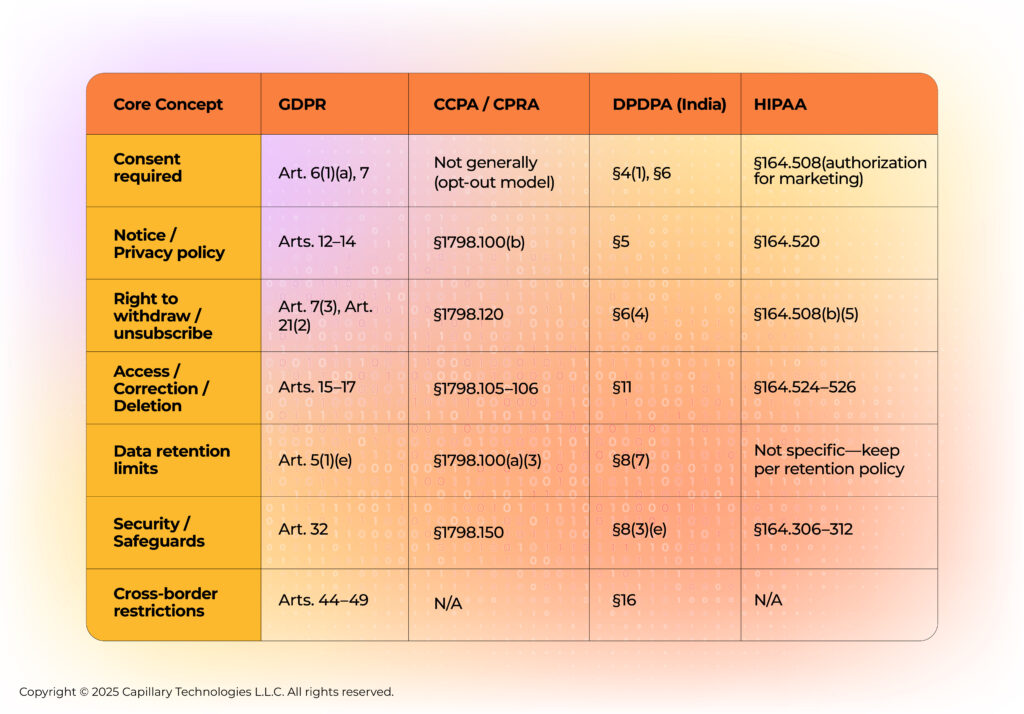
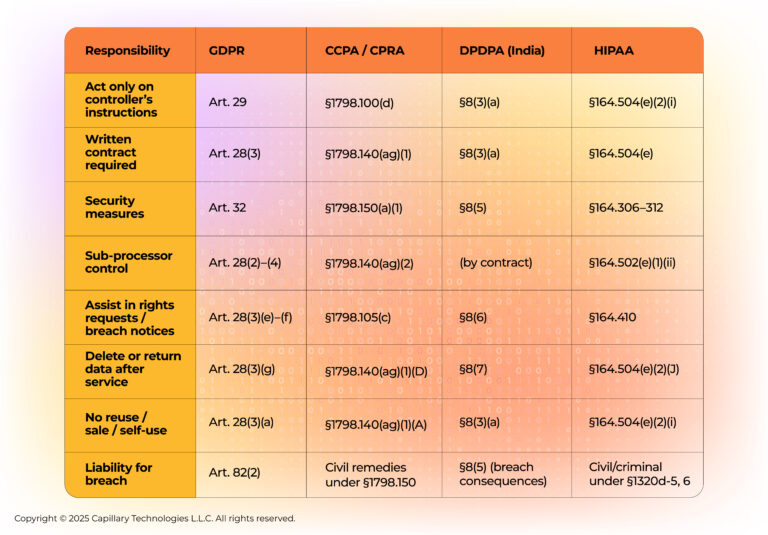
Standards Mapping: Privacy Features to Regulations for Capillary as a processor

Data Privacy and Security

Though we are a Data processor, we support Data controllers, i.e,. our clients in the following clauses:

Data Privacy and Security

Shield+: The Future of Brand Security and Privacy

In a fast-moving world, true leadership means anticipating risks, enabling organizational control, and building trust no matter how the landscape evolves. Capillary’s Shield+ initiative envisions the next generation of data governance, adaptive security, and AI-driven privacy.

Shield+ Agent: AI-Driven Data Governance

Shield+ imagines an AI-powered command center for data protection—where brands can ask questions like “Which systems accessed health data last week?” and get clear answers instantly. Shield+ Agent can discover and tag sensitive data, apply policies dynamically, and provide real-time compliance guidance. A unified dashboard brings this intelligence together, offering visibility into risks, policies, and solutions in one place.

Raising the Bar: Integrated and Proactive Security

As threats evolve, Capillary’s focus areas include automated provisioning through SCIM, brand-dedicated domains for greater control, and a credentials vault for secure integration management. AI-driven threat analytics is also a key priority—enabling early detection of risks across APIs, identities, and dataflows.


Secure Rooms: Support Without Compromising Trust


Secure Rooms reimagine how support teams handle sensitive operations. Access is minimum-necessary, time-bound, logged, and fully auditable. Permissions revert automatically after sessions end, ensuring complete control and visibility for brands.


Shaping the Future Together


Capillary’s vision for Shield+ is about building a resilient, transparent, and empowering security foundation for brands and end customers alike. Cyber risks are accelerating, driven by AI and cloud complexity, and SaaS platforms must evolve to meet them. Through innovation and collaboration, Capillary is working toward a future where security, privacy, and trusted engagement move at the pace of possibility.


If you are re-evaluating how your organization handles customer data, this is the moment to raise the bar. Speak with our team to see how Capillary’s privacy-by-design platform and Shield+ roadmap can help you operationalize global standards, strengthen security, and turn trust into a real competitive advantage. Get in touch with us now


Share

Similar Articles

Contact Us

Get the best loyalty & customer engagement platform out there!

  • Design industry shaping loyalty programs
  • Integrate easily and go live quicker
  • Deliver hyper-personalized consumer experiences
Request A Call

10 Executive Predictions for Customer Loyalty & Engagement in 2026

January 2026

Why loyalty is being rewritten—and what executives must do next

Executive Predictions 2026

Customer loyalty in 2026 won’t be defined by who has the biggest points program or the glossiest app. It will be defined by who feels most worth sticking with in a world where choices are abundant, economic pressure is real, and AI quietly shapes every touchpoint.


A few numbers set the stage:


  • A 5% increase in retention can lift profits by 25–95%.
  • 91% of companies already have loyalty programs—yet 81% of Gen Z and millennials switched brands in the last year.
  •  
  • The loyalty tech market is on track to hit $41B+ by 2032.

The message is clear: companies don’t have a loyalty program problem. They have a true loyalty problem.

Below are 10 executive-level predictions for how customer loyalty and engagement will transform in 2026—what’s driving the changes, why they matter, and how leaders should prepare.


1. “Agentic AI” Becomes the Loyalty Operating System

2026 is the year loyalty stops being a static program and starts behaving like an adaptive system powered by AI agents.


  • Over 70% of retailers have already piloted or partially implemented “agentic AI” to drive efficiency and smarter operations, with customer service and personalized marketing as the top use cases. (TechRadar)
  •  
  • McKinsey highlights “next best experience” models that use AI to orchestrate every interaction—content, timing, offer—based on predicted behavior, not just past clicks. (McKinsey & Company)
  •  

What this looks like in 2026

  • AI bots that don’t just answer questions but proactively intervene when churn risk spikes (e.g., “We noticed you’re not using feature X—want a quick walkthrough and a 20% upgrade credit?”).
  •  
  • Agentic AI in CX platforms (like those showcased in recent industry events focused on AI in customer experience) becomes the brain behind loyalty, not just a bolt-on to the contact center. (The Times of India)

Why this prediction is worth betting on

The economics are brutal: customer acquisition costs keep climbing, while a small increase in retention still produces outsized profit gains. (Sprinklr) AI that can predict and prevent churn will become a board-level priority, not an experiment in the CX team.

Executive move:
Treat AI not as a “chatbot project” but as your loyalty infrastructure. Mandate a 2026 roadmap where AI models continuously rank customers by risk, value, and propensities—and trigger personalized journeys automatically.

2. Loyalty Becomes Emotional… or It Doesn’t Exist

Points and discounts still matter—but younger customers are loyal to brands that feel like them.

  • 70% of Gen Z say they’re loyal to a brand they love and trust, and 21% will pay more to show that loyalty.SAP Emarsys
  • Yet 81% of Gen Z and millennials switched brands in the last year—they’re emotionally loyal, but not locked in. (EMARKETER)

What this looks like in 2026

  • Loyalty is expressed as community membership: private Discords, exclusive drops, co-created collections, and local events.
  • Rewards become less “10% off next purchase” and more “access, identity, and recognition”—early access, backstage classes, community voting on new features.

Example

Gen Z shoppers are already driving a revival of malls as social spaces, valuing community, experiences, and authenticity over pure transactional shopping. (The Guardian)

Executive move:
Measure emotional loyalty (trust, identification with values) alongside transactional metrics. Put community-building and brand storytelling on the same priority level as discounts and cashback.

3. From “Program” to “Platform”: Ecosystem Loyalty Takes Over

With 91% of companies running some kind of loyalty program, we’re hitting saturation. (ClickPost) The next competitive edge is ecosystem-level loyalty, where your program connects multiple brands, categories, or services.

  • The loyalty management market is expected to grow at 15.3% CAGR through 2032, driven largely by omnichannel and partner ecosystems. (ClickPost)

  • Deloitte’s research shows consumers want flexibility in earning and redeeming across contexts—4 in 5 say flexibility is critical. (Deloitte)

What this looks like in 2026

  • Telecom + food delivery + streaming bundles with one shared rewards currency.

  • Airline points redeemable for ride-hailing, grocery delivery, or creator content.

  • Retail brands linking their programs so customers can “spend their loyalty” where it’s most meaningful to them.

Executive move:


Stop designing loyalty as a closed garden. Ask: “Whose ecosystem are we in—or building?” Start with 1–2 high-fit partners and pilot shared rewards or multi-brand tier benefits.

4. Personalization Moves From “Nice” to “Non-Negotiable”

Personalization has been “the future” for a decade. In 2026, it becomes the minimum expectation.

  • 71% of consumers expect personalized interactions, and 76% get frustrated when it doesn’t happen. (McKinsey & Company)

  • 61% of consumers say they’re willing to spend more for personalized experiences, but only 25% of experiences feel truly personalized today. (medallia.com)

  • 58% of marketers plan to invest more in personalization specifically for their loyalty programs in 2025 and beyond. (Digital Silk)
  •  

What this looks like in 2026

Loyalty offers that adapt in real time based on context: location, inventory, and mood inferred from interactions.

  •  
  • Pricing, bundles, and recommendations are all tuned to individual value perception, not static segments.
  •  
  • “Next best experience” engines running under the hood of apps, websites, and service centers. (McKinsey & Company)
  •  

Executive move:


Make “% of interactions that are contextually personalized” a key health metric. If your loyalty emails still look identical for all Platinum members, you’re behind.

5. Subscription Fatigue Forces a “Loyalty for Flexibility” Deal

The subscription gold rush has created its own enemy: subscription fatigue.

  • Over 60% of streaming consumers report subscription fatigue, with one-third canceling at least one streaming service in 2023. (Lexology)

  • In 2024, 40.3% of consumers said they had canceled a subscription service, with video and music streaming hit hardest. (International Finance)

  • Consumers juggle about 12 active subscriptions across categories, making them increasingly selective. (Kadence)

What this looks like in 2026

  • Churn isn’t just “lost customers”—it’s rotating subscriptions as a lifestyle.

  • “Pause, don’t cancel” becomes a standard retention pattern, with loyalty incentives to come back or downgrade instead of leaving.

  • Programs reward tenure and flexibility (e.g., keeping an account open but on a low tier) as much as raw spend.

Executive move:
Redesign loyalty for a subscription-fatigued world:

  • Introduce “loyalty for flexibility” benefits (easy plan switches, seasonal pauses, earned grace periods).

  • Treat every cancellation as a loyalty moment: offer “come back” credits, saved preferences, and easy reactivation.

6. Service Quality Becomes the #1 Loyalty Battleground

Marketing still wins the click—but service keeps (or loses) the customer.

  • Research shows AI in service is shifting from cost reduction to delivering faster, more human-like support that boosts satisfaction and reduces burnout.(DevRev)
  • In many sectors, customers say the least personalized parts of their experience are “during their stay” or “in-store,” not in pre-purchase marketing—an untapped loyalty lever. (medallia.com)

What this looks like in 2026

  • Loyalty tiers that explicitly include service-level guarantees (response times, access to specialists, concierge support).

  • AI agents that resolve the bulk of routine tasks, freeing humans to handle emotional, complex, or high-value interactions.

  • NPS and CSAT linked directly to loyalty benefits and funding—your happiest customers literally earn better perks.

Executive move:
Move part of your loyalty budget into service. It’s no longer “loyalty vs. CX”—service excellence is a loyalty benefit.

7. “Micro-Loyalties”: Customers Are Loyal in Context, Not Forever

The idea of a single “forever brand” is fading, especially among younger consumers.

  • 81% of Gen Z and millennials switched brands in the past year.EMARKETER
  • Half of retail executives now expect price sensitivity to override traditional brand loyalty, even as they know retention is crucial. (openloyalty.io)

What this looks like in 2026

Customers hold multiple micro-loyalties:

  • One brand for premium treats, another for everyday value.

  • One app for discovery, another for price checks, another for checkout convenience.

  • Loyalty can shift by use case, mood, or social context.

Executive move:


Stop asking, “How do we own 100% of this customer?” and start asking, “Where do we deserve to be their first choice?” Design use-case–specific experiences and offers rather than generic “be loyal to us always” messaging.

8. Experience-Led Loyalty Makes a Physical Comeback

Experiences—not just products—will increasingly anchor loyalty.

  • 56% of consumers say it’s important to spend money on experiences. (BON Loyalty)
  • Gen Z is reviving malls as social destinations—going for events, community, and engagement, not just shopping. (The Guardian)

What this looks like in 2026

  • Loyalty programs that convert points into events, learning, and networking (workshops, creator meetups, lounges, live demos).

  • Physical spaces designed as engagement hubs for top-tier members, not just showrooms.

  • Hybrid experiences where in-person engagement unlocks digital perks or exclusive online access.

Executive move:
If you have any physical footprint—stores, branches, pop-ups—treat them as loyalty theaters, not just sales channels. Tie visits, check-ins, and event participation directly into your rewards model.

9. Data Transparency Becomes a Loyalty Currency

Customers will increasingly trade their data for better experiences—but only if they understand the deal.

  • PwC reports 82% of consumers are willing to share personal data in exchange for more personalized experiences. (PwC)

  • Another survey shows 48% of consumers would share data for a better brand experience, and 30% for direct economic value (cash or goods). (Retail Customer Experience)

  • At the same time, more than half of consumers remain worried about data misuse, especially with AI. (TechRadar)

What this looks like in 2026

  • Loyalty programs that explicitly state: “Here’s what we collect, here’s what you get back.”
  • Granular controls (“Share location only in-store,” “Use my data for offers but not for sharing with partners”).

  • “Data dividends” where customers earn bonus points or cash for opting into richer data-sharing.

Executive move:


Turn your privacy policy from a legal PDF into a value story. Make “data-for-value” a visible part of your loyalty messaging, and let customers control—and see—the impact of their choices.

10. Loyalty Goes Hyper-Local and Inclusively Designed

Global brands will still matter—but loyalty will increasingly be shaped by local context and inclusive design.

  • Deloitte’s loyalty research shows younger generations place a much higher value on digital experience, with ~75% of Gen Z and millennials calling a strong digital experience essential to loyalty programs. (Paint & Decorating Retailer)

  • Cultural expectations, payment norms, and economic realities vary widely by region—what feels like “loyalty” in India is different from Brazil or the UK. (Deloitte+1)

What this looks like in 2026

  • Programs tuned to local realities: micro-rewards, low-data app experiences, local language support, regional partner networks.

  • Inclusive tiers that don’t just reward big spenders, but also frequency, advocacy, and engagement, making loyalty feel accessible even at lower income levels.

Executive move:


Stop rolling out one global program with light translations. Build local loyalty playbooks, co-designed with regional teams and customers. Measure success not just in global metrics, but in how well you’ve adapted to local behaviors and constraints.

So… What Should an Executive Actually Do in 2025 to Win 2026?

If you’re leading CX, marketing, or digital, here’s a pragmatic starting checklist:

  1. Name a “Chief Loyalty Owner.”
    Make loyalty (not just CRM) an executive-level responsibility, with clear revenue and experience goals.
  2. Build an AI-backed loyalty brain.
    Start with churn prediction + next best action, then expand to always-on personalization.
  3. Redesign your value exchange.
    Make it explicit: “Here’s what we know about you. Here’s what you get in return.”
  4. Shift some discounts into experiences and service.
    Reallocate a percentage of your promo budget into events, community, and differentiated service levels.
  5. Pilot one ecosystem partnership.
    Don’t boil the ocean—link your program with one strong partner and test a shared reward or universal tier benefit.


Loyalty in 2026 Isn’t a Program—It’s a Promise

As we move into 2026, customer loyalty will be defined less by the size of your rewards wallet and more by the depth of your brand’s commitment to relevance, transparency, and emotional resonance. Loyalty becomes the sum of every interaction—each helpful nudge, each personalised moment, each act of empathy, each friction quietly removed.

The brands that win will be the ones that build relationships, not just reward structures.
The ones that use AI to elevate human connection, not replace it.


The ones that treat data ethically, design inclusively, and innovate with intent.

Customers aren’t asking companies to be perfect—they’re asking them to be present, consistent, and genuinely value-driven. That’s where real loyalty is born.

2026 won’t belong to the companies with the most points. It will belong to the ones that make people feel seen, supported, and significant—the brands that come across as:

  • Smarter – AI that actually helps, not annoys
  • More human – emotional connection and real community
  • More fair – transparent data use and honest value exchange
  • More flexible – adapting to customers’ real lives, not forcing them into rigid journeys

In the end, loyalty in 2026 won’t just be something customers earn—it will be something brands must earn back, every day.

Share

Similar Articles

Contact Us

Get the best loyalty & customer engagement platform out there!

  • Design industry shaping loyalty programs
  • Integrate easily and go live quicker
  • Deliver hyper-personalized consumer experiences
Request A Call

Generative Loyalty: The Future of Customer Loyalty

Generative Loyalty is an innovative, new model for customer loyalty from Capillary Technologies and Brierley. While traditional loyalty programs focus on rewarding customers for their past behavior, generative loyalty focuses on planning ahead and the future; predicting and proactively anticipating customer needs, using insight to generate more insight.


Generative Loyalty to Regenerate ROI


Brands can increase overall loyalty marketing ROI and customer spending by leveraging generative loyalty. 


As we’re right in the middle of the next-gen digital age, brand loyalty, and loyalty program engagement need to evolve. Consumers are looking for immediate value, and their loyalty is more fluid. By adopting a generative loyalty approach, brands can create net new outputs based on data, algorithms, and AI. This AI-driven strategy will continually self-generates (no surprise) campaigns and learning, allowing loyalty insights to drive contextualized messaging to be constantly reinvented. This in turn creates more loyalty intelligence. And with that, loyalty intelligence allows marketers AND consumers to essentially regenerate their own loyalty journey – whatever and however they want their loyalty to be – as they like it.


Generative loyalty uses predictive analytics to drive intelligence that’s needed to address the right timing, tone, and treatment for automating powerful personalization and optimization. Businesses can retain valuable customers, enhance emotional loyalty, and drive higher returns. It’s easy. It’s automated. It’s contextual. This is what will drive the business outcomes that matter the most to your brand to generate revenue and profits.


Generative loyalty has the potential to revolutionize the way that brands interact with their customers. By using data and AI to predict what customers want in the future, brands will create more personalized and engaging propositions to drive profitable loyalty solutions.


Pioneering Loyalty Innovations


Capillary Technologies and Brierley (a Capillary Technologies company) have been making waves and driving innovation in the loyalty industry for over three decades. Named a leader in the Forrester WaveTM: Loyalty Technology Solutions, Q1 2023 report, Capillary Technologies powers 500+ loyalty programs, across 30+ countries, 400 brands, and more than a billion consumers. 


To learn more about generative loyalty and how our loyalty solutions can transform your brand, reach out to the customer loyalty experts! We will be thrilled to help integrate cutting-edge loyalty strategies into your marketing solutions and increase ROI and program profitability.