
February 13, 2026
See how Capillary bakes privacy, security, and global compliance so you can protect customer data, earn trust, and turn it into an advantage.
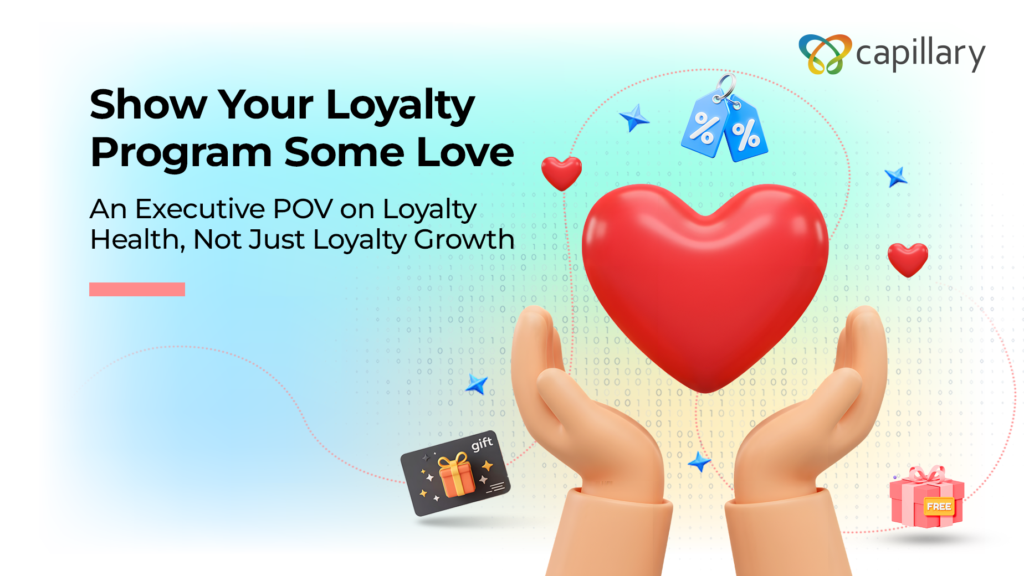
Valentine’s Day is a reminder, not the point
As Valentine’s Day approaches, brands inevitably start talking about relationships, appreciation, and loyalty. It’s a convenient seasonal metaphor—but it also exposes an uncomfortable reality. Most companies spend far more time acquiring customers and launching promotions than they do systematically evaluating the health of their loyalty program. February 14 may not belong in your strategic planning calendar, but it is a useful reminder that loyalty is not a “set it and forget it” asset. Like any long-term relationship, it either deepens through intentional care or slowly decays through neglect.
The questions leaders should actually be asking
In nearly every loyalty review I’ve participated in, the same surface metrics dominate the conversation: total members, enrollment growth, and redemption rates. Those numbers feel reassuring, but they rarely answer the questions that actually matter. Is the membership base still growing because the program is compelling—or simply because enrollment is defaulted at checkout? Are members actively engaging with benefits, or just accumulating dormant points? Is the program reducing churn, increasing frequency, or driving a mix shift toward higher-margin categories? And most importantly, is it still competitive in a market where loyalty programs have become table stakes?
If those questions feel uncomfortable, that’s usually a sign they haven’t been examined rigorously. Programs rarely fail dramatically. They drift. They become bloated with underused benefits, misaligned tiers, outdated earn-and-burn economics, and experiences that no longer feel distinctive. Over time, what was once a strategic advantage turns into an expensive maintenance obligation.
Loyalty health is not the same as loyalty size
One of the biggest mistakes companies make is equating loyalty program “health” with membership growth. A large loyalty base is not inherently valuable if a meaningful portion of those members are inactive, disengaged, or behaviorally unchanged. In fact, a fast-growing but weakly engaged program often masks deeper structural problems: overly generous enrollment incentives, shallow differentiation versus competitors, or benefits that don’t align with what customers actually value.
A healthy loyalty program has three characteristics. First, it meaningfully changes customer behavior in ways that improve unit economics—frequency, retention, mix, or share of wallet. Second, it delivers benefits that feel emotionally resonant, not just financially rational. Third, it evolves as customer expectations, competitive benchmarks, and business priorities shift. Most programs satisfy only one of these conditions. Very few satisfy all three.
The competitive reality most brands underestimate
Loyalty is no longer a differentiator by default. In most categories, your customers belong to three to six programs already. They are constantly comparing your benefits, tiers, thresholds, and experiences—whether consciously or not—against what they get elsewhere. Free shipping thresholds, birthday rewards, points expiration policies, early access, and VIP perks are no longer novel. They are hygiene factors.
This means that loyalty design must be treated as a competitive strategy, not a marketing tactic. If your tier thresholds are meaningfully higher than your peers’, or your rewards feel less attainable, or your experiential benefits are generic, customers will notice—even if they never explicitly complain. The result isn’t immediate churn. It’s gradual disengagement, lower redemption intent, and declining emotional attachment.
Why emotional loyalty matters more than most dashboards admit
Most loyalty programs are built around rational incentives: points, discounts, and transactional rewards. Those mechanics are necessary, but they are not sufficient. Emotional loyalty—how customers feel about your brand, how recognized they feel, how valued they believe they are—drives long-term retention far more than incremental discounts.
This is the dimension most programs under-measure. Engagement metrics tell you whether customers are clicking and redeeming. They don’t tell you whether customers feel appreciated, understood, or proud to associate with your brand. Those emotional drivers are often the difference between a customer who defects for a 10% discount elsewhere and a customer who stays even when your price isn’t the lowest.
The uncomfortable truth is that many loyalty programs unintentionally commoditize the brand by training customers to anchor on discounts instead of attachment. When that happens, loyalty stops being a relationship engine and becomes a margin drain.
What a real loyalty health assessment should include
A serious loyalty health review goes far beyond counting members and redemptions. It should evaluate four dimensions in parallel.
First, behavioral impact: Is the program demonstrably improving frequency, retention, mix, or share of wallet versus a comparable non-member baseline? Second, economic efficiency: Are earn-and-burn rates, tier thresholds, and benefit funding aligned with margin structure and profitability targets? Third, experiential differentiation: Do benefits feel distinctive and valued, or interchangeable with competitors? Fourth, emotional resonance: Do customers feel recognized, appreciated, and emotionally connected to the brand?
Most programs are only measured on the first dimension—and even that measurement is often superficial. Without a holistic view, teams end up optimizing tactics in isolation rather than redesigning the system that produces those outcomes.
Why competitive benchmarking is not optional anymore
Internal performance trends are meaningless without external context. A flat engagement rate might be acceptable—or it might signal that competitors have leapfrogged you on benefits and experience. A rising enrollment curve might reflect organic growth—or simply frictionless sign-ups with no real commitment.
Competitive benchmarking forces uncomfortable but necessary questions. Are your tier thresholds materially higher than your peers? Are your rewards less attainable? Are your experiential benefits weaker? Are your earn rates out of step with category norms? Without those answers, loyalty design decisions are being made in a vacuum.
This is where most brands underestimate the speed of loyalty inflation. What felt generous three years ago is often merely average today.
What to do when the diagnosis isn’t flattering
The point of a loyalty health assessment isn’t to confirm that everything is fine. It’s to identify what no longer works and what should be rebalanced. In practice, that usually leads to one of three strategic moves.
First, rebalance earn-and-burn economics so rewards feel attainable without overfunding discounts. Second, consider adding or re-aligning tiers that reward and recognize profitable behaviors, not just raw spend. Third, introduce emotionally resonant benefits—recognition, access, personalization, gamification and surprise & delights —that deepen attachment rather than just subsidizing transactions.
The strongest programs are not the biggest or most generous ones. They are the most intentionally designed ones.
A more useful Valentine’s Day takeaway
So yes, Valentine’s Day is a contrived hook. But the underlying point is real. Loyalty is not a campaign. It is an operating system for customer relationships. And like any system, it degrades if it isn’t periodically audited, refreshed, and realigned with strategy and competition.
Most brands don’t need a bigger loyalty program. They need a healthier one.
That means measuring what actually matters, understanding how customers really feel, benchmarking against competitors honestly, and redesigning benefits with both emotional resonance and financial performance in mind. We have decades of experience building, enhancing and benchmarking loyalty programs across nearly every industry, and can also field our Balanced Loyalty Quotient (BLQ) research to your customers, giving you insights into their rational and emotional loyalty toward your brand vs. key competitors.
If your loyalty program hasn’t had a serious health check in the last 18–24 months, it’s probably overdue—whether Cupid is watching or not.
Share

Randy Hernandez
Trending Topics
Ecommerce in Malaysia: Growth, Trends & Opportunities
Capillary Technologies acquires Brierley
Similar Articles
Great Ingredients, Broken Recipes: Why North America’s Biggest Loyalty Programs Are Failing Their Best Customers
A few weeks ago, I set out to answer a question that had been nagging
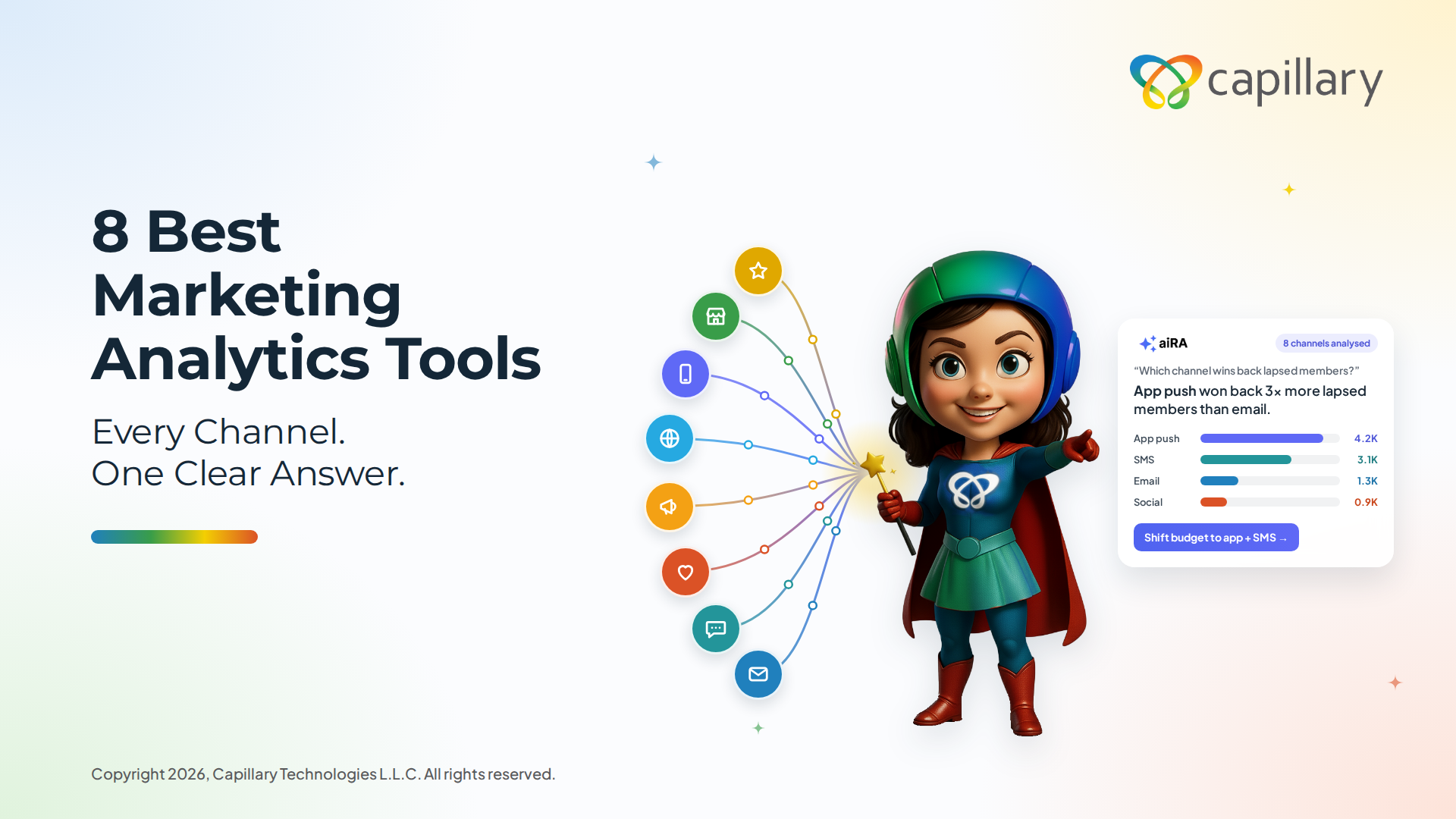
8 Best Marketing Analytics Tools for 2026 (Self-Service & AI-Powered Compared)
Introduction Marketers are drowning in channel data, yet most still wait days for a simple
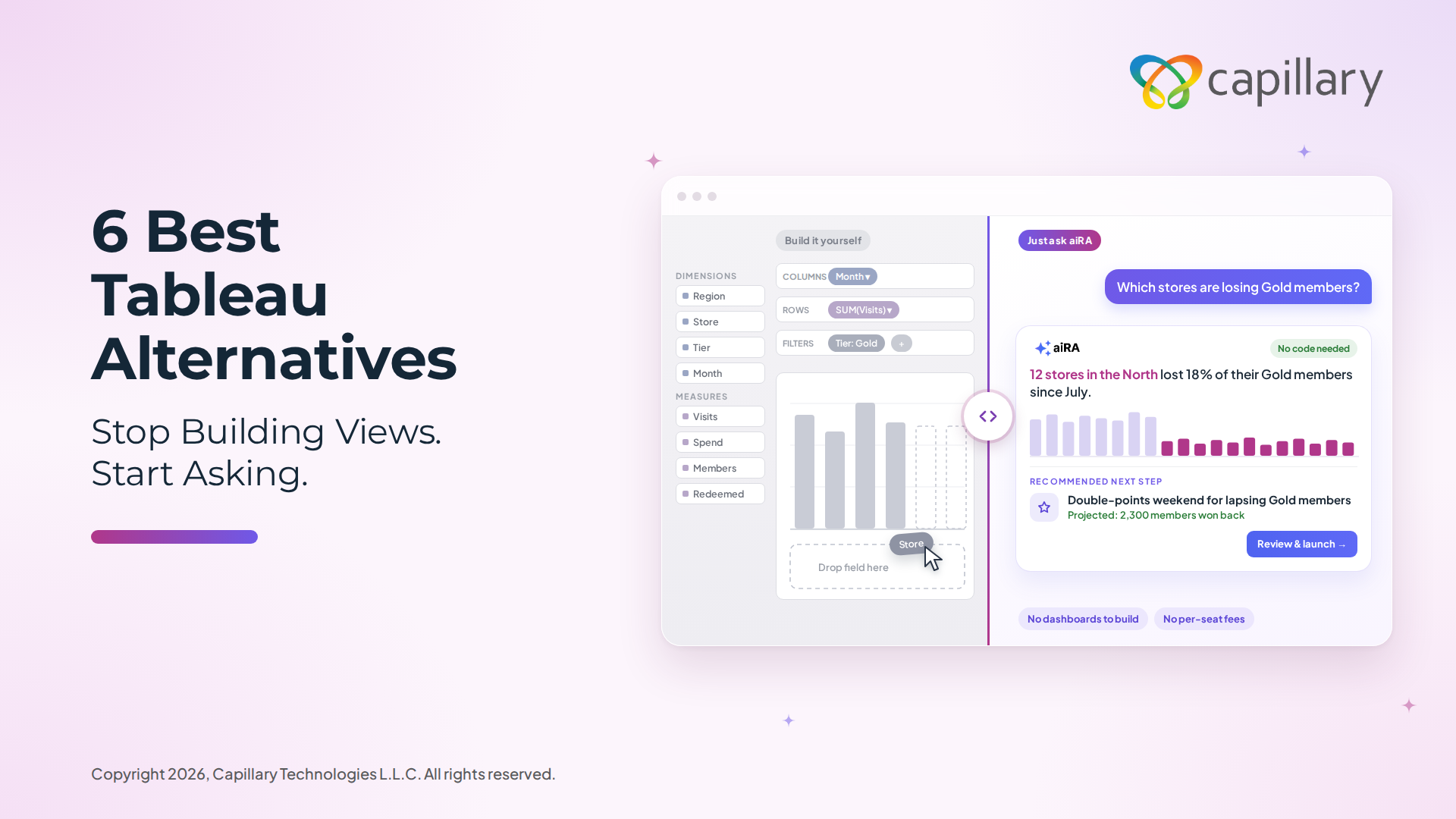
Tableau Alternatives: 6 No-Code & AI-Powered BI Tools Worth Switching To in 2026
Introduction Tableau is powerful, but it is also heavy. The learning curve is steep, most
Contact Us
Get the best loyalty & customer engagement platform out there!
- Design industry shaping loyalty programs
- Integrate easily and go live quicker
- Deliver hyper-personalized consumer experiences