
June 26, 2026
Gamified, personalized loyalty programs are becoming the key differentiator in the DACH region, helping brands boost engagement, retention, and customer lifetime value by turning passive rewards into interactive experiences.
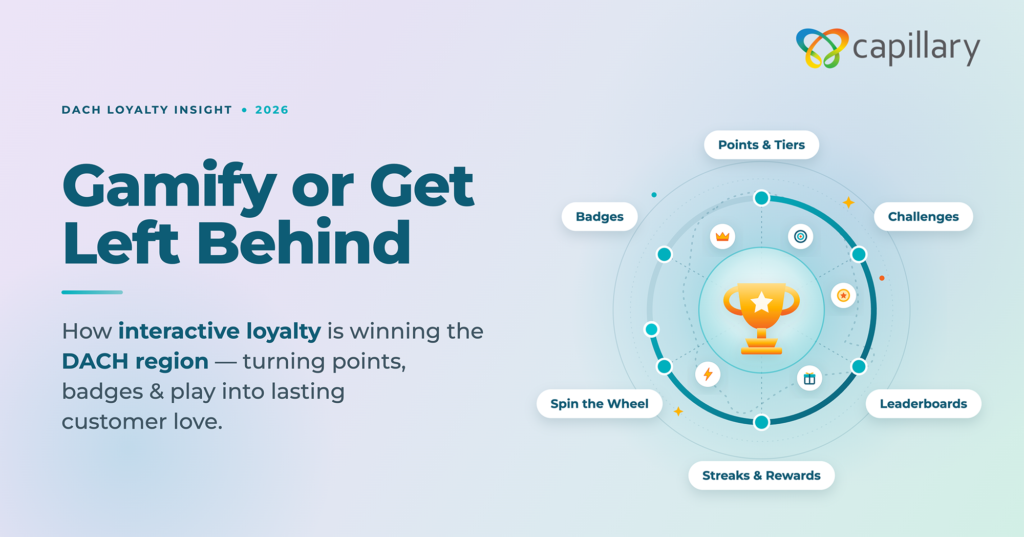
The foundational architecture of customer loyalty is shifting across Germany, Austria, and Switzerland. The days of plastic loyalty cards and generic paper coupons are fading. Today’s consumers expect seamless, highly personalized digital experiences, but then again – merely offering an app is no longer enough to secure their attention.
The DACH Loyalty Paradox: High Enrollment, Low Engagement
On paper, the digital transformation of loyalty in the DACH region looks highly successful. Recent data from the DACH Loyalty Report 2026 shows that 73.8% of DACH shoppers would switch to a digital loyalty solution, and 61% explicitly demand personally tailored offers. The financial upside of meeting this demand is massive, as customers spend an average of 27.9% more after engaging with a targeted loyalty program. (1)
However, a closer look reveals a significant “experience gap.” While the average European consumer belongs to around nine different loyalty programs, they actively use only a fraction of them. The modern digital marketplace is saturated with “sameness,” predictable earn-and-burn points systems, and static discount tiers. To prevent app fatigue and customer churn, brands must transition their loyalty propositions from passive, points-based programs to active, personalised engagement that also recognises broad behaviour as well.
The most powerful mechanism to achieve this is gamification.
The Psychological Architecture of Gamification
The DACH market is not completely alien to the concept of gamification, and there are companies such as Deutsche Bahn that frequently have games on the mobile app during the Christmas season, Easter break, etc., that offer their members easy-to-play games with tangible rewards. These are highly contextual and offer members a chance to play when they have the time – during travel.
That said, gamification does not have the widespread adoption that brands would benefit from.
It is worth noting that gamification is not merely a marketing trend; it is also a proven behavioral strategy supported by extensive academic research. Studies published in the Journal of Theoretical and Applied Electronic Commerce Research confirm that gamification fulfills fundamental human psychological needs, such as autonomy, competence, and social relatedness, which leads directly to higher brand engagement and deep-rooted loyalty. (2)
By weaving game design elements, such as tiered milestones, digital badges, interactive quizzes, and chance-based “spin-to-win” wheels, into the customer journey, brands trigger intrinsic motivation. Customers stay engaged because they genuinely enjoy the interactive process, rather than just waiting for a delayed financial discount.
Retailers such as Rewe, through its “Rewe Bonus” program, have started offering its members the opportunity to redeem vouchers, earn cashbacks, and also collect digital stamps on the mobile app. This ensures that customers get short-term/immediate benefit, and also accumulate something for a long-term reward as well.
The business impact is undeniable. The global gamification market, valued at $36.86 billion in 2025, is projected to scale aggressively to $308.85 billion by 2034. (3) Implementing gamified features leads directly to a 30% increase in customer retention and can boost overall brand engagement by 47%. (4) Furthermore, 73% of consumers report viewing a brand more favorably when quality rewards are presented through gamified experiences. (4)
How the Shift Looks in Practice and what does it mean for your brand?
Putting the data together gives us a composite diagnosis of how loyalty programs are evolving:
|
Layer |
Traditional Loyalty |
Gamified Loyalty |
|
Strategy |
Points strictly for financial transactions |
Engagement via daily interactions and interactive challenges |
|
Reward Structure |
Static discounts and predictable coupons |
Variable rewards, digital badges, and exclusive status tiers |
|
Customer Motivation |
Extrinsic (chasing financial gain) |
Intrinsic (autonomy, competence, social relatedness) |
|
Data Gathering |
Transactional purchase history only |
Behavioral tracking, zero-party data, and real-time interaction |
DACH Region Case Studies: Real-World ROI
We are already seeing this approach benefit brands and retailers across Germany, Austria, and Switzerland as they use these tools to drive measurable ROI:
-
A Leading Swiss Grocery Retailer: When this supermarket chain needed to boost sign-ups for its new loyalty program, it implemented an interactive digital memory game. The engagement was so successful that more than 50% of the players signed up for the loyalty program after completing the challenge. (5) Later, their gamified 24-day digital Advent Calendar generated over 150,000 visits and captured more than 86,000 highly qualified leads. (5)
-
A Global Automotive Brand: This brand’s regional loyalty app utilizes digital “lootboxes” filled with randomized rewards to gamify the driving experience. By rewarding users with digital items for their vehicle avatars, they transformed an infrequent automotive transaction into a daily brand interaction. (6)
-
A Major Coalition Loyalty Program: The region’s absolute largest coalition program recently launched a “Games World” directly inside its app, completely shifting user session duration by allowing members to earn loyalty currency simply by playing vetted mobile games. (7)
-
A Quick-Service Restaurant Chain (Global Innovation): Showcasing the future of location-based gamification, this fast-casual brand triggered a “Spin & Win” digital wheel on users’ phones the exact moment they walked near a retail location. This frictionless, proximity-based gamification resulted in a 20% engagement rate and a massive 23% lift in new loyalty user sign-ups. (8)
Technology alone isn’t enough; strategy is what makes gamification stick. At Capillary Technologies, we believe that to stand out in a saturated market, your brand must build a deep emotional connection with your consumers. With our dedicated DACH regional team in Munich, we are committed to bringing our advanced loyalty infrastructure to local enterprises.
Recently named a Leader with the highest scores in both current offering and strategy in The Forrester Wave™: Loyalty Platforms, Q4 2025, Capillary’s modular SaaS suite empowers brands to orchestrate these complex journeys. (9) Utilizing platforms like Loyalty+ alongside our aiRA generative AI assistants, brands can rapidly deploy hyper-personalized, gamified campaigns at scale.
Beyond the software, Capillary offers specialized Gamification and Loyalty Consulting Services. Our team provides bespoke Program Design and Redesign services to build highly engaging, gamified initiatives from the ground up. We don’t just add arbitrary leaderboards; we apply proven behavioral mechanics to your specific audience, ensuring that every challenge and reward is scientifically engineered to boost your Balanced Loyalty Quotient (BLQ) and drive measurable revenue.
Adding a gamified layer to your loyalty ecosystem is no longer optional; it is a baseline requirement to secure customer lifetime value in the modern economy. It is time to let Capillary’s technology and consulting experts level up your loyalty strategy and turn passive shoppers into lifelong brand advocates.
Case in point
Working with Jotun in Vietnam, Capillary’s AI models surfaced a recurring dip in weekly sales every Friday, right in the middle of the end-of-year refurbishment boom, when painters were busiest. Instead of discounting their way out of it, the brand turned the soft spot into a game. “Golden Friday” let painters scan a QR code on their paint purchase, win instantly, and share the moment, three mechanics (gameplay, instant gratification, and word-of-mouth) compressed into a few taps. Simple enough that anyone could play, sticky enough that they came back week after week.
The real edge was in the prize, not just the play. Gold carries deep cultural weight in Vietnam, where receiving it around the New Year is considered highly auspicious, so the rewards didn’t just feel valuable, they plugged straight into sentiment painters already held. The payoff: a 1,250% lift in Friday sales, 12X more paint purchased, and a 30% jump in registrations, amplified by Facebook and Zalo campaigns that reached 1.25M. It’s proof that the best gamification isn’t about points and confetti, it’s about reading behavior, finding the dead day, and rewarding people in a way that genuinely means something to them.
Where to start, and what are the risks of getting it wrong
So where do you begin, and how do you avoid the traps? Gamification is easy to get wrong. Bolt a spin-to-win wheel onto an app with no behavioural rationale and you just add another notification to ignore, feeding the fatigue and “sameness” that already drive churn. Done badly it can feel manipulative, reward the wrong behaviours, burn margin on giveaways that don’t lift engagement, and erode hard-won trust in a privacy-conscious DACH market. The fix is to start with a diagnosis, not a feature.
As Jotun showed, the win came from spotting one specific soft spot, a dead sales day, and rewarding something the audience genuinely cared about. So begin small: pick one high-friction moment, match it to what actually motivates your customers, and pilot a single mechanic with clear metrics before scaling. That’s where strategy beats technology, and where Capillary comes in: our consulting team engineers each mechanic against your audience and Balanced Loyalty Quotient (BLQ), then uses Loyalty+, gamification, and aiRA to deploy and refine it at scale.
Sources and further reading:
(1) Hello Again. (2025). DACH Loyalty Report 2026. Hello Again Whitepapers.
(2) Li, N., & Aumeboonsuke, V. (2025). How Gamification Features Drive Brand Loyalty: The Mediating Roles of Consumer Experience and Brand Engagement. Journal of Theoretical and Applied Electronic Commerce Research, 20(2), 113.
(3) Fortune Business Insights. (2025). Gamification Market Size, Share & Industry Analysis, 2026-2034.
(4) Fluent. (2025). How Gamified Loyalty Programs Engage Customers Beyond the Checkout. Fluentco Insights.
(5) Brame. (2025). Loyalty Reloaded: How SPAR Switzerland Innovated Customer Engagement Through Gamification. Brame Customer Stories.
(6) Lindemann, T. (2024). Gamification Examples in the Automotive Sector: Porsche Austria BONEO. Thomas Lindemann Gamification.
(7) PAYBACK Group. (2025). Mit Spiele-Apps Punkte sammeln! PAYBACK Spielewelt. PAYBACK.de.
(8) Flybuy. (2026). Flybuy powers new location-triggered gamification experiences that increase app downloads and loyalty adoption. PR Web.
(9) Capillary Technologies. (2025). The Forrester Wave™: Loyalty Platforms, Q4 2025.
Share

Nick Lupo
Trending Topics
Ecommerce in Malaysia: Growth, Trends & Opportunities
Capillary Technologies acquires Brierley
Similar Articles
Power BI vs Tableau vs aiRA
Your Dashboard Shows the Drop. aiRA Shows Why, & What to Do About It. Power
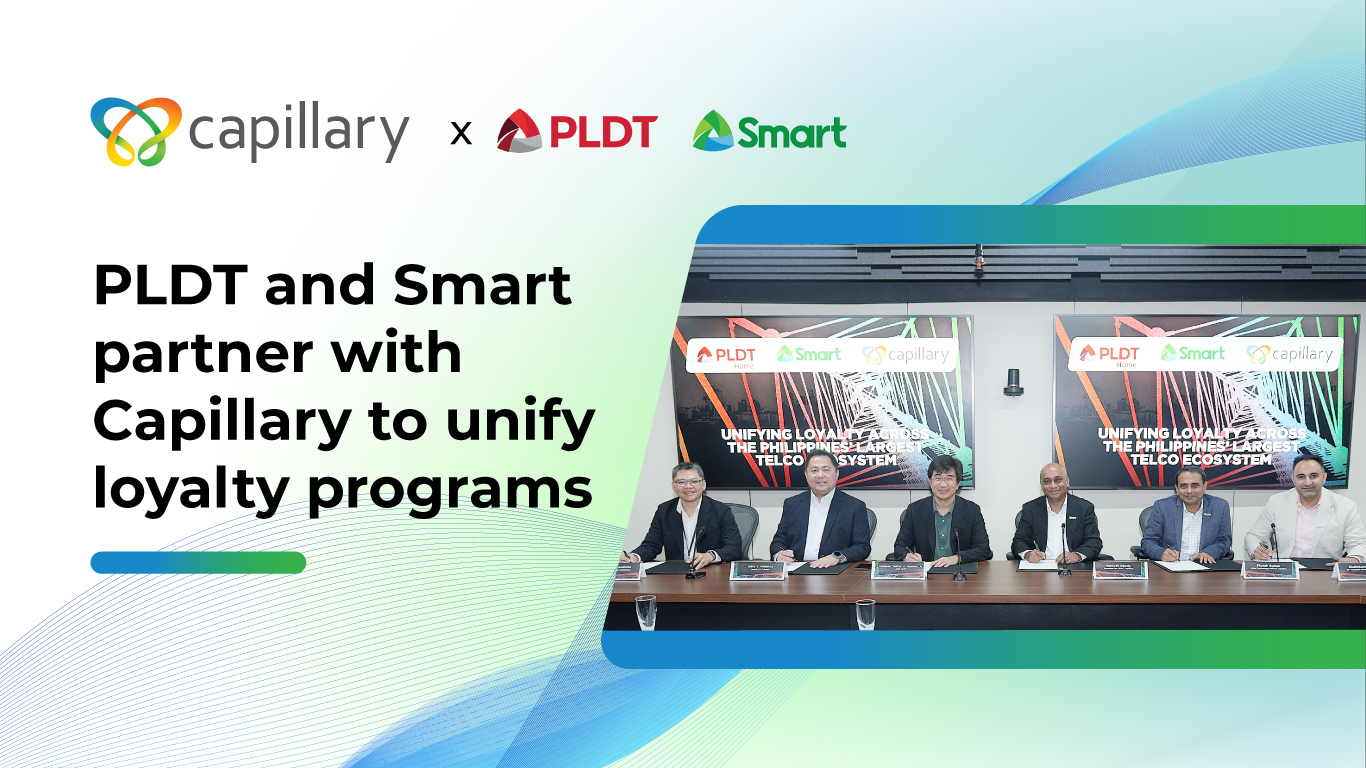
PLDT and Smart partner with Capillary to unify loyalty programs
Manila, Philippines — PLDT Inc. (PLDT) and its wireless subsidiary Smart Communications, Inc (Smart) have
Contact Us
Get the best loyalty & customer engagement platform out there!
- Design industry shaping loyalty programs
- Integrate easily and go live quicker
- Deliver hyper-personalized consumer experiences