
July 8, 2026
Loyalty is becoming the foundation of modern marketing by powering trusted customer identity, first-party data, AI-driven personalization, and long-term relationships in a privacy-first world.
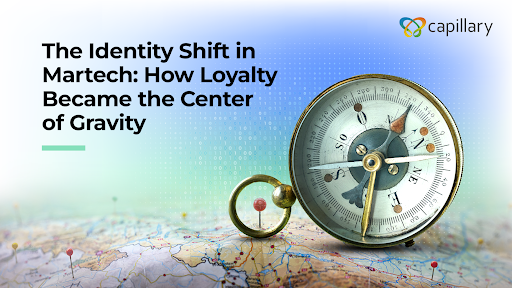
Over the past few years, loyalty has moved from a “nice-to-have program” to a structural advantage in modern marketing. That shift is not happening because brands suddenly rediscovered points. It is happening because the center of gravity in martech is moving toward identity, consent, and durable customer relationships, and loyalty is one of the few mechanisms that can deliver all three at once.
The classic martech playbook was built for an era of abundant third-party data and cheap reach. That era is ending unevenly, but unmistakably. Third-party identifiers are less dependable, regulators are more active, and platforms are tightening the rules around tracking and data sharing. Even Google’s long-running third-party cookie deprecation effort has repeatedly shifted timelines and implementation details. That instability isn’t temporary. It signals a future defined by persistent uncertainty and diminished signal, not a return to the old model.
In that environment, loyalty becomes more than a retention lever. It becomes the brand’s most scalable way to create a direct, permissioned data relationship with customers at the exact moment they are most willing to identify themselves: when they are receiving real value in exchange. That value exchange is the part many stacks struggle to create. A customer data platform can unify what you already have, but it cannot, on its own, compel authentication, preference sharing, or ongoing behavioral depth. Loyalty can.
Loyalty is becoming the practical alternative to the “perfect CDP promise”
For years, CDPs were positioned as the system that would finally deliver a unified customer view, complete with persistent identifiers and activation-ready segments. In practice, many brands discovered that identity resolution is only as strong as the identifiers feeding it. When customers browse anonymously, clear cookies, switch devices, or opt out, CDP graphs quickly degrade. Especially as data collection rules continue to tighten.
Loyalty changes the equation because it is inherently identity-led. A loyalty ID, membership login, phone number, or app-based identifier is not just a technical key; it is a durable relationship handle that can span e-commerce, owned channels, in-store, and service interactions. More importantly, it is typically tied to explicit consent, stated preferences, and a transparent explanation of what data is collected and why. In an era where privacy regulation is expanding state-by-state in the U.S. and enforcement activity is increasing, that clarity is a competitive advantage, not a compliance afterthought.
This is why loyalty is increasingly being treated as a foundational identity layer rather than a campaign layer. When brands have a strong loyalty program, the “single customer view” becomes materially easier because the customer has already agreed to be recognized across touchpoints. The identity graph becomes less probabilistic and more deterministic, and deterministic identity is the difference between marketing that guesses and marketing that knows.
Loyalty unlocks personalization that customers actually experience as relevant
Personalization has suffered from a credibility gap. Many organizations claim they personalize because they can merge tables, not because customers consistently experience something better. The result is a lot of superficial customization and a lot of missed context: customers receiving offers for products they already purchased, service messages disconnected from store activity, and lifecycle journeys that reset every time a user switches devices.
Loyalty shifts personalization from surface-level message to decisioning infrastructure that actually informs what a brand does next. When membership is the spine of the customer record, personalization can incorporate transactional recency, category affinity, price sensitivity, earn-and-burn behavior, channel preference, and engagement patterns in a way that is both richer and more stable than cookie-based observation. It also supports the governance customers increasingly expect: transparency, control, and guardrails around how data fuels automated experiences.
This matters because customer expectations have not cooled. Research continues to show that customers want more relevant experiences and more coherence across channels, but they also expect trust, control, and honesty as personalization becomes more automated. Loyalty is the mechanism that can balance those demands because it is inherently opt-in and inherently value-based.
Loyalty is a customer experience operating model, not a marketing tactic
A modern loyalty program touches more than marketing. It touches merchandising and pricing through offers, finance through liability and breakage, product through benefit design, analytics through measurement, customer service through issue resolution, and stores through enrollment and identification at POS.
This is exactly why loyalty is becoming a forcing function for customer experience transformation.
Organizations have struggled for years with “alignment around the customer” because each function sees a partial customer. Loyalty, by design, demands a shared definition of the member and a shared understanding of the lifecycle. That creates a practical pathway from siloed channel execution to end-to-end journey orchestration, where acquisition, onboarding, engagement, retention, and win-back are planned as a connected system rather than a sequence of disconnected campaigns.
This is also where loyalty becomes strategically different from a CDP. The CDP is often owned by marketing operations or data teams and can remain abstract to the business. Loyalty is inherently business-facing because it includes a promise to customers, a measurable cost structure, and a cross-functional operating cadence. When loyalty is well-run, it becomes the governance layer that makes “customer-centric” real.
AI runs on loyalty data, and loyalty data is unusually model-ready
AI does not fail because models are weak. It fails because inputs are incomplete, identities are inconsistent, and outcomes cannot be measured cleanly enough to improve. Loyalty directly mitigates all three.
First, loyalty data is identity-stable. That makes it dramatically easier to build features at the person level rather than the device level, which improves propensity scoring, next-best-action models, churn prediction, and lifetime value forecasting. Second, loyalty data is behavior-dense. Transactions, redemptions, benefit selection, tier movement, referrals, app engagement, and preference signals create a mix of explicit and implicit intent that is more interpretable than clickstream alone. Third, loyalty is measurable. When you control the member relationship, you can design holdouts, measure incrementality, and connect marketing stimuli to downstream behavior with fewer attribution distortions.
Equally important, the trust conversation around AI is not theoretical anymore. Customers want transparency and control, and regulators are increasingly attentive to how personal data is used in automated systems. Loyalty offers a natural framework for consent, preference management, and human-legible explanations of value, which helps brands deploy AI with fewer governance surprises.
Loyalty data is higher quality because it is collected with intent
Most brands live with fragmented profiles, mismatched identifiers, and data that is “technically collected” but operationally unreliable. Loyalty data is different because it is designed to be used. A member record is meant to support earning and redemption, tier status, benefits delivery, and customer recognition. That forces data cleanliness: consistent timestamps, consistent identifiers, and a clear connection between actions and outcomes.
That quality shows up in practical ways. SKU-level purchase history is more actionable than generic “visited product page” signals. Earn-and-burn patterns reveal true engagement and price sensitivity. Tier movement reflects a lifecycle state that marketing can operationalize. Preferences and declared interests enable segmentation that is explainable, not just inferred. When these signals are fed into activation and analytics, the organization gets faster, not just “more data.”
Analyst coverage increasingly reflects this convergence of loyalty and broader marketing capabilities, with loyalty platforms being evaluated not only on rewards mechanics but also on profile construction, personalization support, and decisioning.
Loyalty is becoming the operating system for modern marketing
When loyalty sits at the center, it naturally connects identity, data, personalization, measurement, and AI. It becomes the system that makes the rest of the stack more valuable because it increases authenticated traffic, improves consent posture, stabilizes identifiers, enriches profiles with behavioral depth, and creates a framework for testing and optimization that is tied to real commercial outcomes.
This is why, heading into 2026, loyalty is increasingly being treated less like a program and more like a platform strategy. The brands that win will not be the ones with the most generous points. They will be the ones that design loyalty as a customer relationship engine: a membership experience customers actually want, a data relationship customers actually understand, and an operating model the business can run consistently.
In short, loyalty is no longer a channel. It is the connective tissue that makes the entire martech ecosystem to function under modern privacy constraints, rising customer expectations, and AI-driven decisioning.
Share

Alexis Kvamme
Trending Topics
Ecommerce in Malaysia: Growth, Trends & Opportunities
Capillary Technologies acquires Brierley
Similar Articles
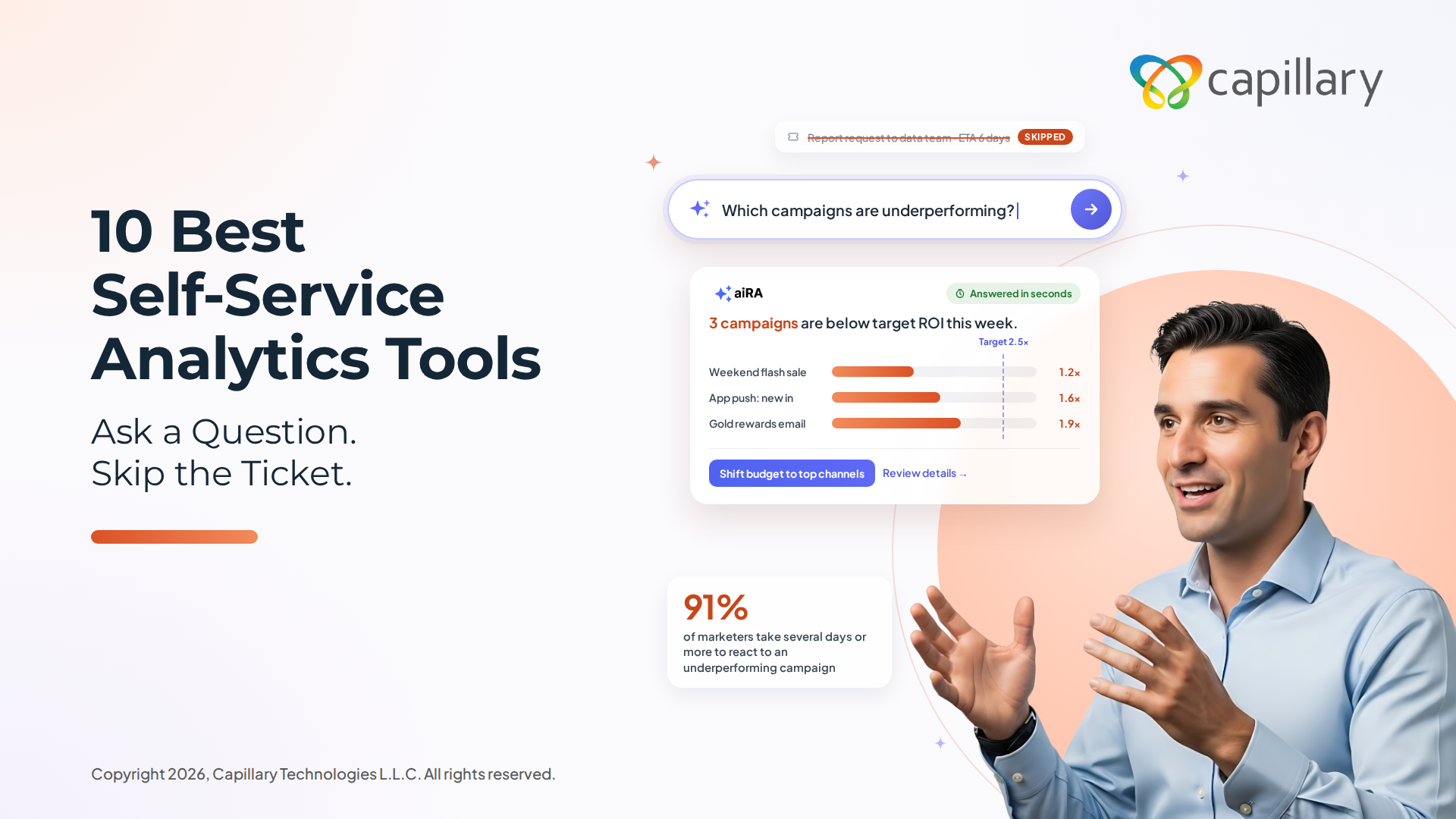
10 Best Self-Service Analytics Tools for Marketers and Business Teams in 2026
Marketing teams run on data, but getting a straight answer out of that data is
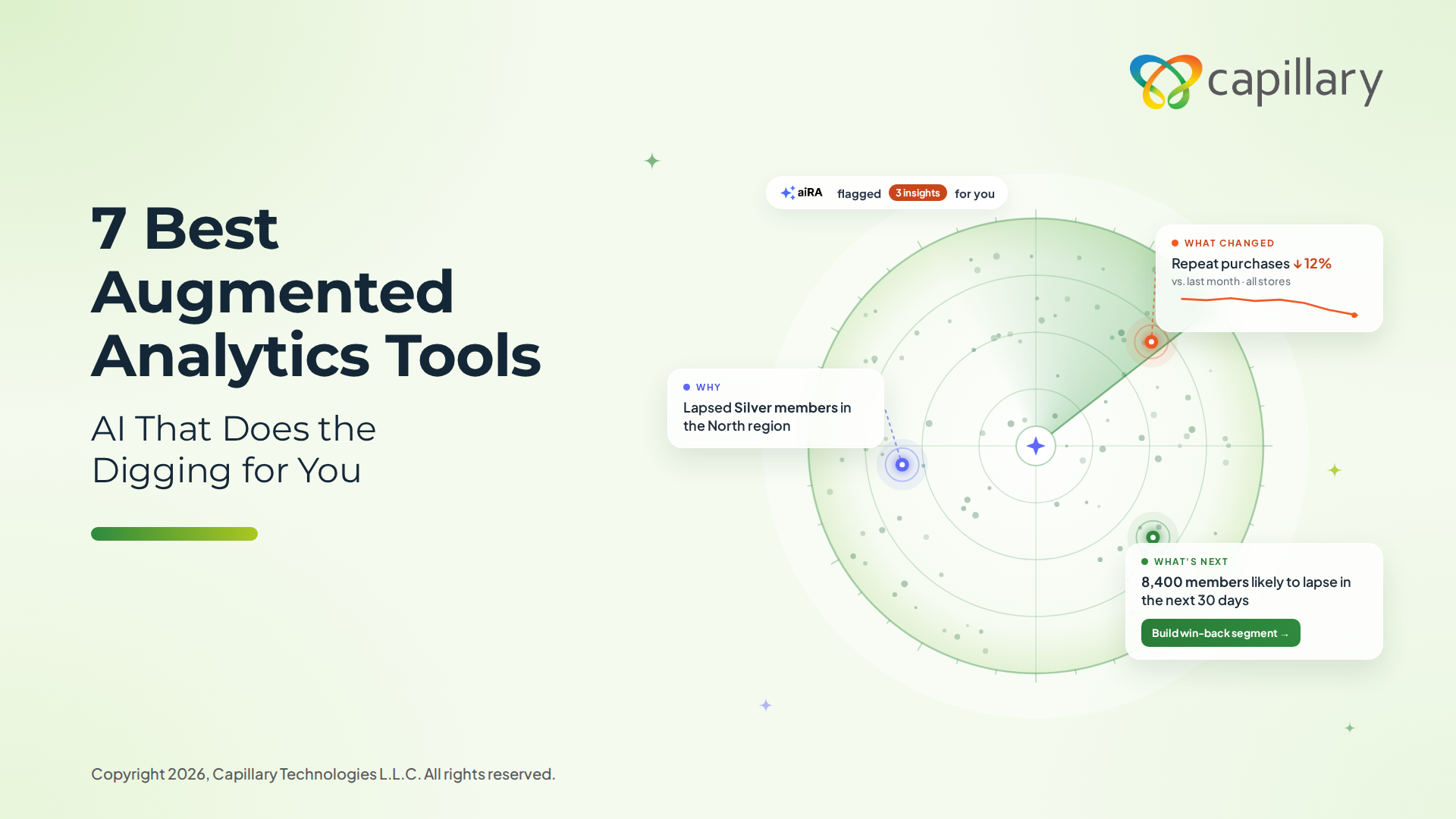
7 Best Augmented Analytics Tools for Marketing and CRM Teams in 2026
Most dashboards show you what happened, but they leave the digging to your team. Augmented
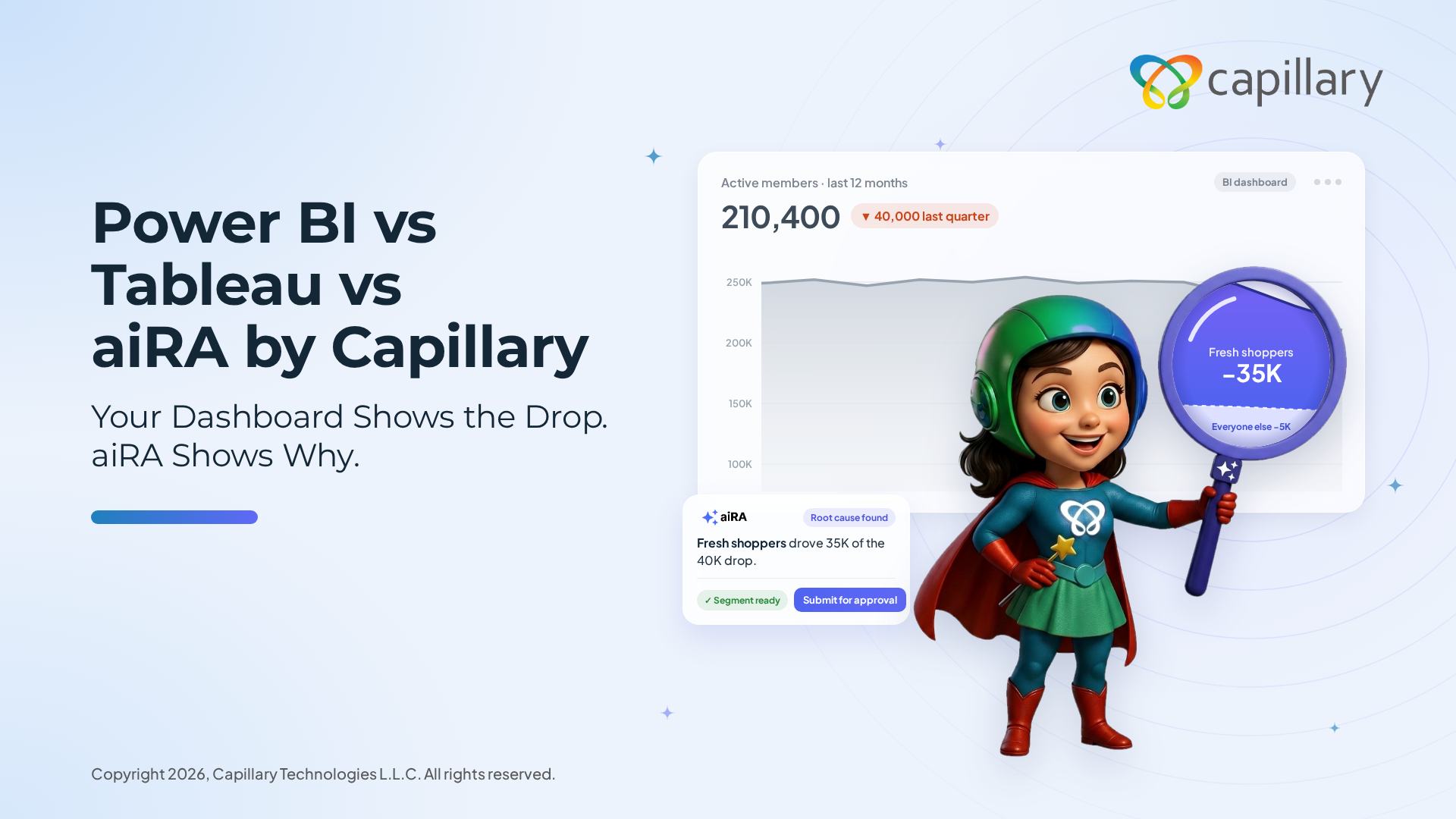
Power BI vs Tableau vs aiRA
Your Dashboard Shows the Drop. aiRA Shows Why, & What to Do About It. Power
Contact Us
Get the best loyalty & customer engagement platform out there!
- Design industry shaping loyalty programs
- Integrate easily and go live quicker
- Deliver hyper-personalized consumer experiences