
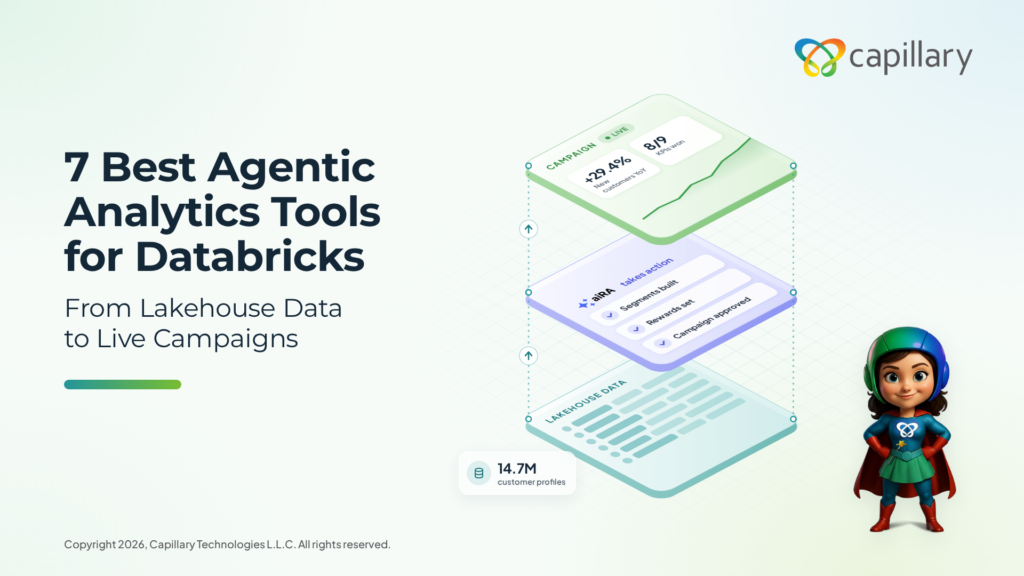
Every BI and lakehouse vendor now claims to offer agentic analytics. Look closely and most of it still just answers questions instead of acting on them. If you’re searching for agentic analytics on Databricks, chances are you want more than a smarter dashboard sitting on top of your customer data.
The category is moving fast. Gartner predicts 40% of enterprise applications will be integrated with task-specific AI agents by the end of 2026, up from less than 5% in 2025. Databricks is leaning in too, with its own push into marketing AI through Data Intelligence for Marketing.
But hype and results are two different things. According to McKinsey’s State of AI report, only 23% of organizations have scaled an agentic AI system into production, while 62% are at least experimenting. That gap is where architecture matters. A tool that only reports insights stalls out. A tool that can act on them makes it to production.
If you’re choosing an agentic analytics tool for Databricks, this guide compares 7 options on one question: does the tool act on your customer data (build the segment, launch the campaign, adjust the reward), or does it only report on it? It’s written for marketing and loyalty teams, not data engineers.
TL;DR
- The core question: Most “agentic analytics” tools for Databricks still stop at answering questions. This guide compares 7 tools on whether they act on your customer data (build the segment, launch the campaign, adjust the reward) or only report on it.
- Best for marketing and loyalty teams: aiRA by Capillary builds campaigns, segments, and rewards end to end from plain-language requests, with human approval at each step and no engineering dependency. Capillary’s platform is built on the Databricks lakehouse.
- Best for governed BI across the business: Cube gives data teams a universal semantic layer, but has no marketing execution layer.
- Most native option: Databricks Data Intelligence for Marketing with CustomerLake adds campaign agents and activation, but it’s in Private Preview, needs data team setup, and has less depth on loyalty.
- Best for data teams and analysts: Hex (notebooks and self-serve), ThoughtSpot (search and embedded analytics), Sigma (spreadsheet-style BI with writeback), and Looker (Google Cloud shops). Where these tools can act, the actions are general-purpose or developer-built, not marketing workflows.
- The deciding test: Ask who has to act on the answer. If it’s your data team, most of these tools work. If it’s your marketing team and the goal is a live campaign, aiRA is the strongest fit.
How Long Does It Take to Get Agentic Analytics Live on Databricks?
Most comparisons ask which tool is the smartest. The better question is which one actually ships. Marketing teams don’t control the data team’s roadmap, so a tool that needs heavy setup often never gets prioritized, no matter how good the demo looked.
The dependency problem
Most agentic analytics tools built around Databricks, including Cube, ThoughtSpot, and Databricks’ own Genie, need a data team to model the semantic layer, define metrics, and maintain access rules before a marketer can ask a single question. The blocker isn’t the AI’s capability. It’s the queue behind IT. Your campaign waits in line behind every other ticket.
Where aiRA removes the dependency
aiRA by Capillary lets marketers work in plain language, so launching or adjusting a campaign doesn’t need engineering in the middle. Two anonymised deployments show what that looks like:
- Consumer superapp: Promotions are authored in plain English with no engineering dependency. The team handles 20+ promotion templates a month without a data team touching them, with promotion creation time cut by 50% and zero configuration errors.
- US healthcare provider: Configuration effort dropped from 90 days to 21, and the team shrank from 20 specialists to 4. It scaled from one to 90+ partner organizations without a proportional jump in headcount.
The takeaway: these are setup-effort and time-to-value numbers, not just accuracy numbers.
What this means if you’re on Databricks
These deployments aren’t Databricks-specific, but the pattern carries over. Even when your warehouse is Databricks, it’s rarely the bottleneck. The bottleneck is whoever has to build and maintain the layer between the warehouse and the campaign. aiRA removes that layer for marketing and loyalty use cases, and it can sit alongside whatever BI or semantic tool your data team runs for internal reporting.
How to Evaluate an Agentic Analytics Tool for Databricks
Plenty of tools now call themselves agentic. Some are the real thing, and some are a chatbot bolted onto a dashboard. Use these five criteria to tell them apart before you look at any ranking.
- Databricks-native connectivity: Does the tool read Unity Catalog and Delta Lake directly, or does it connect through a generic connector? Direct access means fresher data, fewer copies, and less to maintain.
- Insight vs. insight-to-action: Does it stop at answering a question, or can it take the next step itself, like building a campaign, updating a segment, or changing a reward? This is the biggest divider in the category.
- Built for marketers vs. analysts: Does it require SQL or semantic-layer knowledge, or can a non-technical marketer run it in plain language? If only your data team can operate it, marketing is still waiting in line.
- Governance carried to the action layer: Are access rules and approvals enforced when the AI acts, not just when it reports? Reading data safely is table stakes. Acting on it safely is what matters once an agent can touch live campaigns.
- Time-to-value: Does a data team need to model and maintain a layer before a marketer can use it, or does it work with minimal setup? The faster it ships, the faster it pays off.
Most tools clear one or two of these. Very few clear all five, and the comparison table below shows exactly where each one lands.
aiRA by Capillary vs. Agentic Analytics Tools for Databricks
Best Agentic Analytics Tools for Databricks in 2026
1. aiRA by Capillary
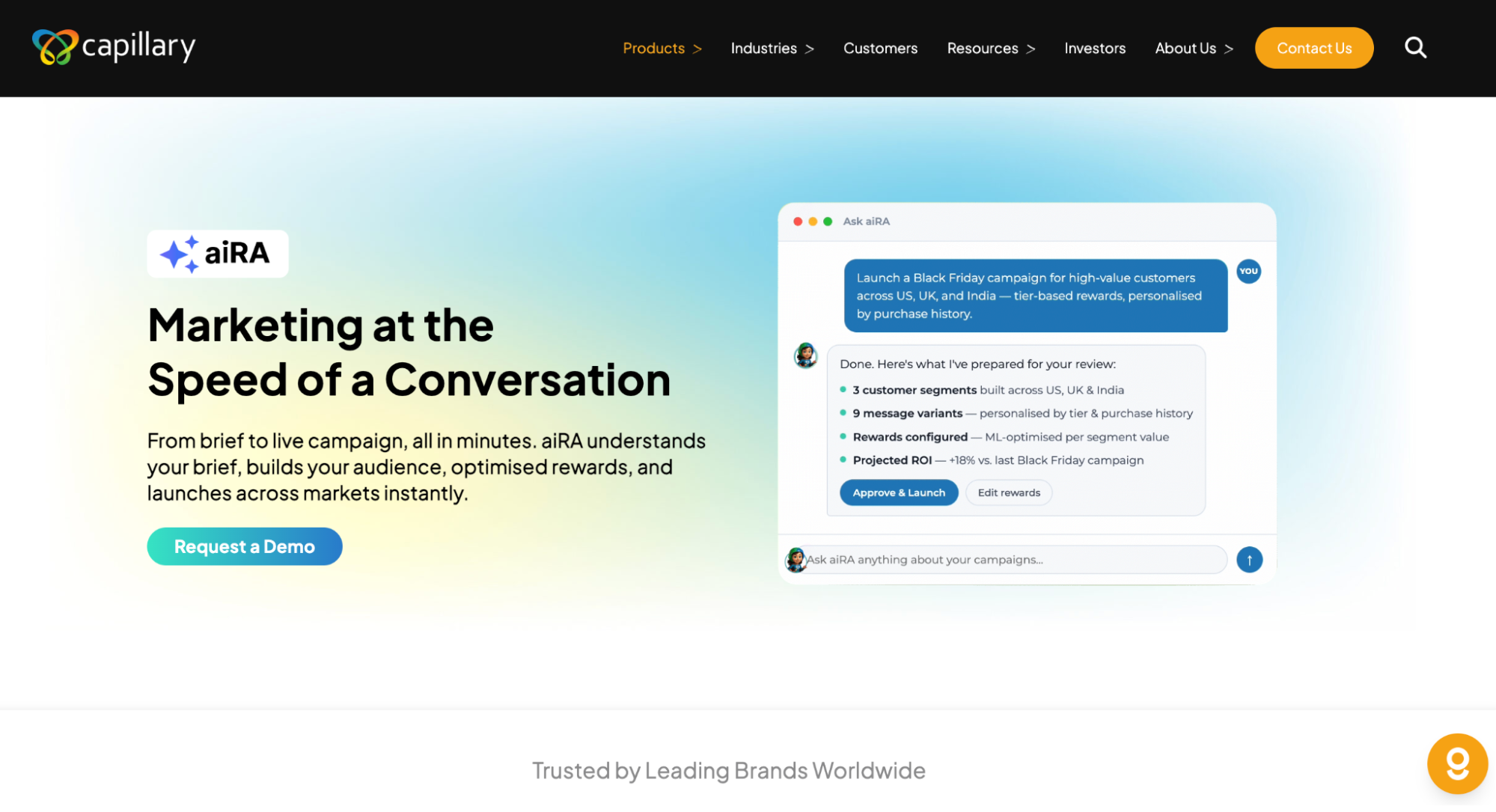
Best for: Marketing and loyalty teams on Databricks who want AI to build and launch campaigns, not just report on them.
aiRA is Capillary’s agentic co-pilot for marketing and loyalty, and Capillary’s platform is built on the Databricks lakehouse. Instead of surfacing an insight and leaving the next step to a human, aiRA takes a request in plain language and builds the campaign, segment, or reward end to end. Every step goes through human approval, so marketers stay in control of what actually goes live.
That end-to-end approach shows up in real results. A Middle East fashion retailer used aiRA to run its Ramadan 2026 campaign across a 14.7M-customer base. aiRA built behavioural segments across five lifecycle cohorts, ran the campaign from start to finish, and recalibrated it every cycle. The regional growth gap narrowed from -9.6pp to -2.2pp, new customers grew 29.4% year over year, and aiRA won 8 of 9 scorecard KPIs against a dedicated analytics agency.
Pros
- Builds campaigns, segments, and rewards end to end, not just insights
- Human approval at each step, so marketers keep control
- Plain-language interface with no engineering dependency
- Proven on loyalty work, including a full loyalty programme redesign for an Indian menswear brand delivered in 38 days
- Cuts setup effort, as covered in the implementation section above
Cons
- Purpose-built for marketing and loyalty, so you’ll still need a separate tool for company-wide BI and reporting
- Pricing is quote-based, so you can’t ballpark cost from a public price list
- Human approval at each step is good for control, but teams wanting fully hands-off automation should expect a review loop
Pricing: Quote-based, as part of the Capillary platform. You can choose a fixed license fee that includes implementation, configuration, integrations, training, and self-service support, or a lower fixed fee plus a revenue share based on incremental sales. The second option ties your cost to sales lift, which lowers the upfront commitment.
2. Cube
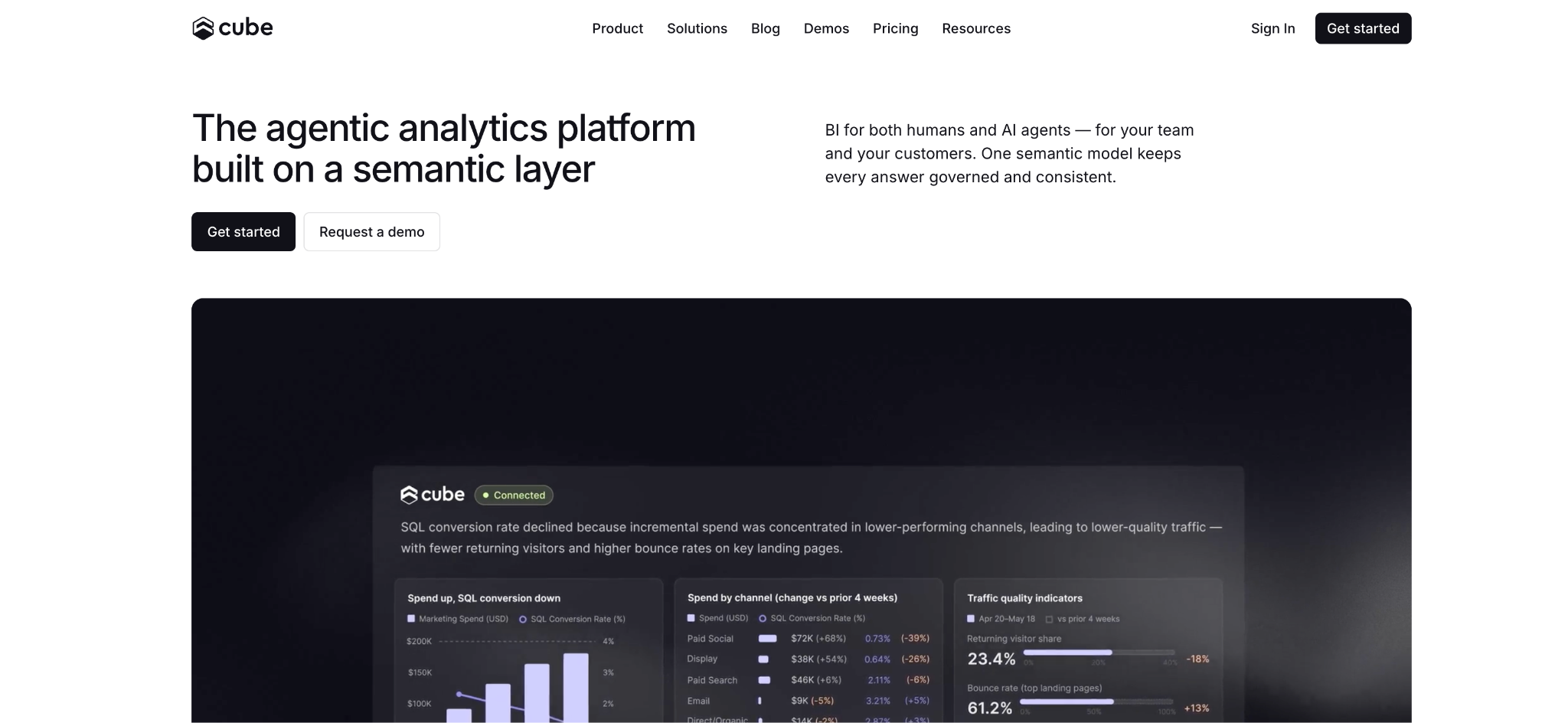
Best for: Data teams needing a governed, universal semantic layer across BI, embedded analytics, and AI.
Cube (D3) is built around one idea: define your metrics once in a semantic layer, then let every tool and agent use those same definitions. It’s warehouse-agnostic and supports Databricks and dbt, and its agentic analytics features let agents build semantic models, answer questions, and create data apps. If your data team wants consistent, governed numbers behind everything from dashboards to AI, Cube is a strong foundation.
Pros
- Governed, universal semantic layer across BI, embedded analytics, and AI
- Agents that build semantic models, answer questions, and create data apps
- Warehouse-agnostic, with support for Databricks and dbt
- Free tier available, and open-source Cube Core is free to self-host
Cons
- Built for data teams and analysts, not marketers
- No marketing execution layer, so insights still need a person or another tool to act on them
- Connects to Databricks via a connector rather than natively
- Costs vary with usage, since the invoice is driven by consumption
Pricing: Starter is $40 and Premium is $80 per developer per month, but the invoice is driven by consumption in Cube Compute Units plus AI token grants. There’s a free tier, and open-source Cube Core is free to self-host.
3. Databricks Data Intelligence for Marketing
Best for: Teams fully inside the Databricks ecosystem.
Databricks’ own marketing offering pairs Data Intelligence for Marketing with CustomerLake, and it’s the most native option on this list. CustomerLake adds campaign and profile agents, audiences, and activation, so it goes beyond insight into action. Because everything runs inside Databricks, there’s no separate integration to build. It’s aimed at marketers, though it still needs a data team to get set up.
Pros
- Fully native to Databricks, with no separate integration needed
- Insight-to-action: CustomerLake adds campaign and profile agents, audiences, and activation
- Built with marketers in mind
- No separate platform fee, so you’re not adding another vendor contract
Cons
- Currently in Private Preview and not generally available, with only a handful of named early adopters
- Still needs data team setup before marketers can use it
- Less depth on loyalty and rewards than a purpose-built marketing tool
- No disclosed pricing rates, which makes budgeting hard
Pricing: No disclosed pricing rates. It’s consumption-based, with no separate platform fee, and Databricks monetizes it through the underlying compute and storage you use.
4. Hex
Best for: Data science, exploratory analysis, and data-team-led self-serve.
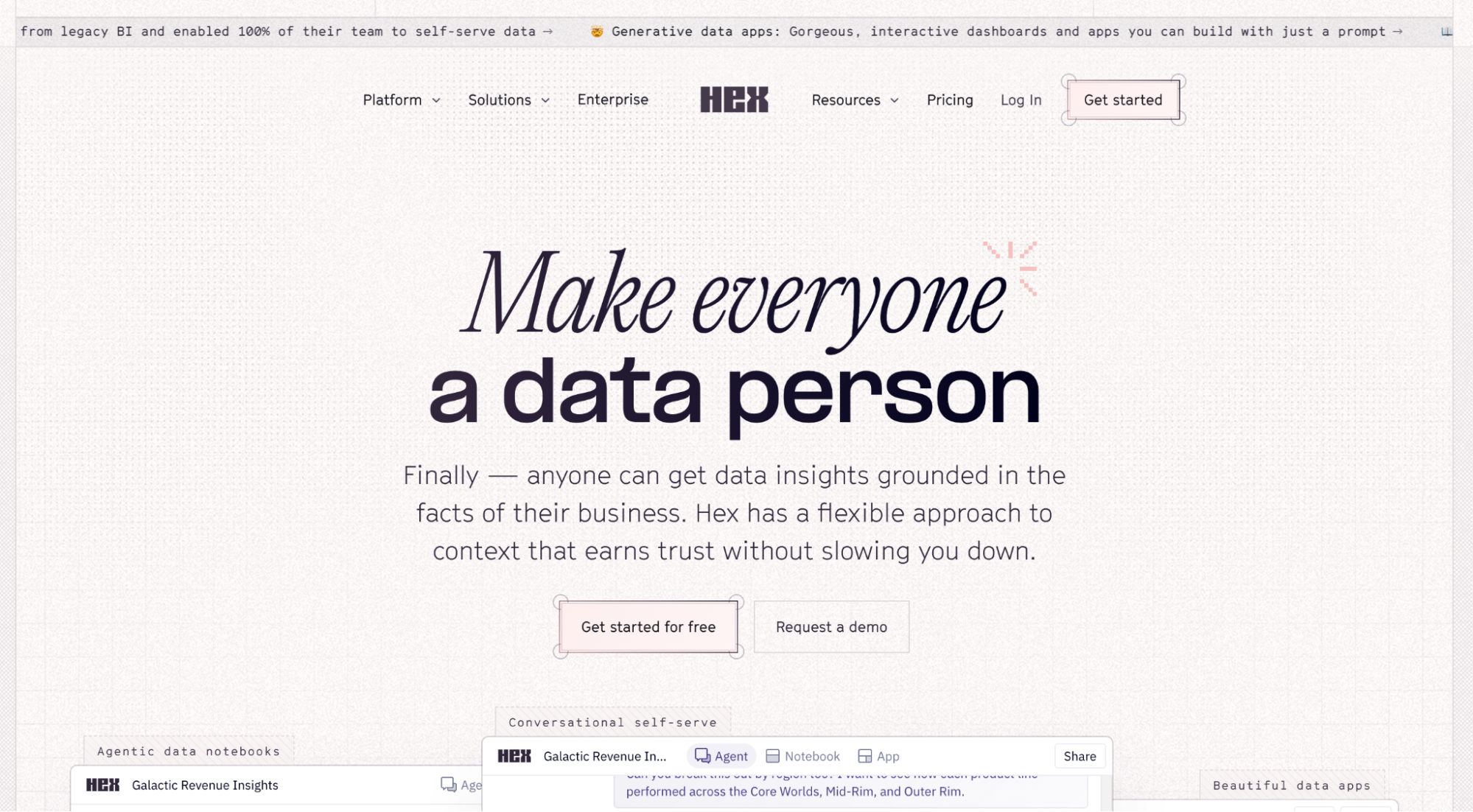
Hex is a collaborative analytics workspace where data teams explore data, build analyses, and share them with the rest of the business. Its agentic features include a Notebook Agent and Threads, which help analysts work through questions faster. It connects to Databricks via a connector, with a sync for Unity Catalog Metric Views. It’s a solid pick when your data team leads and wants to open up self-serve for others, but it’s data-team-first rather than built around marketers.
Pros
- Agentic analysis through Notebook Agent and Threads
- Syncs with Unity Catalog Metric Views on Databricks
- Supports data-team-led self-serve for the wider business
- Free Community plan, so it’s easy to try
Cons
- No marketing execution, so campaigns still need another tool
- Only partly suited to marketers, since it’s built data-team-first
- Connects to Databricks via a connector rather than natively
- Costs can climb, since bigger machines, GPUs, and AI features are pay-as-you-go
Pricing: Free Community plan. Professional is $36 per editor per month, Team is $75 per editor per month, and Enterprise is custom. Bigger machines, GPUs, and AI features are pay-as-you-go.
5. ThoughtSpot
Best for: Search- and agent-driven analytics, and embedded analytics.
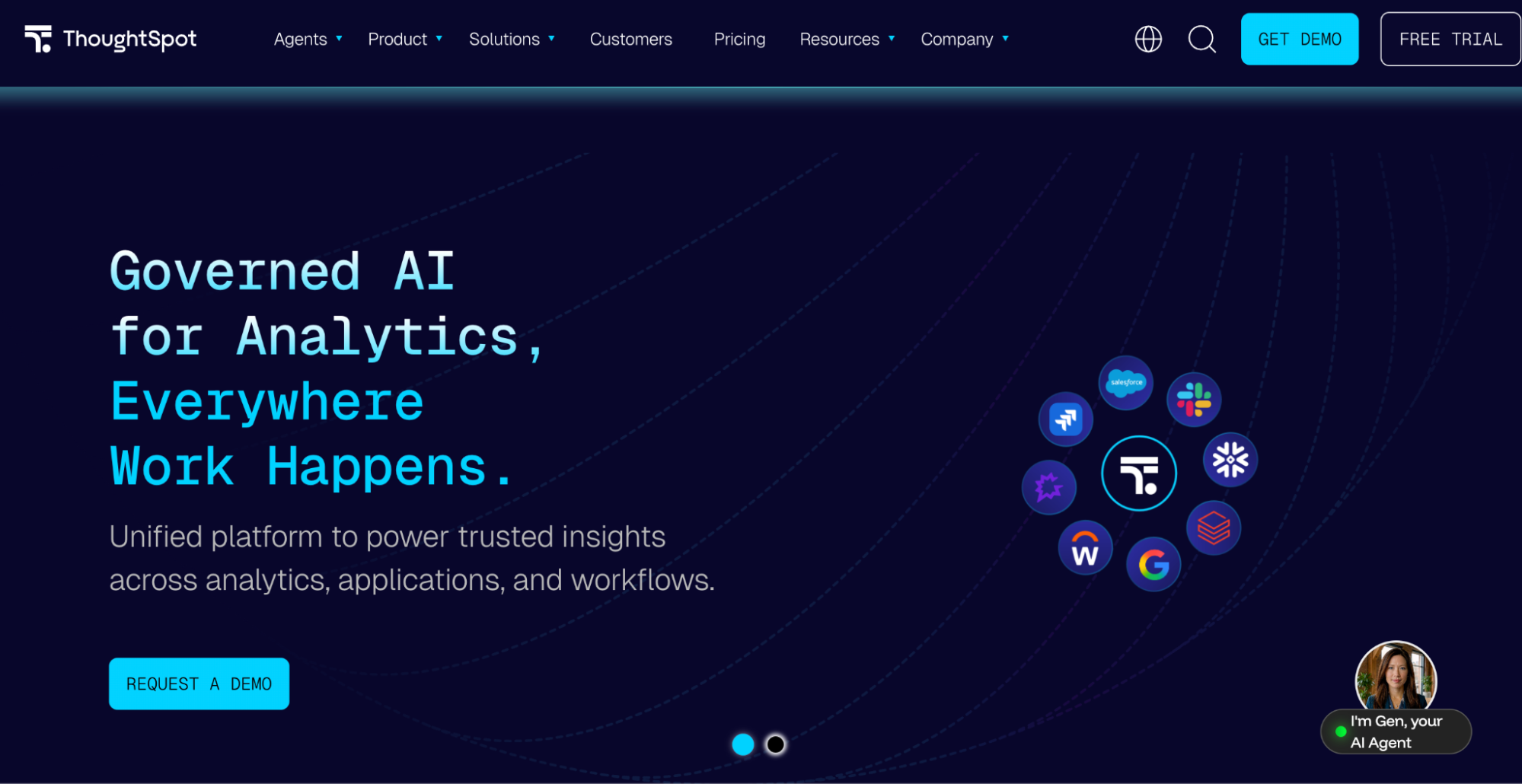
ThoughtSpot lets people ask questions of their data through a search-style interface, and its Spotter agent suite adds agent-driven analysis on top. It has one of the deeper Databricks integrations on this list, working through DataSpot and Unity Catalog. It can also push actions back into other systems through writeback via its embed SDK. That said, those actions are built by developers, so it’s a better fit for teams with engineering support than for marketers who want to launch something on their own.
Pros
- Deep Databricks integration via DataSpot and Unity Catalog
- Spotter agent suite for agent-driven analytics
- Writeback via embed SDK, so it can trigger actions and not only report
- Strong option for embedded analytics
- Entry plans are affordable, starting at $25 per user per month
Cons
- Needs up-front data modeling before marketers can use it
- Actions are developer-built, not a ready-made marketing workflow
- Only a partial fit for marketers
- Enterprise costs run high, with a reported average around $137,000 a year, and all plans are billed annually
Pricing: Essentials is $25 per user per month and Pro is $50 per user per month. Enterprise is custom, with a reported average of around $137,000 a year. All plans are billed annually.
6. Sigma
Best for: Spreadsheet-fluent finance, ops, and business teams.
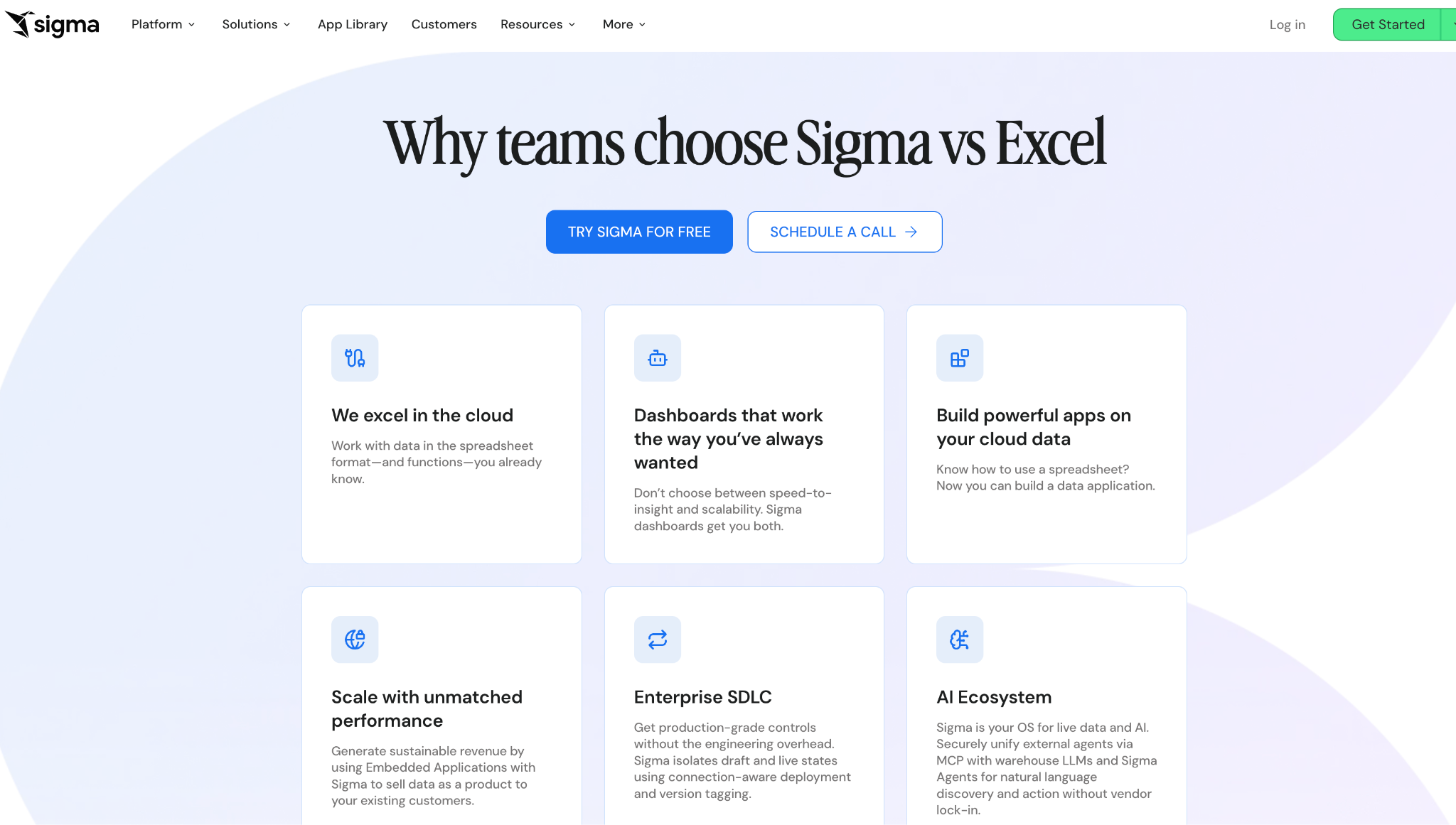
Sigma gives business users a familiar spreadsheet-style interface on top of their warehouse, so people who live in Excel can work with live data without writing SQL. It integrates deeply with Databricks, with live queries and writeback. Its Sigma Agents, AI Apps, and writeback features also let teams take action on the data, not just analyze it. It’s business-friendly, but it’s a general-purpose tool rather than one built for marketing.
Pros
- Deep Databricks integration with live queries and writeback
- Insight plus action through Sigma Agents, AI Apps, and writeback
- Approachable for spreadsheet-fluent business users
- Four license tiers (View, Act, Analyze, Build), so you can match access to the role
Cons
- Not marketing-specific, so it’s only a partial fit for marketers
- Execution is general-purpose, not built around campaign or loyalty workflows
- No public per-user price list, since it’s sales-led
- Usage credits come on top of license tiers, which makes costs harder to predict
Pricing: Sales-led, with no public per-user price list. There are four license tiers (View, Act, Analyze, Build) plus usage credits. Reported annual costs have a median of $60,500, ranging from $17,500 to $132,507.
7. Looker
Best for: Existing Google Cloud and Looker shops.
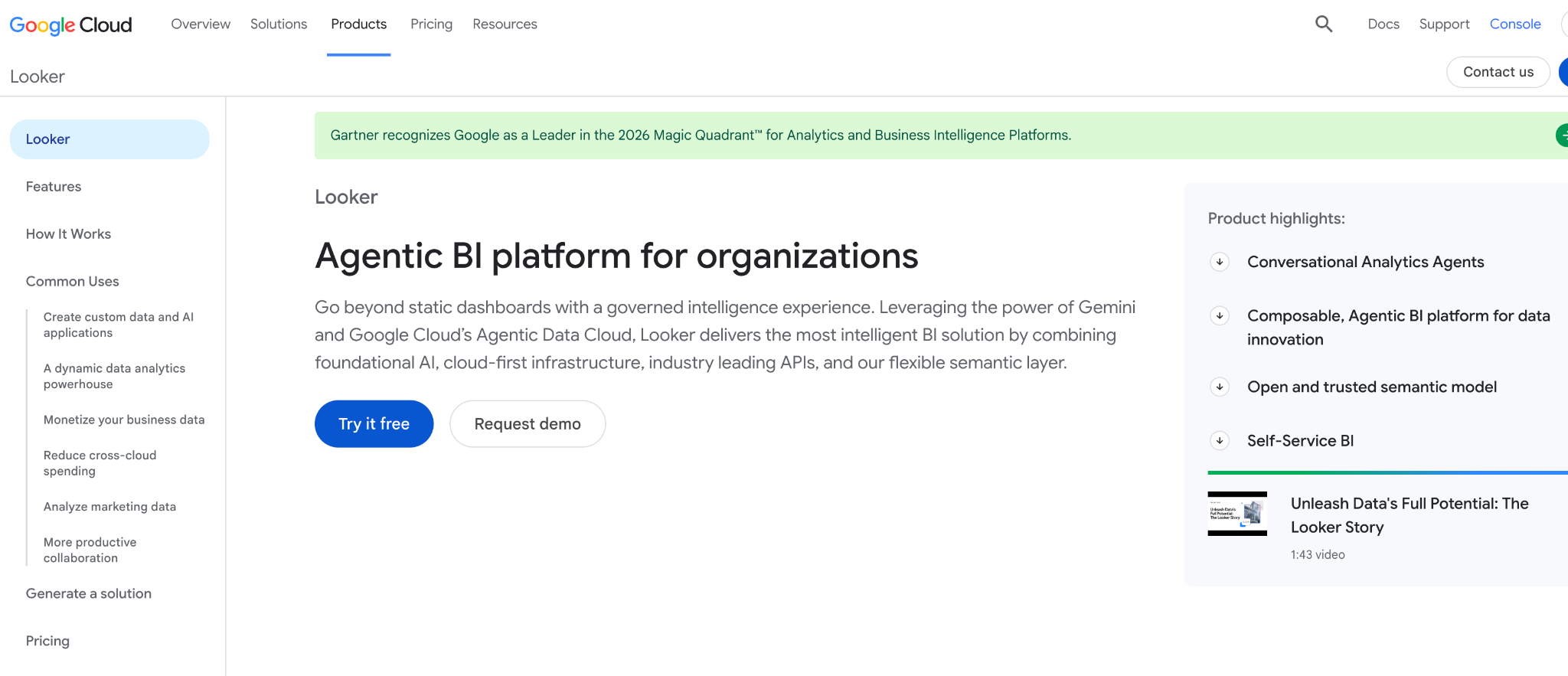
Looker is Google Cloud’s BI platform, and it makes the most sense if your team has already invested in the Looker and Google Cloud stack. It connects to Databricks via a connector, and its Gemini Conversational Analytics lets people ask questions in natural language. Action-triggering agents are still in preview, so today it leans mostly toward insight rather than action. It also relies on LookML developers, which puts it out of reach for marketers who want to work on their own.
Pros
- Natural fit if you already run Google Cloud and Looker
- Gemini Conversational Analytics for natural-language questions
- Action-triggering agents in preview, so there’s a path toward execution
- Standard, Enterprise, and Embed options to match different use cases
Cons
- Relies on LookML developers, so it isn’t built for marketers
- Proprietary LookML adds a learning curve and a skills dependency
- Mostly insight for now, with agentic actions still maturing
- Connects to Databricks via a connector rather than natively
- No public pricing, with annual commitments of one to three years
Pricing: Standard, Enterprise, and Embed are all listed as “Call sales,” on 1-, 2-, or 3-year annual commitments. Reported Standard platform fees are around $60,000 to $66,000 a year, plus per-seat adders.
Which Agentic Analytics Tool Should You Pick?
The right choice depends on who owns the outcome and what has to happen after the insight. Find the situation that matches your team.
- Your marketing or loyalty team runs on Databricks data and needs AI that acts, not just reports: aiRA by Capillary is the strongest fit. It builds and launches campaigns, segments, and rewards from plain-language requests, with human approval at each step and no engineering dependency. A revenue-share pricing option ties cost to incremental sales.
- You need a governed source of truth for BI and embedded analytics across the business: Cube gives your data team a universal semantic layer that keeps metrics consistent across BI, embedded analytics, and AI.
- You’re committed to the Databricks ecosystem and want a native marketing option: Databricks Data Intelligence for Marketing with CustomerLake is worth a look. It’s currently in Private Preview and still requires data team setup, so confirm availability before you plan around it.
- Your data science team works in notebooks and explores data hands-on: Hex suits data-team-led exploration and self-serve.
- You want search and agent-driven analytics, or embedded analytics, and have engineering support: ThoughtSpot fits, as long as you plan for up-front data modeling and developer-built actions.
- Your finance or ops teams live in spreadsheets: Sigma offers a familiar interface, with live queries and writeback on Databricks.
- You’re already invested in Google Cloud and Looker: Looker is the natural extension, though its agentic actions are still maturing.
One test to make the call
Ask who has to act on the answer. If it’s your data team, most of the tools above will serve you well. If it’s your marketing team, and the goal is a live campaign rather than a better chart, the field narrows quickly. Most options stop at insight or need engineering to act on it. aiRA is built so the marketer can do the acting.
Databricks’ own offering is the closest alternative for that job, so the next section puts the two side by side.
aiRA by Capillary vs. Databricks Data Intelligence for Marketing
If your customer data lives in Databricks, you’ll likely weigh Databricks’ own marketing offering against aiRA. Both go beyond reporting into action. The difference is what it takes to get value from each, and how soon.
Availability and setup
Databricks Data Intelligence for Marketing, with CustomerLake, adds campaign and profile agents, audiences, and activation. It’s a strong concept, but it’s in Private Preview, not generally available, with only a handful of named early adopters. It also still needs data team setup, so your marketers wait on the same queue as everyone else.
aiRA is live in customer deployments today. Capillary’s platform is built on the Databricks lakehouse, and marketers work in plain language, with no engineering dependency to launch or adjust a campaign.
Depth where marketing teams need it
Databricks has less depth on loyalty and rewards programs. aiRA has proof in exactly that area:
- Loyalty redesign: An Indian menswear brand redesigned its loyalty programme in 38 days. aiRA modeled 3rd- and 5th-visit milestone rewards with revenue projections, with discounts held at 10% or less.
- Campaign execution: A Middle East fashion retailer ran its Ramadan 2026 campaign through aiRA, growing new customers 29.4% year over year and winning 8 of 9 scorecard KPIs against a dedicated analytics agency.
Commercial clarity
Databricks bills through consumption with no disclosed pricing rates, so budgeting is guesswork. aiRA is quote-based, with two clear structures: a fixed license fee that includes implementation, integrations, and training, or a lower fixed fee plus a revenue share tied to incremental sales.
When Databricks’ own tool still makes sense
If staying entirely inside Databricks tooling is your top priority, and your team can wait for general availability and data team setup, the native option is worth watching.
The verdict
If you need marketing and loyalty execution now, with depth on rewards and no dependency on the data team’s roadmap, aiRA is the stronger choice. It’s built on the same Databricks foundation, so you don’t give anything up to get it.
Conclusion
Agentic analytics on Databricks comes down to one distinction: tools that answer questions, and tools that act on the answer. Most options either stop at insight or leave the action to developers and data teams. That’s fine for some jobs and a real bottleneck for others.
If you need governed BI or embedded analytics across the business, Cube or a similar semantic-layer tool is the right foundation. If you prefer to stay fully native inside Databricks, Databricks Data Intelligence for Marketing is the option to watch, once it’s available to you and your data team can support the setup. And if you run a marketing or loyalty team that wants AI to execute rather than just report, aiRA by Capillary is the better fit. It’s built on the Databricks lakehouse, works in plain language, and keeps your team approving every step, so campaigns, segments, and rewards move at marketing speed instead of waiting in a queue.
Timing matters here too. Gartner expects 40% of enterprise applications to include task-specific AI agents by the end of 2026, up from less than 5% in 2025. This category is moving fast, so the smart move isn’t picking the tool that looks best today. It’s picking the one built for where this is heading, and for marketing teams, that means AI that does the work.
The easiest way to judge that is to see it on your own data.
See aiRA on your Databricks data. Book a walkthrough with the Capillary team and watch a real request go from a plain-language question to a campaign ready for your approval.
Frequently Asked Questions
What is agentic analytics on Databricks?
Agentic analytics on Databricks means AI agents that work with the data in your Databricks lakehouse and do more than answer questions. Instead of surfacing an insight and waiting for a person to follow up, the agent can take the next step, like building a segment or launching a campaign. Tools differ a lot in how far they go, which is why it helps to compare them on insight versus action.
Is Databricks Data Intelligence for Marketing the same as an agentic analytics tool?
It counts as one. With CustomerLake, Databricks adds campaign and profile agents, audiences, and activation, so it goes beyond reporting into action. The caveats for buyers are that it’s in Private Preview and not generally available, it still needs data team setup, and it has less depth on loyalty and rewards programs than a purpose-built marketing tool.
Can agentic analytics tools trigger actions, not just answer questions?
Some can, and the depth varies. Sigma offers agents, AI apps, and writeback, and ThoughtSpot supports writeback through its embed SDK, though those actions are built by developers. Looker’s action-triggering agents are still in preview. aiRA by Capillary builds campaigns, segments, and rewards end to end, with human approval at each step, and marketers run it in plain language.
What’s the best agentic analytics tool for Databricks marketing teams?
For marketing and loyalty teams that want AI to build and launch campaigns, aiRA by Capillary is the strongest fit. It’s built on the Databricks lakehouse, needs no engineering dependency, and has proven results in loyalty and campaign work. If you need governed BI across the whole business instead, a semantic-layer tool like Cube is the better foundation.
Does aiRA by Capillary require a Databricks integration?
Not as a separate project for your team to build. Capillary’s platform is built on the Databricks lakehouse, and marketers work in plain language without waiting on engineering. If you want to know how it fits your specific Databricks setup, that’s a good question for the walkthrough with the Capillary team.

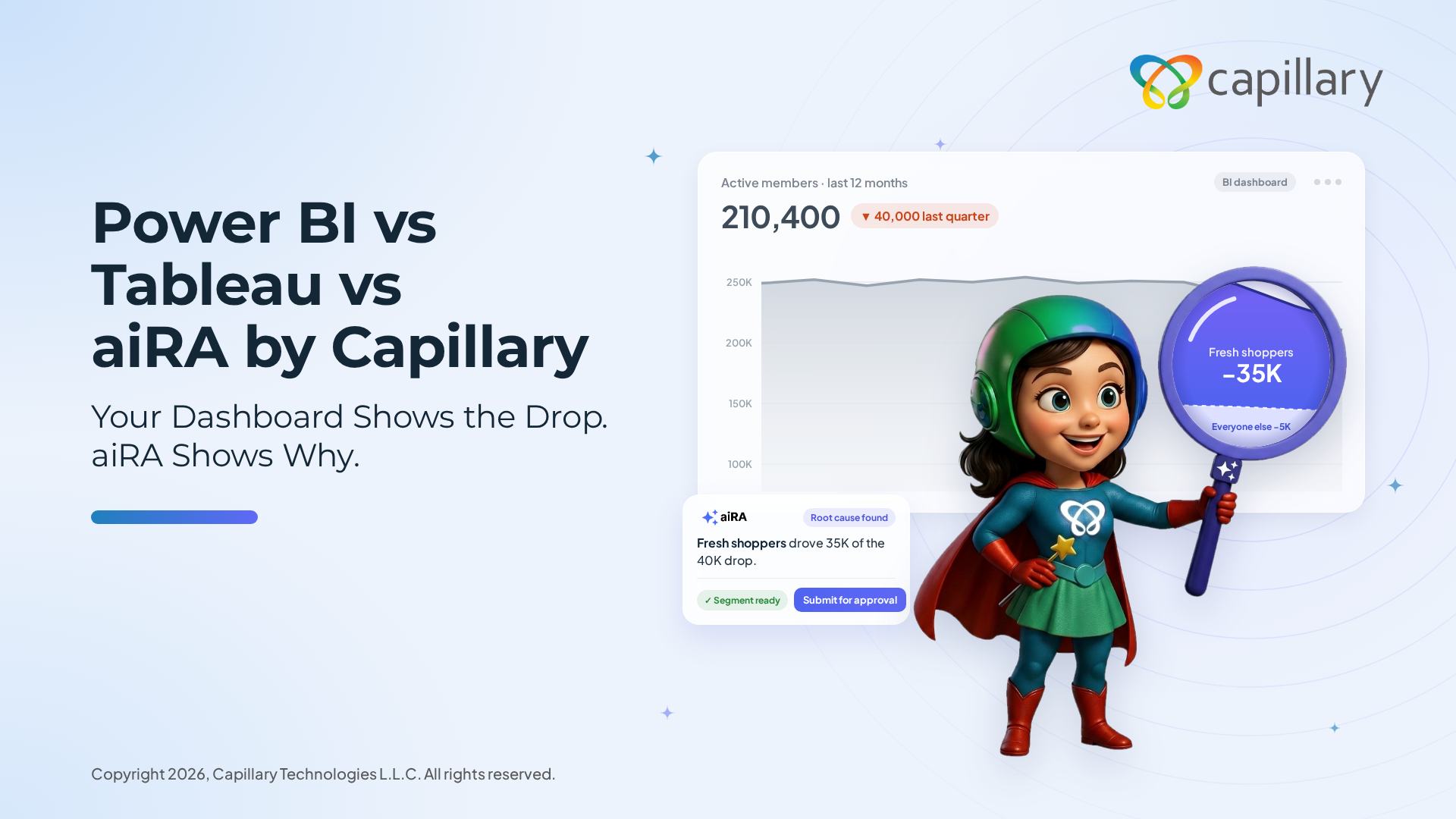
Power BI vs Tableau vs aiRA
Your Dashboard Shows the Drop. aiRA Shows Why, & What to Do About It. Power
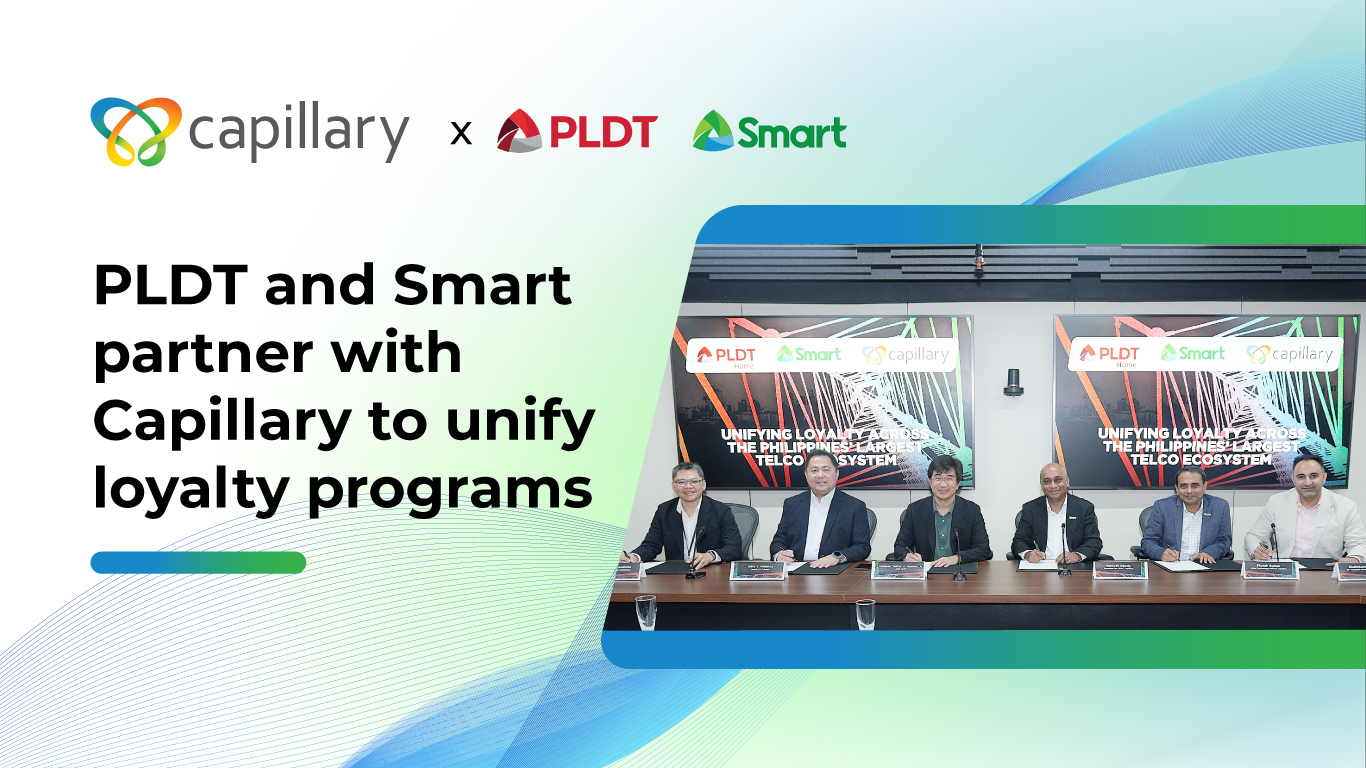
PLDT and Smart partner with Capillary to unify loyalty programs
Manila, Philippines — PLDT Inc. (PLDT) and its wireless subsidiary Smart Communications, Inc (Smart) have